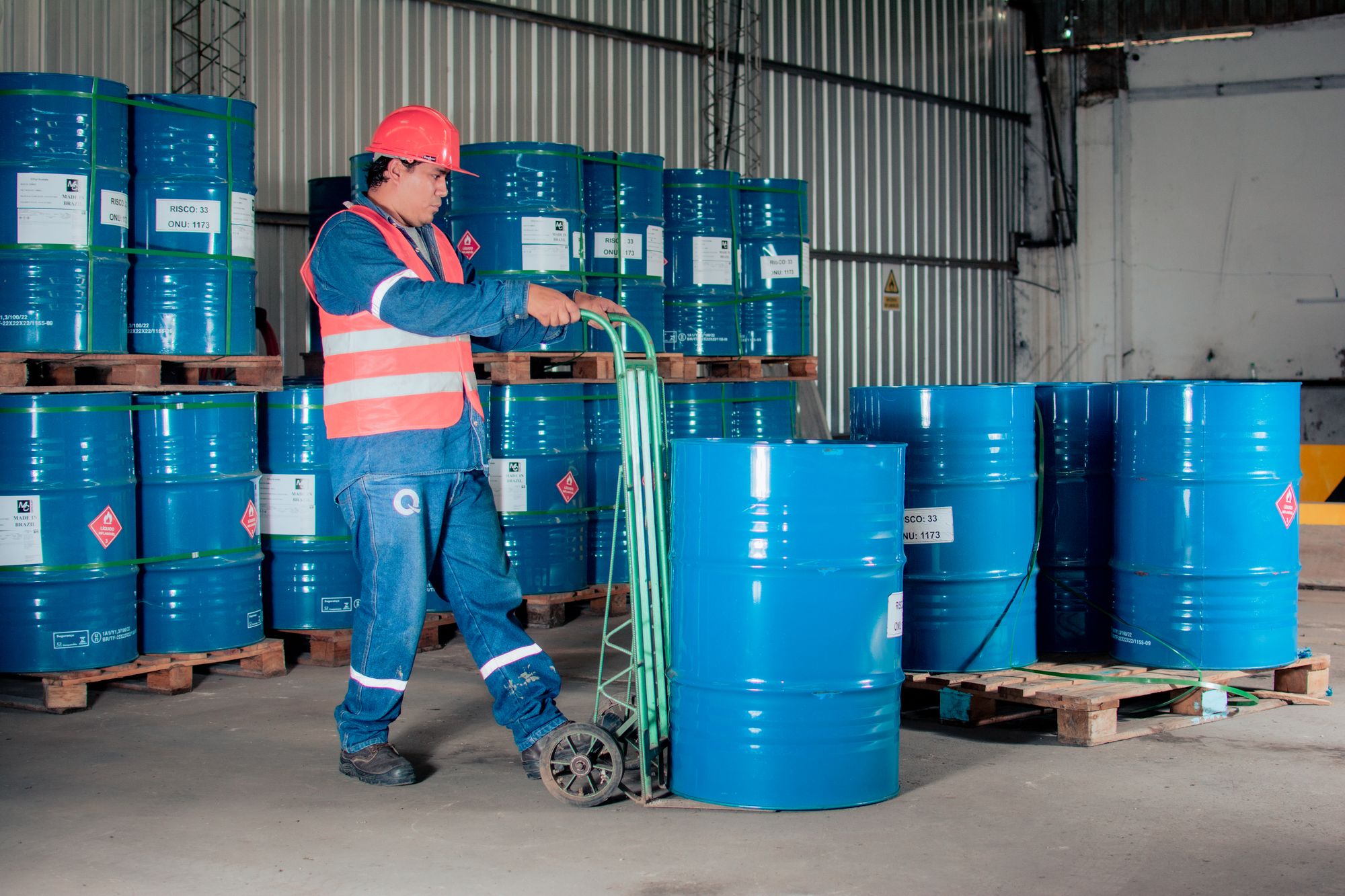

The investigation report said “worker error.” A maintenance technician at a manufacturing facility had opened the wrong valve, sending the wrong material through the line. The company had solid lockout/tagout procedures, well-maintained equipment, and clean audit scores. What the incident report did not capture: the technician was working his third consecutive 12-hour shift because the department had been understaffed for four months. No one had ever formally identified the staffing and workload conditions as a hazard.
This is the gap that quietly sits behind a significant share of workplace incidents. Physical hazards show up on safety walks. Psychosocial hazards do not. Yet research is unambiguous about the connection between the two.
The Research EHS Programs Tend to Look Past
A peer-reviewed study published in BMC Public Health found that occupational psychosocial stressors contribute to approximately 37% of industrial accidents and injuries. The mechanism is well understood: stress impairs concentration, degrades decision-making, disrupts memory recall, and erodes the cognitive reserves workers draw on to perform safely. A worker who is chronically overwhelmed, working under time pressure, or operating in a climate of fear is not making individual mistakes. That worker is operating in a system that has compromised their capacity to work safely.
NIOSH’s 2024 Science Bulletin on psychosocial hazards explicitly identified excessive workloads, bullying, harassment, job insecurity, and lack of supervisor support as occupational health concerns requiring formal hazard management. These are not HR concerns that happen to show up at work. They are hazards in the occupational sense, with measurable impacts on health and safety outcomes.
37%
of industrial accidents and injuries are linked to occupational psychosocial stressors
Source: BMC Public Health / PMC, 2022
What ISO 45003 Actually Defines
Published in June 2021, ISO 45003 is the first international standard dedicated to psychological health and safety at work. It functions as a companion to ISO 45001 and provides a structured framework for identifying, assessing, and controlling psychosocial hazards. For organizations already operating within an ISO 45001 management system, ISO 45003 is designed to slot directly into existing risk processes.
The standard defines three categories of psychosocial hazard source:
Psychosocial Hazard Categories Under ISO 45003
| Category | Examples |
|---|---|
| Work Organization and Conditions | Excessive workloads, shift scheduling, job insecurity, isolation, inadequate resources, poor work-life balance |
| Social Factors at Work | Bullying and harassment, poor supervisory relationships, lack of recognition, role ambiguity, unfair treatment |
| Work Environment and Equipment | Psychological strain from high-consequence work, extreme environmental conditions, inadequate tools |
The standard’s value is not in certification. Most organizations that use it do not seek ISO 45003 certification. The value is in having a documented, internationally recognized taxonomy of psychosocial hazards that EHS programs can use to expand their hazard identification process without reinventing the wheel.
Why Traditional Programs Consistently Miss These Hazards
Physical hazards are visible. An unsecured load, a missing guardrail, a mislabeled chemical container; these surface in inspection rounds. Psychosocial hazards do not appear on a checklist walkthrough. They live in workload data, incident contributing factors, turnover rates, and patterns that require deliberate analysis to surface.
The structural gap is that these conditions have historically been routed to HR rather than EHS. But this framing misunderstands the nature of the risk. A supervisor who creates a climate of fear is not creating an employee relations problem. That supervisor is creating conditions that suppress hazard reporting, deter near-miss disclosure, and make it more likely that workers absorb risk silently rather than escalate it. The downstream effect appears in your incident log, not in an HR complaint form.
The systems-thinking view of safety has always understood this. When a worker makes a critical error under conditions of chronic stress, understaffing, or role confusion, the analysis should not stop at the individual. The system created those conditions. The risk assessment should have identified them.
Making Psychosocial Hazard Assessment Practical
Formal ISO 45003 implementation is one path, but not the only one. EHS managers can begin integrating psychosocial hazard assessment into existing workflows through a few targeted steps.
Expand your hazard identification template. Add explicit categories for workload and scheduling hazards, supervisory relationship quality, role clarity, and staffing adequacy. If your current template only captures physical and chemical hazards, you are systematically excluding a meaningful share of your organization’s risk profile.
Review incident contributing factors retrospectively. Pull your incident investigations from the past 12 to 18 months and examine contributing factors. Fatigue, understaffing, time pressure, and poor communication rarely appear as primary causes, but they appear consistently in the background. Pattern them.
Apply your existing risk matrix. Psychosocial hazards can be scored using the same severity and likelihood framework you apply to physical hazards. A chronic high-workload condition affecting a shift crew is not a low-probability event. Score it accordingly and treat it with the same corrective action rigor you would apply to an identified chemical storage deficiency.
Create a reporting channel workers will actually use. Workers who feel psychologically unsafe will not report psychosocial hazards through a system that requires them to identify themselves or navigate a formal complaint process. Low-friction reporting, anonymous or semi-anonymous, is essential for capturing the conditions workers are actually experiencing on the floor.
The OSHA Trajectory
OSHA does not currently have a specific standard governing psychosocial hazards across industries, but the regulatory direction is clear. The General Duty Clause has been applied in workplace violence cases, itself a psychosocial hazard category under ISO 45003. OSHA has published substantive guidance on workplace stress through its workplace stress pages, and the agency’s growing emphasis on worker mental health signals that formal rulemaking is a matter of when, not whether.
Organizations that build psychosocial risk management into their programs now are not getting ahead of compliance. They are addressing a documented contributor to incidents that their current programs are missing. That is justification enough.
How Q-Risk Can Help
Expanding a risk program to cover psychosocial hazards requires a system flexible enough to capture and score hazard categories that fall outside traditional physical inspection templates. Quantum’s Q-Risk module supports configurable risk matrices that can be extended to cover psychosocial hazard categories, including workload conditions, scheduling pressures, role clarity gaps, and supervisory environment factors, using the same severity and likelihood scoring framework applied to physical and chemical risks. This means psychosocial assessments live alongside your broader risk inventory, subject to the same corrective action workflows, rather than sitting in a separate spreadsheet that never gets reviewed at the same table.
For organizations also looking to give workers a low-friction channel to flag psychosocial concerns before they escalate, Q-Hazard supports mobile hazard reporting accessible via QR code and employee ID, with no app download or password required. When the barrier to reporting is low, workers use it. That is where the hazard data you are currently missing starts to appear.