
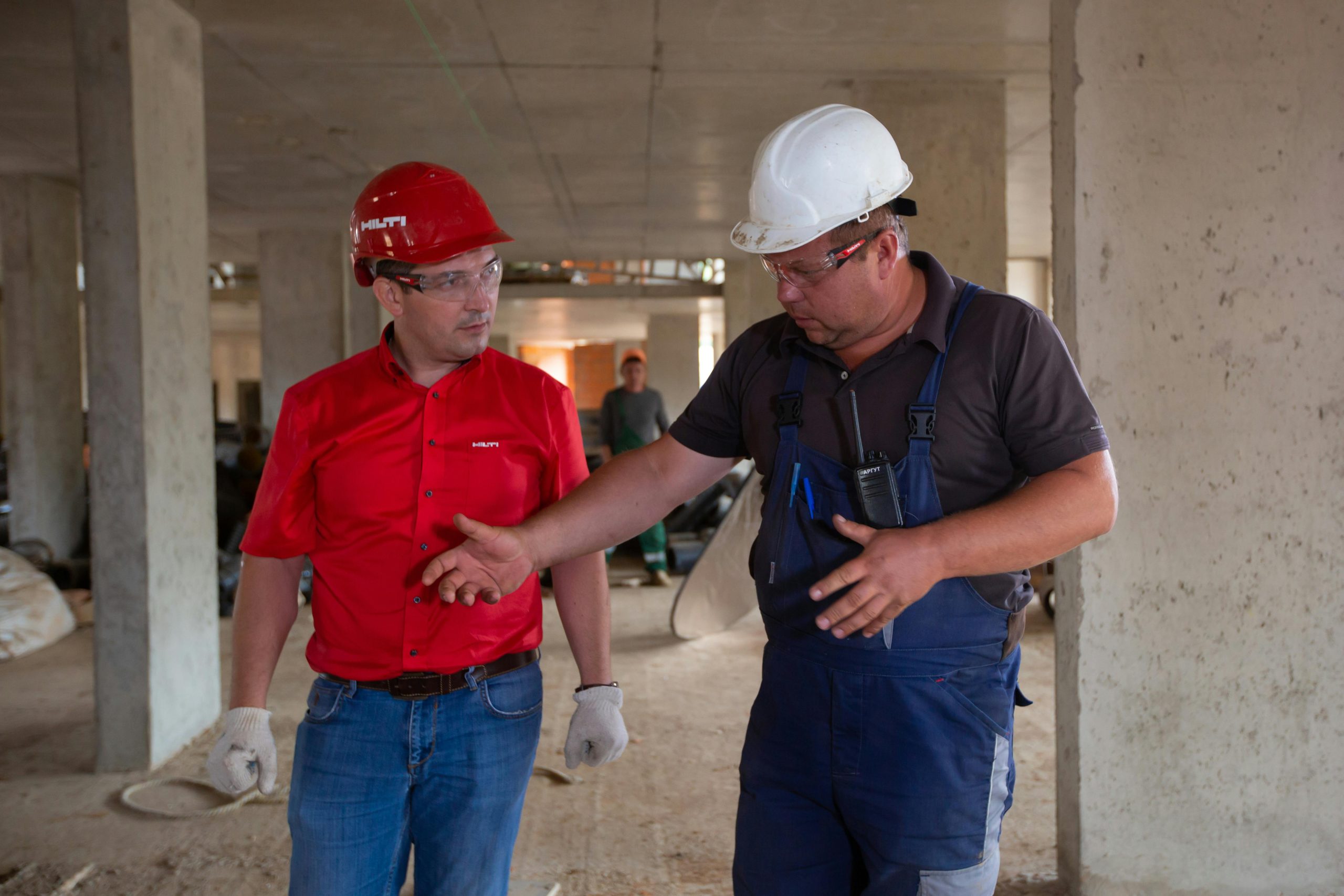
Most EHS managers know the statistics: contractors are disproportionately represented in serious injury and fatality data. OSHA holds host employers jointly responsible for contractor safety on their worksites, even when the contractor brings their own supervision. That shared liability creates both a legal obligation and a practical challenge.
The challenge is this: contractors arrive at your facility with their own safety culture, their own training history, and varying familiarity with your site’s specific hazards. They are working under time pressure, often on fixed-price contracts that create financial incentives to move fast. When something goes wrong, it is tempting to frame it as a contractor problem. But in most cases, the system created the conditions for the incident. The worker did not fail; the program failed the worker.
Building an effective contractor safety management program means designing a system that sets contractors up to work safely, not one that simply generates paperwork to demonstrate that someone tried.
Why Contractors Present a Distinct Safety Challenge
The fundamental difference between contractor safety and employee safety is familiarity. Your own workers have gone through your onboarding, worked alongside your supervisors, and learned your site’s rhythms over months or years. Contractors arrive with none of that context. They may be highly skilled at their trade and still be completely unaware of a confined space entry procedure, a live electrical system near their work area, or a permit-required process that operates on a schedule they were never told about.
This familiarity gap is compounded by organizational distance. Contractors take direction from their own supervisors, not yours. Their safety training was shaped by previous employers and project types that may look nothing like your environment. And because they are often on site for a limited duration, there is less opportunity for informal safety learning, the kind that happens when experienced employees spot a new hire making a mistake and correct it before it becomes an incident.
The Four Pillars of an Effective Contractor Safety Program
Prequalification Before Work Begins
The most common failure in contractor safety programs is that they start too late. By the time a contractor arrives on site, the leverage you had to screen out high-risk vendors is gone. Prequalification shifts that conversation upstream, to the procurement decision itself.
An effective prequalification process evaluates contractors on their safety record (Total Recordable Incident Rate, DART rate, OSHA citations), their safety management systems, insurance coverage, and training compliance, before they ever receive a purchase order. This is not about checking boxes. It is about selecting partners who have demonstrated that they can work safely in environments like yours. The OSHA Process Safety Management standard (29 CFR 1910.119) explicitly requires employers to evaluate contractor safety performance and ensure contractors understand site hazards before work begins. Even outside PSM-regulated environments, this standard reflects good practice for any high-hazard worksite.
Orientation and Training Enforcement
Prequalification gets the right contractors to your door. Orientation and training enforcement gets them safely through it.
Contractors need to understand your site’s specific hazards, emergency procedures, permit systems, and PPE requirements before they begin work. The problem is that this training often happens through paper sign-in sheets, one-time verbal briefings, or ad hoc walkthroughs that leave no auditable record. When an incident occurs, the absence of that documentation creates both a compliance exposure and a gap in any root cause investigation.
Effective programs tie training completion directly to site access. A contractor who has not completed required orientation does not receive a badge or a work order. Enforcing this consistently requires a system that can track completion across a rotating roster of workers who may change week to week, or even day to day on large projects.
Some platforms now make this easier for the contractors themselves. Rather than requiring a full app installation or a login that a temporary worker is unlikely to remember, workers can access required safety reporting by scanning a QR code and entering only their employee ID. Every submission is automatically attributed to the correct individual, which means EHS managers get full participation visibility without manual cross-referencing, and contractors face less friction getting into the system that keeps them accountable.
Ongoing Oversight During the Project
Training and orientation set expectations. Ongoing oversight confirms whether those expectations are being met in practice.
For contractors, this means regular inspections of work areas and practices, behavioral observations where applicable, and a clear process for escalating unsafe conditions. It also means creating a way for contractors to report hazards they observe, not just respond to ones that are reported about them.
This is where many contractor safety programs have a significant gap. Host employers conduct periodic inspections, but contractors often have no practical way to surface hazards they encounter during the work itself. They are unfamiliar with the reporting system, may be reluctant to flag issues that could delay their project timeline, or simply do not know who to contact. The result is that conditions go unreported until they become incidents.
Performance Evaluation and Closeout
The final pillar is closing the loop. After a contractor engagement ends, documenting how they performed on safety builds the data foundation for better prequalification decisions in the future. It also helps you identify patterns across your contractor base, including which vendors consistently meet expectations and which ones require additional oversight or should not be invited back.
Performance evaluations do not need to be complex. A structured assessment covering whether the contractor met training requirements, whether they had any incidents or near misses, and how they responded to corrective action requests is enough to build a meaningful record over time. That record becomes your institutional memory about contractor risk, and it gets more valuable with every engagement you document.
Where Contractor Safety Programs Break Down
Most contractor safety failures are not caused by a lack of rules. They are caused by systems that cannot enforce the rules consistently at scale. Paper-based prequalification questionnaires sit in email inboxes without being reviewed. Training records live in spreadsheets that no one updates when a new worker rotates onto the project. Inspection findings are captured on paper forms that never make it into a corrective action workflow.
The underlying problem is fragmentation. When prequalification, training, inspections, and performance data all live in separate systems or documents, there is no way to get a complete, real-time picture of contractor risk. And when something goes wrong, the investigation becomes a document recovery exercise rather than an analysis of what the system allowed to happen.
How Contractor Management Can Help
The Contractor Management module in Quantum Nexus EHS is designed to connect the full contractor safety lifecycle in a single platform. Prequalification, training enforcement, project-level inspections, and performance evaluations share the same underlying data, so EHS teams have a complete view of contractor risk without assembling it from multiple sources.
Because the module integrates with the broader Quantum Nexus EHS platform, training records tie directly to certificate management, inspection findings route through the same corrective action workflow used for your own facilities, and contractor performance data appears alongside your internal safety metrics. For organizations managing large contractor populations across multiple sites, this kind of integration eliminates the data gaps that make contractor safety programs difficult to enforce consistently, and gives EHS leaders the visibility they need to make better decisions before the next project starts.