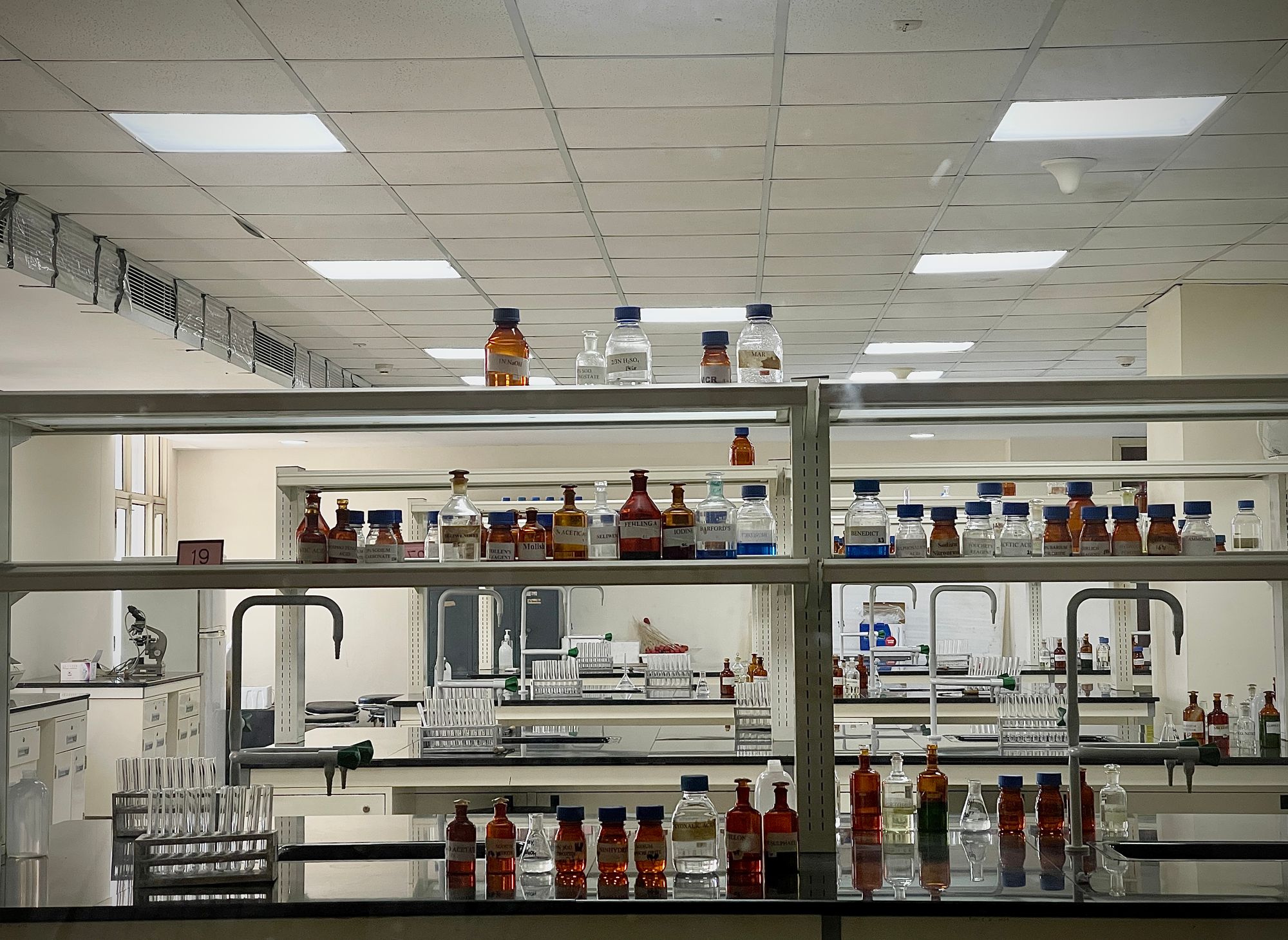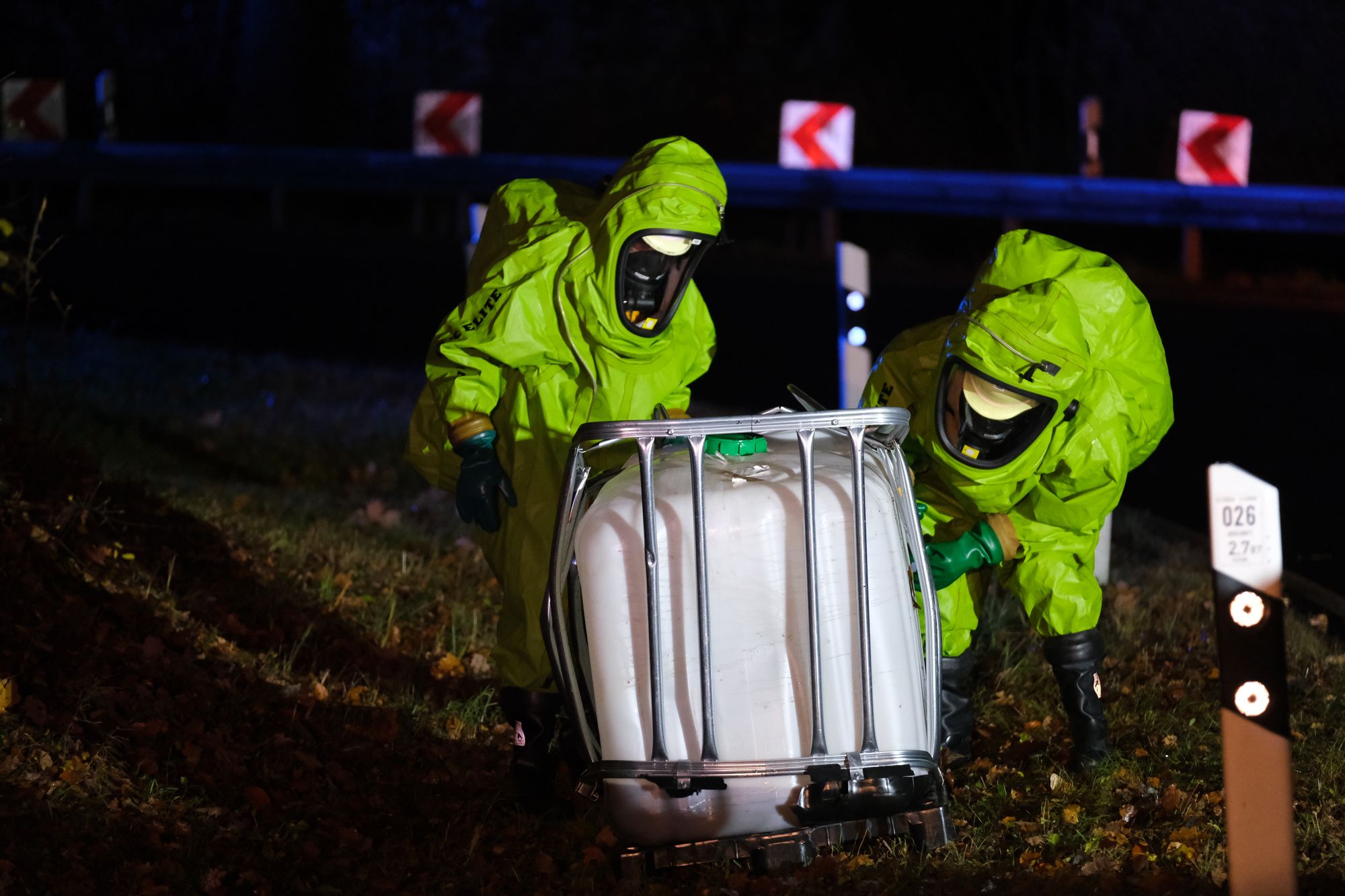
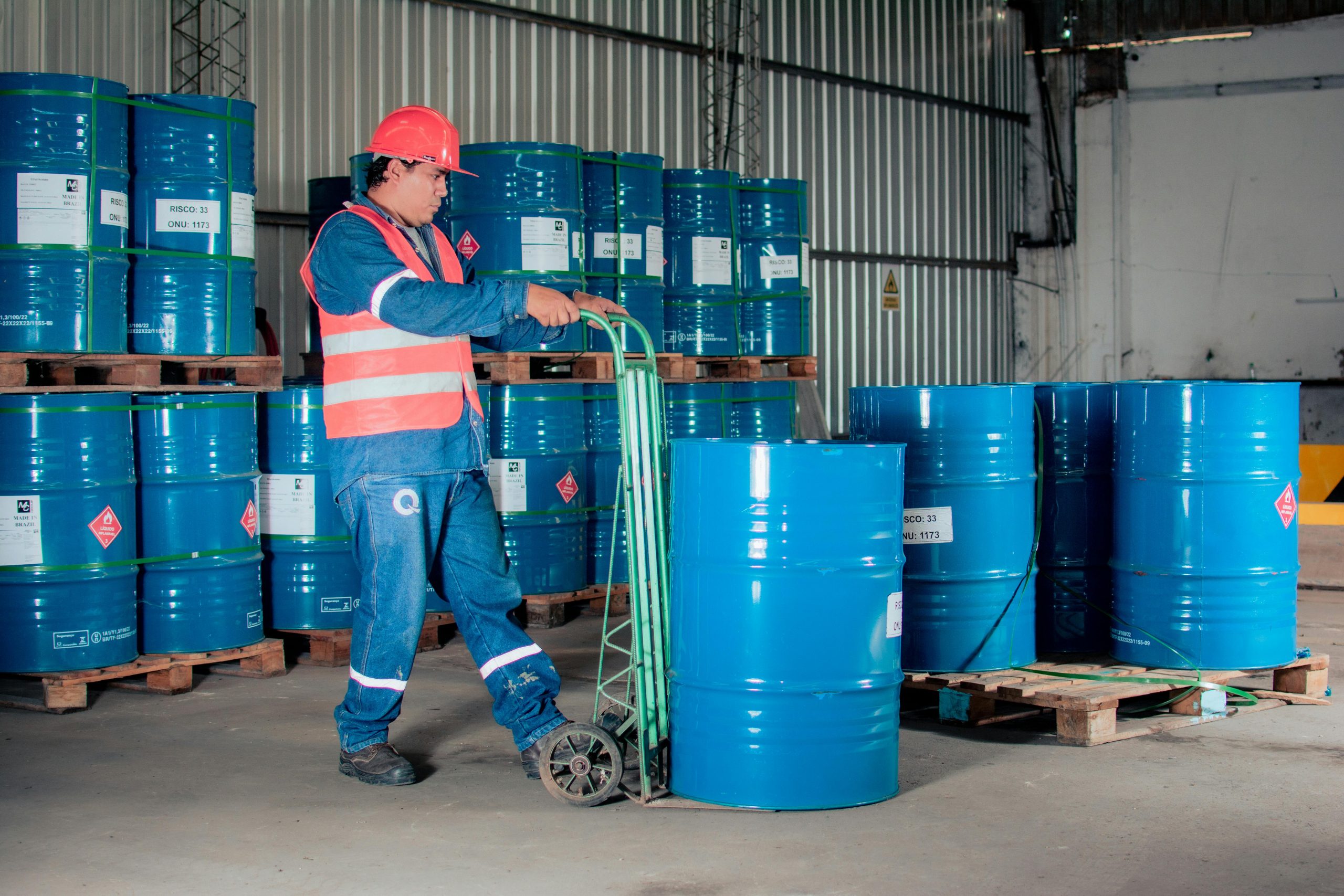
The spray bottle of solvent sitting on the workbench. The squeeze container filled from a 55-gallon drum. The small transfer jar by the utility sink. These are secondary containers, and they represent one of the most common Hazard Communication compliance failures EHS managers encounter during walk-throughs. Not because workers are negligent, but because facilities rarely have a reliable system for getting accurate GHS labels onto containers that are decanted, transferred, or repackaged during normal operations.
Secondary container labeling is not complicated in principle. In practice, it is one of those areas where the gap between written policy and the shop floor tends to widen steadily, especially in facilities that handle a large number of chemicals across multiple departments.
What Counts as a Secondary Container?
Under OSHA’s Hazard Communication Standard (29 CFR 1910.1200), a secondary container is any container into which a hazardous chemical has been transferred from its original manufacturer packaging. This includes squeeze bottles or spray containers filled from bulk supply, portable containers used during maintenance or cleaning tasks, drum dispensing containers at point of use on the production floor, and sample vials or transfer containers in laboratory settings.
The word “secondary” does not imply the chemical is less hazardous. It simply means the chemical is no longer in the container the manufacturer labeled. That distinction carries real compliance weight: once a chemical leaves its original packaging, the employer becomes responsible for ensuring the new container is correctly labeled with all required GHS hazard information.
What OSHA’s HazCom Standard Requires on Secondary Container Labels
For secondary containers used within a facility, OSHA 29 CFR 1910.1200(f)(6) gives employers some flexibility in how hazard information is conveyed, but the substance of that information cannot be reduced. All six required GHS label elements must either appear on the container label or be made accessible through an equivalent system that workers are trained to use.
Required GHS Label Elements for Secondary Containers
| Label Element | What It Must Convey |
|---|---|
| Product Identifier | Chemical name, code, or batch number that matches the SDS on file |
| Signal Word | “Danger” or “Warning” depending on severity of hazard category |
| Hazard Statement(s) | Standardized phrases describing the nature of the hazard (e.g., “Flammable liquid and vapour”) |
| Pictogram(s) | GHS hazard pictograms appropriate to the chemical (flame, skull, corrosion, exclamation mark, etc.) |
| Precautionary Statement(s) | Instructions for safe handling, storage, first aid, and disposal |
| Supplier Information | Manufacturer or importer name, address, and emergency phone number (employer contact is acceptable for in-plant secondary containers) |
Source: OSHA, 29 CFR 1910.1200(f)(1), Hazard Communication Standard
OSHA permits alternative labeling systems for in-plant containers, including color-coded systems such as NFPA or HMIS and written reference formats, as long as all hazard information is conveyed and workers receive documented training on how to use the system. The key requirement is that a worker handling a secondary container must be able to access equivalent hazard information immediately, not only when they go searching for it.
The Portable Container Exception: Where It Actually Applies
One of the most frequently misapplied provisions in HazCom is the portable container exemption under 29 CFR 1910.1200(f)(9). This provision exempts a container from labeling requirements, but only when all three of the following conditions are met simultaneously: the chemical is for the immediate use of the employee who performed the transfer; the container is used only during the shift in which it was filled; and the container remains in the continuous custody of the person who filled it.
If any one of those conditions fails, the exemption does not apply and the container must be labeled. In practice, most portable containers in a facility do not actually meet all three criteria. A spray bottle set down on a shelf and used the next morning, or picked up by a different worker, falls outside the exemption immediately. Many facilities apply this provision far more broadly than OSHA intends, treating any small portable container as exempt by default.
Secondary Labeling in Multilingual Workforces
Facilities with workers who speak different primary languages face an additional layer of complexity. OSHA requires that HazCom training be conducted in a language workers understand, and that hazard information be accessible to the employees who will actually encounter it. A label printed only in English does not satisfy this standard if the workers most likely to handle that container cannot read it.
For facilities with Spanish-speaking workers or other language communities, GHS secondary container labels need to include translated hazard information, or be paired with accessible translated SDSs and training that workers can reference at the point of use. Some chemical management platforms now support multilingual GHS label generation directly from structured chemical data, which removes the need to manually translate labels or maintain separate template sets for each language group.
Why Secondary Container Programs Break Down
The root cause of most mislabeled or unlabeled secondary containers is not worker carelessness. It is a system that makes correct labeling harder than skipping it. When printing a compliant GHS label requires a worker to locate a binder, read an SDS by hand, identify the relevant hazard statements and pictograms, and then design a label from scratch, consistent compliance is unlikely, particularly for workers under time pressure on the production floor.
Effective secondary container labeling programs address this upstream. They ensure the chemical data needed for an accurate label is structured, accessible, and tied directly to a label-printing tool at or near the point of transfer. When label generation is built into the chemical management workflow rather than treated as a separate manual task, the process takes seconds instead of minutes, and compliance becomes the path of least resistance.
The Compliance Cost of Getting It Wrong
Hazard Communication has ranked among OSHA’s most frequently cited standards for years. In fiscal year 2024, it was the second most cited standard across all industries, trailing only fall protection.
OSHA Top 5 Most Cited Standards, Fiscal Year 2024
| Rank | Standard | 29 CFR Citation |
|---|---|---|
| #1 | Fall Protection, General Requirements | 1926.501 |
| #2 | Hazard Communication | 1910.1200 |
| #3 | Control of Hazardous Energy (Lockout/Tagout) | 1910.147 |
| #4 | Ladders, Construction | 1926.1053 |
| #5 | Respiratory Protection | 1910.134 |
Source: OSHA, Top 10 Most Frequently Cited Standards, FY2024
OSHA serious violation penalties can reach $16,550 per citation under current penalty structures, with willful or repeat violations subject to penalties up to $165,514 per violation. But the compliance exposure is secondary to the actual risk: workers who handle unlabeled or incorrectly labeled secondary containers face real, preventable chemical hazards. The label is not paperwork. It is the information a worker needs to protect themselves.
Building a Practical Secondary Container Labeling Workflow
A functional secondary container labeling program is built on three foundations: accurate chemical inventory data, accessible label printing capability, and consistent field verification.
The inventory layer matters first. If the underlying SDS data is incomplete or out of date, every label generated from it compounds the problem. EHS managers should ensure their SDS library reflects the actual chemicals on site, with each chemical record containing structured hazard data rather than just a stored PDF.
The printing layer matters second. Workers should be able to generate a correct GHS secondary container label without reading a PDF or manually entering hazard data. When label generation is tied directly to a structured chemical record, the label contents are accurate by default and the process takes seconds rather than minutes.
The verification layer matters third. Periodic walk-throughs specifically focused on secondary container labeling, separate from broader EHS audits, are the only reliable way to catch containers that have slipped through. Policy compliance and field compliance are not the same thing, and the gap between them typically shows up most clearly in secondary container programs.
How Q-Chem Can Help
Accurate secondary container labeling starts with accurate chemical data. Q-Chem, the chemical management module within Quantum EHS Management System, extracts hazard data from safety data sheets into a structured database, including GHS pictograms, signal words, hazard statements, and precautionary statements. When a worker needs to print a secondary container label, the hazard information is already structured and ready. Labels can be generated directly from the chemical record, including multilingual formats, with no manual data entry required.
Q-Chem’s SDS import tool uses optical character recognition to extract chemical component and hazard data, with recent improvements in its ability to detect components even when manufacturers place them in non-standard locations within a document. That accuracy matters for regulatory compliance, and it matters for the reliability of every secondary container label generated from those records.