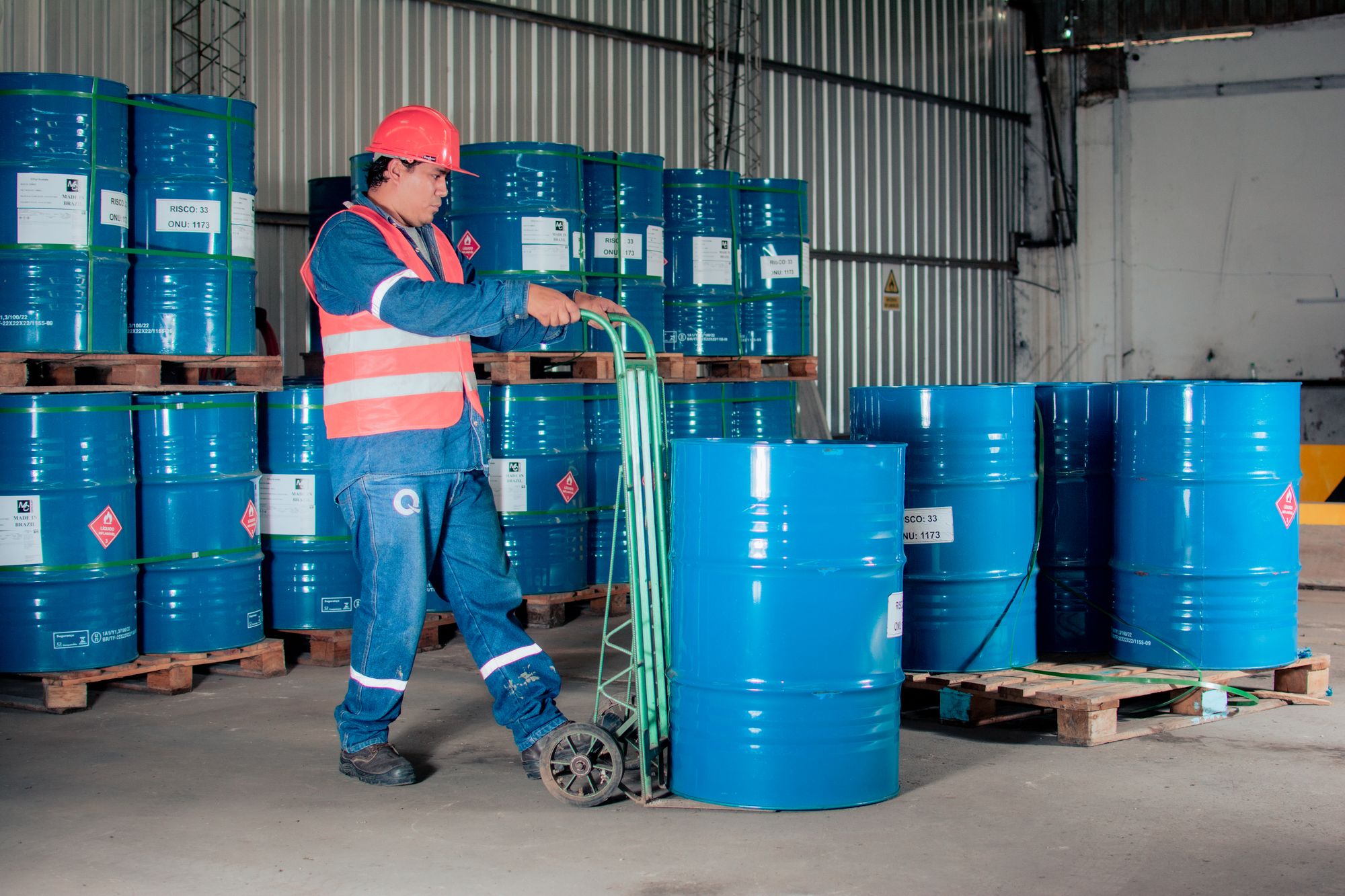

Second shift at a distribution center. A forklift operator comes around the end cap of aisle 14 and meets a temp worker stepping out from behind a stack of pallets. The operator brakes hard, the load shifts, and for one long second both of them stand still. Then they nod at each other and get back to work. No report is filed. Three weeks later, a different operator and a different worker meet at the same corner, and this time the result is a fractured ankle and an OSHA recordable. During the investigation, four separate employees say the same thing: everyone knew about that corner.
Every EHS manager has lived some version of this story. The frustrating part is not that the near miss happened. It is that the information existed, in the heads of the people doing the work, and the organization never received it. If your incident numbers have been drifting down while nothing about the work itself has changed, it is worth asking which one you are actually measuring: safety, or silence.
The Reporting Gap Is Wider Than Most Leaders Think
Underreporting is not an edge case. Research compiled by the Bureau of Labor Statistics has estimated that national injury counts may miss between 33 and 69 percent of all workplace injuries, and peer-reviewed comparisons of survey data against workers’ compensation claims have found gaps of similar size across industries.
Up to 69%
of workplace injuries may never appear in official counts
Source: U.S. Bureau of Labor Statistics, Hidden Tragedy: Underreporting of Workplace Injuries and Illnesses
Near misses fare worse, because nothing forces them into the record. An injury eventually produces a medical bill, a comp claim, or a missed shift. A near miss produces nothing unless someone chooses to speak. In a 2026 industry benchmarking survey, EHS leaders estimated that 90 percent of incidents, hazards, and near misses at their organizations go unreported, up from 79 percent a year earlier. The trend is moving the wrong way at exactly the moment production pressure and workforce strain are moving up.
Silence Is a System Output
When reporting collapses, the reflex is to blame disengagement: workers must not care enough to fill out the form. Decades of safety research point the other way. Workers stop reporting because the system around them has taught them, accurately, that reporting does not pay. That lesson usually has three parts.
The first is friction. In many facilities, reporting a near miss means leaving the floor, finding a shared terminal, remembering a password for a system used once a quarter, and working through a form built for investigators rather than for the person who just watched a pallet fall. In recent benchmarking, nearly half of EHS leaders acknowledged that workers avoid reporting because the process itself is time consuming or the system is hard to use. Friction never feels like a safety decision while the form is being designed. On the floor, it is the safety decision.
The second is blame. If the first question a report triggers is what the worker did wrong, the second report never arrives. OSHA’s recordkeeping rule is explicit on this point: under 29 CFR 1904.35, reporting procedures must be reasonable, must not deter or discourage employees from reporting, and retaliation against employees who report is prohibited. A reporting process that functions as a confession box fails that test in spirit long before it fails it in law.
The third is futility. A worker who reports a blocked egress route and then walks past the same blocked route for six weeks has learned everything they need to know about where reports go. Silence spreads through a crew quietly, one unanswered report at a time.
What a Near Miss Is Actually Worth
A near miss is the cheapest safety data an organization will ever receive. It carries the same causal information as an injury: the same blind corner, the same missing guard, the same time pressure, minus the harm and minus the cost. The National Safety Council and OSHA alliance materials describe near miss reporting as one of the most effective leading indicators available, precisely because it surfaces hazards while the consequence column is still empty.
Read enough near miss reports and the pattern is rarely one careless person. It is a corner with no mirror, a staging area that pushes pedestrians into forklift lanes, a schedule that quietly rewards skipping a step. Those are design problems, and design problems can be engineered out in a way that human nature cannot.
Rebuilding the Reporting Habit
Make reporting easier than staying silent
If a report takes ten minutes and a password, you will get reports only from your most motivated workers on their least busy days. The benchmark to aim for is under a minute, from the spot where it happened. Some platforms now let a worker scan a QR code posted in the work area and submit a report after entering nothing more than an employee ID. No app download, no password, and the submission is still attributed to the correct person automatically. When the cost of speaking up drops to nearly the cost of staying quiet, volume follows.
Answer every report where the crew can see it
Reporting volume tracks response visibility. The fix does not have to be immediate, but the acknowledgment does: who received the report, what happens next, and when. A corrected hazard that nobody connects back to the report that surfaced it does almost nothing for reporting culture. Close the loop publicly and the next report comes easier.
Ask what put them there
When a near miss comes in, the first question should be about the situation, not the person. What about the task, the layout, the schedule, or the equipment made that moment likely? Workers can hear the difference between an investigation and an interrogation, and they calibrate their future honesty accordingly.
Two Reporting Systems, Two Outcomes
| A system workers avoid | A system workers use |
|---|---|
| Log in at a shared terminal with a rarely used password | Scan a QR code at the work area, enter an employee ID |
| Report disappears into a review queue | Acknowledgment and follow-up visible to the crew |
| First question: what did you do wrong? | First question: what about the task put you there? |
| Reviewed monthly, fixed eventually | Routed immediately to the team that owns the fix |
How Q-Hazard Can Help
Q-Hazard, Quantum’s hazard reporting software, is built around removing exactly this friction. Workers report unsafe conditions and near misses from their phone by scanning a QR code posted at the work area and entering only their employee ID; there is no app to download and no password to remember, and every submission is attributed to the right employee automatically. Each report is then routed to the team responsible for corrective action, so the follow-up that keeps a reporting culture alive actually happens.
When an event does cause harm, Quantum’s incident management software supports documentation, root cause analysis, and OSHA recordkeeping as its own workflow. Both reflect the same principle: the people closest to the work hold the information, and the system’s job is to make handing it over easy.