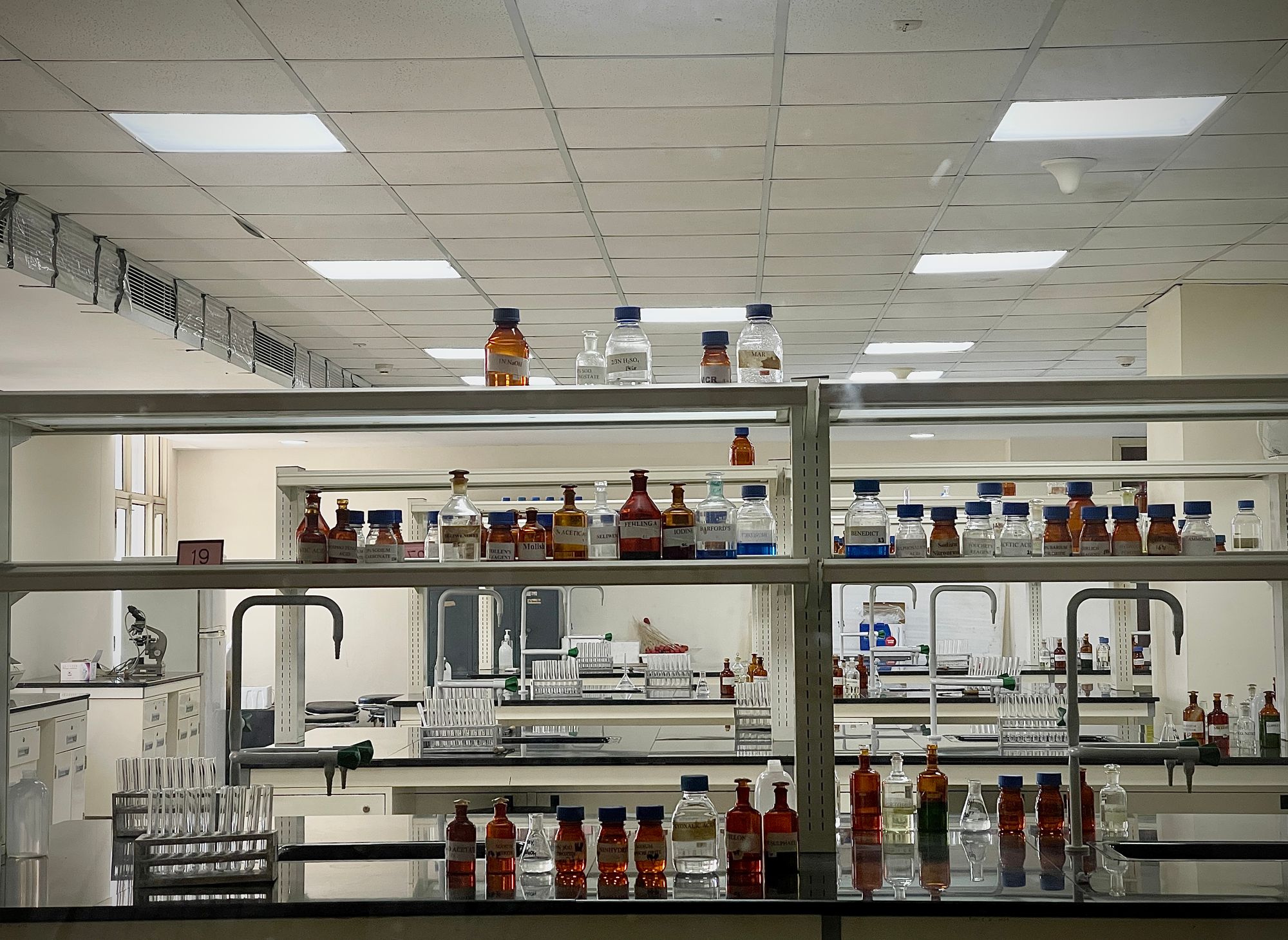
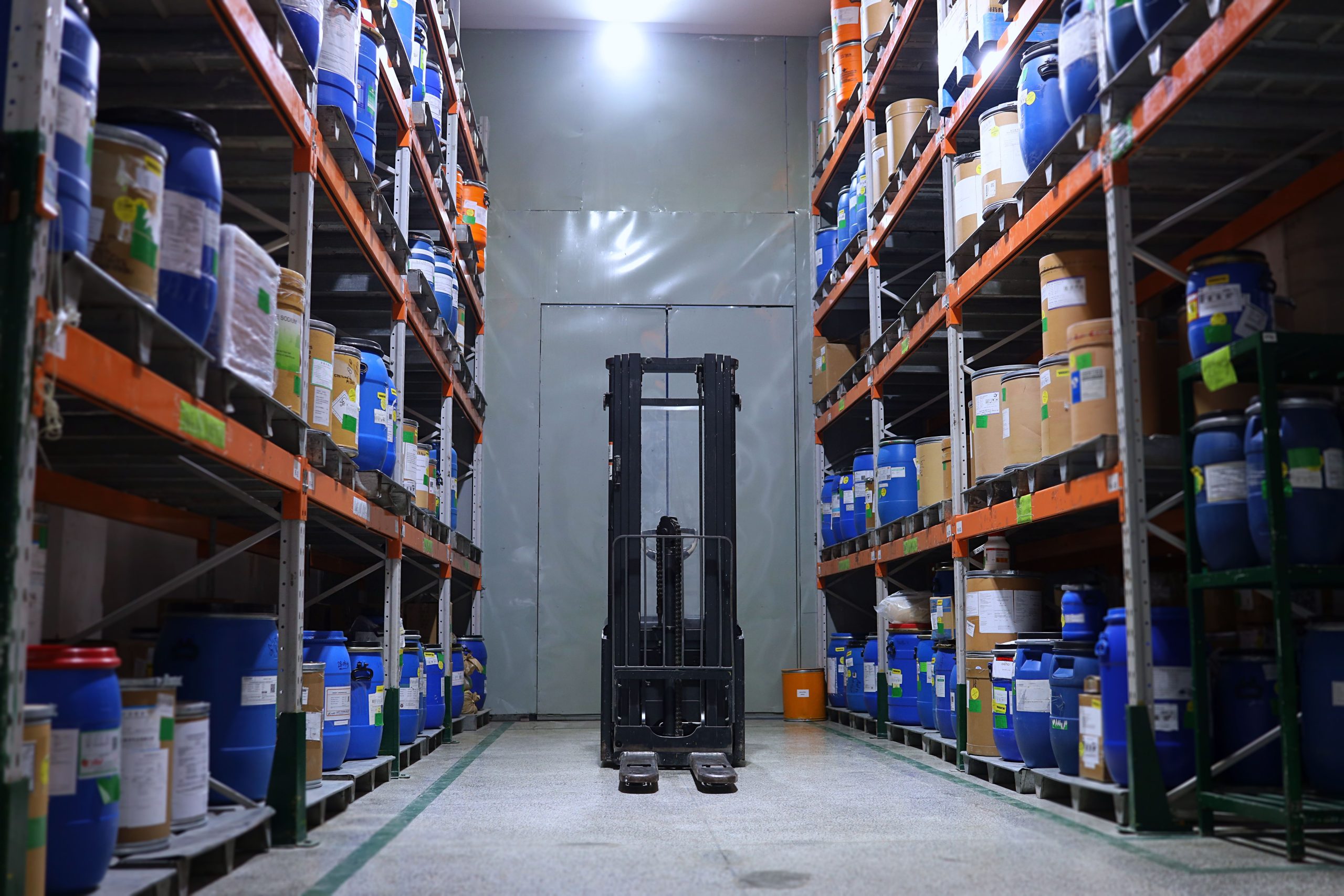
It is Monday morning and you walk into the chemical storage room a new hire reorganized over the weekend. It looks immaculate. Bottles are lined up in tidy alphabetical order, labels facing out, nothing left on the floor. Then your eye lands on the “A” shelf: a bottle of acetic acid sitting inches from a container of ammonium nitrate. One shelf down, a jug of bleach shares space with an ammonia-based cleaner. The room has never looked cleaner, and it is also a chemical incident waiting for a cracked bottle or a warm afternoon. The person who arranged it did exactly what seemed logical. Nothing in the room told them otherwise.
This is the quiet failure mode of chemical storage. Not spills, not missing labels, but incompatible chemicals stored side by side because the storage system never defined how things should be separated. Getting chemical storage compatibility right is less about catching careless workers and more about designing a room where the safe choice is the obvious one.
Why “Organized” and “Safe” Are Not the Same Thing
Alphabetical storage feels intuitive, which is exactly why it spreads. When no one defines a segregation scheme, people fall back on the ordering they already know. The result is incompatible chemicals shelved together, not through negligence, but through the absence of any system that says otherwise. The new hire who set bleach next to ammonia was not careless. The storeroom handed them no compatibility map, no color-coded zones, and no inventory that flagged the conflict before it happened. When you look at it that way, the layout failed the worker, not the other way around.
The consequences are not theoretical. Mix an acid with a base and you get a violent, heat-generating reaction. Store an oxidizer next to flammables or organics and a small ignition source becomes a large fire. Put acids near cyanide or sulfide salts and a leak can release hydrogen cyanide or hydrogen sulfide gas into a closed room. None of these reactions care how neatly the bottles were arranged.
The Chemical Families That Must Stay Apart
Segregation works by hazard class, not by name and certainly not by alphabet. Section 7 of every Safety Data Sheet covers handling and storage, and Section 10 covers stability and reactivity. Together they tell you what each chemical must be kept away from. The principle is simple: store like with like, and separate incompatible groups by distance or a physical barrier.
Common Incompatible Pairs to Keep Separated
| Never Store Together | What Can Happen |
|---|---|
| Acids and bases | Violent exothermic reaction, splattering, container rupture |
| Oxidizers and flammables or organics | Fire or accelerated combustion from a minor ignition source |
| Acids and cyanide or sulfide salts | Release of toxic hydrogen cyanide or hydrogen sulfide gas |
| Water-reactives and aqueous solutions | Heat generation, flammable gas, pressurized rupture |
| Oxidizing acids and organic acids | Ignition and violent reaction on contact |
Notice that none of these pairs are exotic. Acetic acid, bleach, ammonia, and ammonium nitrate are ordinary items found in maintenance closets and production areas everywhere. The danger is rarely the presence of a rare chemical. It is the proximity of two common ones.
What OSHA Actually Requires
There is a common misconception that OSHA publishes a single master separation-distance chart. It does not. Instead, 29 CFR 1910.106 governs the storage of flammable liquids, and the Hazard Communication standard (1910.1200) requires that hazards be identified and communicated through Safety Data Sheets and labels. OSHA expects employers to use each product’s SDS to determine its separation needs. Consensus standards such as NFPA 30 and 400 then fill in specific distances, ranging from roughly 3 feet for small quantities up to 20 feet or more for bulk storage.
The practical takeaway is that your SDS data is the legal backbone of your segregation plan. If a sheet is missing, outdated, or misread, the segregation decision built on top of it is wrong before anyone touches a bottle.
60 gallons
Maximum Class I or Class II flammable liquid permitted in a single approved storage cabinet, with no more than three cabinets per fire area
Source: OSHA 29 CFR 1910.106
Building a Segregation Program That Survives Turnover
The weekend reorganization is a useful warning because it shows how fragile an undocumented system is. One motivated person following the wrong mental model can undo years of careful placement in an afternoon. A segregation program that holds up does not depend on any single person remembering the rules.
Start by reconciling your inventory against what is physically on the shelves, because you cannot segregate chemicals you do not know you have. Classify every container by its GHS hazard class using SDS data rather than by name or supplier. Define storage zones, cabinets, or rooms for each incompatible group, and separate them with distance or a physical barrier as the SDS and applicable codes require. Then make the scheme visible: post a compatibility chart, color-code the zones, and label shelves by hazard class so the right placement is obvious to someone who has never read the policy. Finally, re-check compatibility every time a new product is received, since one unscreened delivery is all it takes to recreate the acetic-acid-next-to-ammonium-nitrate problem.
The goal is a storeroom where doing the safe thing requires no special knowledge. When the zones, labels, and inventory all point the same direction, the new hire who reorganizes over the weekend ends up reinforcing the system instead of defeating it.
How Quantum Chemical Management Can Help
Sound segregation depends on knowing the hazard class of every chemical you store, and that is exactly what a structured chemical inventory provides. Quantum Chemical Management ties each container in your inventory to its Safety Data Sheet and captures the GHS hazard classification, so storage and segregation decisions rest on classification data rather than on whatever order the bottles happened to land in. Because the hazard class travels with every record, an EHS manager can see at a glance which incompatible groups are present at a given location and plan zones accordingly.
That plan is only as reliable as the SDS data behind it. Some platforms now read SDS files more intelligently during import; Quantum’s chemical management recently improved its ability to detect chemical components that manufacturers place in non-standard sections of a sheet, which keeps hazard and component data accurate even during bulk imports and reduces the manual correction that quietly introduces errors. Combined with centralized SDS management, it gives your segregation program a dependable foundation that does not erode with staff turnover or a well-meaning weekend cleanup.