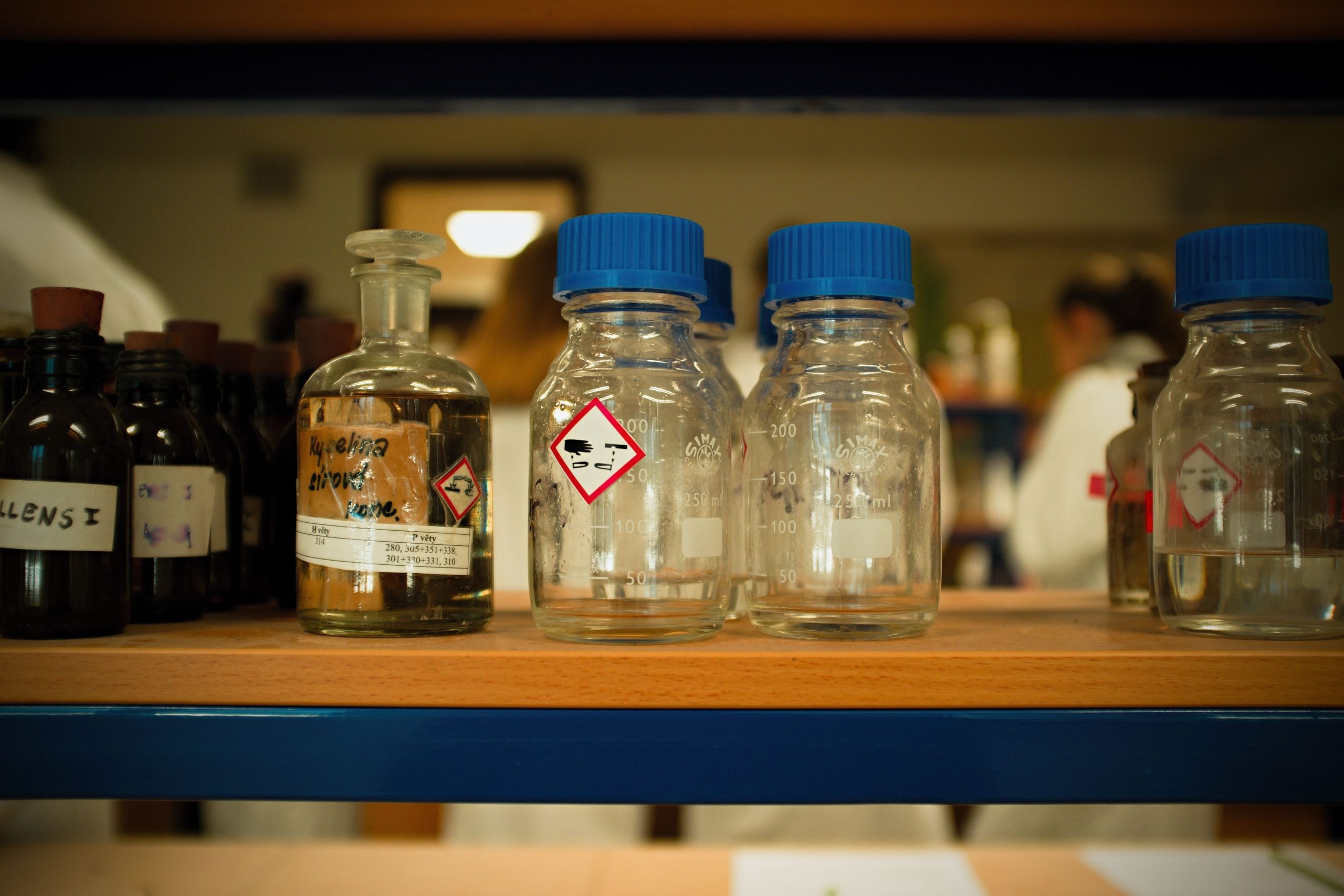
An EHS manager doing a routine audit walks into a corporate quality control lab and asks the lead chemist for the lab’s Chemical Hygiene Plan. He points to a binder on the shelf: the facility’s general Hazard Communication program, complete with SDS binder tabs and a HazCom policy signed two years ago. There’s no Chemical Hygiene Officer named anywhere in it. No annual review date. No section on which procedures require prior approval before a chemist can run them. The binder is real, current on paper, and still not compliant, because a laboratory isn’t governed by the general HazCom standard alone. It falls under a separate OSHA rule that most facilities never open until an inspector asks for it by name.
That gap is easy to miss because the two programs look similar from a distance. Both involve safety data sheets, labels, and training. But OSHA wrote 29 CFR 1910.1450, the Occupational Exposure to Hazardous Chemicals in Laboratories standard, specifically because lab work doesn’t behave like warehouse storage or production-line chemical use. Small quantities, frequent substitution, and unpredictable reactions create a different risk profile, and the standard reflects that with requirements a general HazCom program was never built to satisfy.
A Different Standard for a Different Kind of Risk
The Laboratory Standard exists because a fixed HazCom program, built around static inventories and consistent processes, doesn’t map cleanly onto a room where the chemical mix changes weekly and small-scale reactions happen by design. Regulatory bodies have noted that laboratory work carries a meaningfully higher injury and exposure risk profile than comparable industrial settings, which is part of why OSHA didn’t fold laboratory chemical safety into the general Hazard Communication standard and call it done.
The practical consequence for EHS managers is that a facility with both production areas and a lab, quality control room, or R&D bench needs two chemical safety programs that talk to each other, not one program stretched to cover both. Treating the lab as a smaller version of the warehouse is the most common way this standard gets missed, and it’s rarely caught until an OSHA inspector or an incident forces the question.
What the Standard Actually Requires That HazCom Doesn’t
A general HazCom program covers labeling, safety data sheets, and basic employee training. The Laboratory Standard requires all of that plus a written Chemical Hygiene Plan with elements that have no HazCom equivalent.
General HazCom Program vs. Laboratory Chemical Hygiene Plan
| Required by General HazCom | Also Required by the Lab Standard (1910.1450) |
|---|---|
| Labels and safety data sheets | A designated Chemical Hygiene Officer with defined authority |
| General chemical safety training | Criteria for when an operation requires prior approval before it starts |
| Written HazCom policy | Provisions for medical consultation and exams tied to specific exposures |
| Updated as needed | Mandatory annual review of the entire Chemical Hygiene Plan |
Source: OSHA, 29 CFR 1910.1450
None of that second column shows up in a standard HazCom binder, because it isn’t supposed to. It’s the reason a facility can be fully HazCom-compliant on paper and still fail a lab inspection.
The Chemical Hygiene Officer Is a Role, Not a Signature Line
One of the most consistently missed requirements is the Chemical Hygiene Officer designation. OSHA requires the employer to designate personnel responsible for implementing the plan, including a Chemical Hygiene Officer with the knowledge and authority to actually run the program, not just sign off on it once a year. In practice, that means someone who can pause a procedure that doesn’t have prior approval, knows where the exposure monitoring records live, and owns the annual review instead of inheriting it as an afterthought.
When this role is never formally assigned, the plan tends to default to whoever wrote the HazCom program originally, and the lab-specific pieces, prior approval criteria, medical consultation triggers, engineering control verification, quietly stop getting maintained. The plan still exists. It just stops functioning.
Building or Updating a Compliant Plan
Bringing a Chemical Hygiene Plan up to standard doesn’t require starting from a blank page, but it does require deliberately closing the gaps a general HazCom program leaves open.
Steps to Close the Gap Between HazCom and a Compliant CHP
Document who holds the role, what authority they have, and how that authority is communicated to lab staff.
Define which procedures, reagent combinations, or scales of reaction require sign-off before work begins.
Specify the exposure thresholds and symptoms that trigger access to medical evaluation, and confirm employees know the process.
Put the review on a calendar tied to the Chemical Hygiene Officer, not to memory or the next audit date.
Confirm fume hoods and other lab-specific controls are inspected on their own schedule, not folded into general facility walkthroughs.
Each of these steps closes a specific requirement in the standard rather than adding general safety overhead, which is why they’re worth doing even at facilities with a strong existing HazCom program.
Where SDS Accuracy Quietly Undermines the Plan
A Chemical Hygiene Plan is only as reliable as the chemical data behind it, and that’s where labs run into a second, less visible problem. Lab SDS libraries tend to have more frequent turnover than production inventories, since new reagents and formulations get added constantly. Manufacturers don’t format safety data sheets consistently, and component data sometimes lands in non-standard sections of the document, which makes it easy for critical hazard information to get missed during a manual review or a bulk import.
Some chemical management platforms now use optical recognition during SDS import specifically to catch components placed in unusual locations on the sheet, which reduces the manual correction burden during bulk imports and improves the accuracy of downstream reporting. For a lab adding reagents on a rolling basis, that kind of import accuracy is what keeps the Chemical Hygiene Plan’s hazard information current instead of quietly drifting out of sync with what’s actually on the shelf.
Organizations building or refreshing exposure control programs can find additional guidance from NIOSH on occupational exposure limits and monitoring practices that complement the medical consultation provisions required under the Lab Standard.
How Chemical Management Can Help
Quantum EHS Management System’s Chemical Management module gives EHS managers a single, current view of every chemical in a facility, including the reagents that move in and out of lab environments faster than a production inventory ever would. Because SDS Management now applies optical recognition during import to catch component data manufacturers place in non-standard locations on the sheet, chemists and EHS managers spend less time manually correcting bulk imports and more time confirming that the Chemical Hygiene Plan reflects what’s actually stored in the lab.