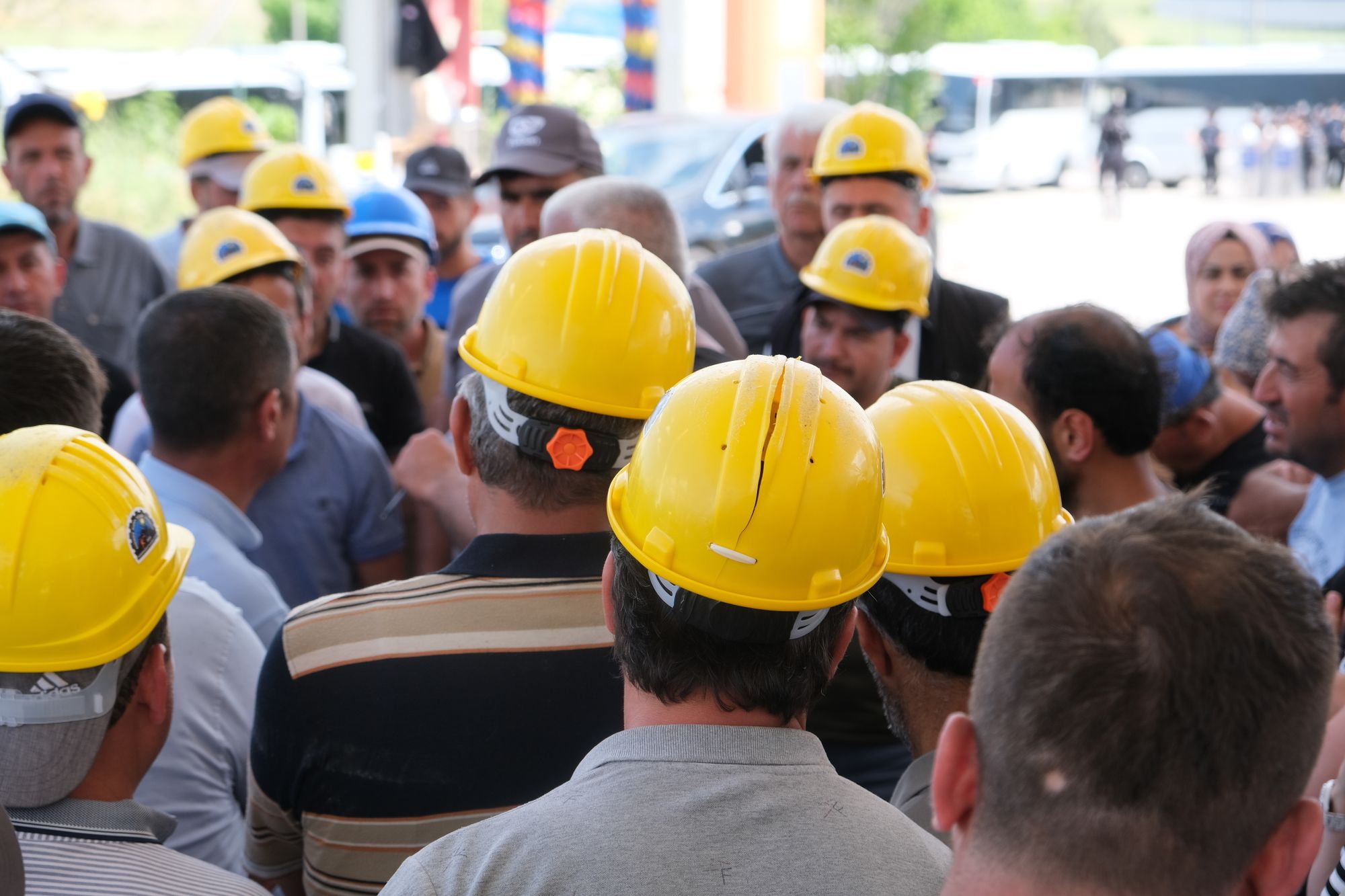

People are assets to system performance, not problems to be eliminated.
Two powerful frameworks are quietly reshaping how high-consequence industries think about safety, reliability, and the human contribution to complex systems. Human and Organizational Performance (HOP) and Human-in-the-Loop (HITL) design principles share a foundational premise: people bring irreplaceable value to work, and systems built around that premise outperform those that don't. Bringing these two disciplines together isn't just philosophically appealing, it's operationally essential.
At Quantum Compliance, we believe the future of safety management lies at exactly this intersection. This article explores why.
What Is Human and Organizational Performance (HOP)?
HOP is a learning-based approach to safety that emerged from the work of researchers and practitioners in nuclear power, aviation, and process industries. Rather than treating accidents as the product of individual recklessness or negligence, HOP holds that error is normal and inevitable, a predictable consequence of how human cognitive systems interact with complex, often ambiguous environments.
The five core principles of HOP are:
- Error is normal; humans will always make mistakes.
- Blame fixes nothing; punishing people doesn't prevent recurrence.
- Context drives behavior; workers respond to the system they're in.
- Learning is vital; organizations must learn from events, not just react.
- How leaders respond to failure matters; leadership shapes culture.
HOP reframes the worker from 'liability' to 'learner', and, critically, from 'source of failure' to 'source of intelligence about how systems actually work.'
What Are Human-in-the-Loop (HITL) Systems?
Human-in-the-Loop (HITL) is a design philosophy for automated and AI-assisted systems. Rather than removing people from the operational equation, HITL architectures intentionally place humans at critical decision nodes where their judgment, pattern recognition, and ethical reasoning add value that algorithms cannot replicate.
HITL systems appear across domains:
- Aviation: pilots retain authority over autopilot systems during critical phases of flight.
- Healthcare: clinicians review AI-flagged anomalies before acting on diagnostic outputs.
- Nuclear and process industries: operators authorize automated responses to abnormal conditions.
- Environmental compliance: human reviewers validate AI-generated regulatory assessments.
The underlying logic is straightforward: automation handles high-volume, high-speed, or high-repetition tasks with efficiency; humans handle complexity, novelty, ambiguity, and moral weight. Neither alone is sufficient in high-stakes environments.
"People are assets to system performance, not problems to be eliminated."
Where HOP and HITL Converge
It is not a coincidence that both HOP and HITL push back against the same assumption: that the ideal system is one from which human involvement has been minimized or eliminated. That assumption has led organizations astray for decades.
The Shared Core: Humans as System Assets
HOP teaches that workers are not 'problems' to be engineered around; they are intelligent agents who adapt to system conditions, bridge gaps in procedures, and fill in the white space that procedures inevitably leave. HITL extends this logic into the design of technology systems: the human is not a fallback when automation fails; the human is a designed, valued element of the system architecture.
Together, these frameworks offer a vision of operational excellence built on human capability rather than human control.
Contextual Intelligence
Both HOP and HITL place enormous weight on context. HOP practitioners conduct 'Learning Teams' and event investigations that seek to understand the conditions workers faced, the local rationality that made an action seem like the right choice at the time. HITL system designers build interfaces and workflows that give human operators the situational context they need to make good decisions: the right data, at the right time, in the right format.
Without context, neither human performance nor human-in-the-loop judgment can be trusted. With it, both become remarkably reliable.
Feedback as a Learning Engine
HOP emphasizes that organizations must build feedback loops from the front line to leadership and back. Near misses, deviations, and informal workarounds are goldmines of information about how the system actually functions under real conditions. HITL systems generate similar feedback: each time a human overrides an automated recommendation, modifies an AI output, or escalates a concern, that data reveals something important about the limits of the automated layer and the value of the human layer.
Organizations that capture and act on this feedback become progressively more resilient. Those that ignore it accumulate latent vulnerabilities, exactly the dynamic James Reason warned us about.
James Reason's Vulnerable System Syndrome: A Warning We Must Heed
James Reason, the British psychologist whose work on human error and organizational accidents has shaped the field for four decades, described what he called the Vulnerable System Syndrome (VSS), a cluster of organizational pathologies that, together, create the conditions for catastrophic failure.
The three pathologies of VSS are:
- Blame culture: the reflexive attribution of accidents to individual worker failure, which suppresses reporting, stifles learning, and leaves systemic causes unaddressed.
- Denial of systemic factors: leadership's tendency to attribute failures to isolated human error rather than organizational design, resource constraints, or management decisions.
- Single-minded focus on production targets: the prioritization of throughput and efficiency at the expense of the proactive investment in defenses that prevent low-probability, high-consequence events.
Reason observed that organizations exhibiting VSS don't fail because of one dramatic catastrophe, but they fail through the slow, quiet accumulation of deferred maintenance, unaddressed near misses, weakened barriers, and a culture that has learned not to talk about problems. By the time a major event occurs, the conditions for it have been building for months or years.
"The Vulnerable System Syndrome is not a sudden collapse. It is an organization that has been quietly failing for a long time without knowing it."
VSS is directly relevant to both HOP and HITL implementation. An organization exhibiting VSS will undermine HOP by blaming workers for systemic failures, destroying the psychological safety that Learning Teams require. It will undermine HITL by treating human oversight as a bottleneck to be bypassed rather than a safeguard to be strengthened.
Conversely, organizations that apply HOP principles and design HITL systems thoughtfully create the opposite of VSS: a culture where errors surface early, learning is continuous, and the system grows more robust over time rather than more brittle.
The antidote to Vulnerable System Syndrome is not more automation or more rules, but it is more organizational intelligence. And organizational intelligence, at its core, comes from people.
Building Resilience: The Organizational Imperative
Deloitte Insights, in their landmark research on resilient organizations, identifies a core set of characteristics shared by organizations that consistently navigate disruption, uncertainty, and complexity without catastrophic failure. These characteristics, namely adaptability, collaboration, trust, purpose, and systemic awareness, map directly onto what HOP and HITL frameworks are designed to cultivate.
Resilient organizations, as Deloitte describes them, don't simply bounce back from adversity, but they learn from it, adapt their systems in response, and emerge with greater capability than before. That is precisely the vision that HOP articulates when it calls for learning-based responses to events rather than blame-based ones. And it is what HITL delivers when human reviewers catch what algorithms miss and feed that information back into system improvement.
Deloitte's full research on organizational resilience is available at Building the resilient organization | Deloitte Insights, and we recommend it as essential reading alongside the HOP literature.
Resilience Is Not Accident-Free; It Is Error-Tolerant
One of the most counterintuitive insights from both HOP and resilience science is that resilient organizations are not ones where nothing goes wrong. They are ones where things going wrong rarely becomes catastrophic. The difference lies in system design, organizational culture, and the presence of capable human judgment at critical junctures.
An organization that has internalized HOP principles and built HITL systems into its workflows is, by design, an organization that can absorb errors, detect them early, and correct before they cascade. That is the architecture of resilience.
Practical Applications for Compliance Professionals
What does the convergence of HOP and HITL mean in practice for organizations managing environmental, health, safety, and regulatory compliance?
1. Design Compliance Systems around Human Capability
Compliance workflows that treat frontline workers as passive rule-followers will consistently underperform those that engage workers as knowledgeable contributors. Use Learning Teams, pre-task risk discussions, and post-event reviews not to assign blame but to understand how work actually happens and how the system can better support it.
2. Use AI and Automation as Force Multipliers, Not Replacements
Automated compliance monitoring, AI-assisted permit review, and algorithmic anomaly detection are powerful tools. But they are most powerful when a skilled human is in the loop, reviewing flagged items, exercising judgment on edge cases, and ensuring that the automated layer is calibrated correctly. HITL is not a constraint on automation; it is what makes automation trustworthy.
3. Build Feedback Channels That Surface Latent Risk
Reason's VSS tells us that the most dangerous risks are the ones that have been normalized, the near misses no one reports, the workarounds that have become standard practice, the barriers that have been quietly degraded. Create systems and cultures that make it safe and rewarding to surface these signals. Close the loop by acting on what you learn.
4. Hold Leadership Accountable for System Conditions
Front-line performance is largely a function of the environment leadership creates. If workers are cutting corners, the HOP question is not 'why did they do that?' but 'what conditions made that seem like the right choice?' Leaders who understand this will invest in better tools, clearer procedures, adequate staffing, and a culture of psychological safety because they know that is how performance improves.
5. Assess and Address Vulnerable System Syndrome Proactively
Use Reason's VSS framework as a diagnostic tool. Ask honestly: Does our organization blame individuals when things go wrong? Do we deny the role of systemic factors? Are production pressures consistently overriding safety investment? If the answer to any of these is yes, the risk is real and the intervention is cultural and structural, not procedural.
Conclusion: The Human Advantage
The history of catastrophic failures in high-consequence industries from Chernobyl to Deepwater Horizon to the Boeing 737 MAX, is, in significant part, a history of systems and cultures that marginalized human judgment at exactly the moments when it was most needed. The lessons from these events are consistent: the human being is not the weak link in the system. The weak link is the organizational and technological design that failed to support, value, and leverage human expertise.
HOP and Human-in-the-Loop design offer a different path. Together, they point toward organizations that treat workers as partners in system performance, build technology that amplifies rather than displaces human judgment, and create cultures that learn rather than blame, and develop the adaptive resilience that enables them to operate safely in complex and changing environments.
Quantum Compliance is committed to helping organizations build compliance and safety management systems that embody these principles, systems that are not merely compliant, but genuinely resilient.
"People are assets to system performance, not problems to be eliminated."
This is not just a philosophical position. It is the evidence-based foundation of high-reliability performance. And it is the standard to which we hold ourselves and our clients.
References & Further Reading
- Reason, J. (1997). Managing the Risks of Organizational Accidents. Ashgate Publishing.
- Reason, J. (2000). Human error: Models and management. BMJ, 320(7237), 768–770.
- Hollnagel, E., Wears, R. L., & Braithwaite, J. (2015). From Safety-I to Safety-II: A White Paper. University of Southern Denmark.
- Conklin, T. (2012). Pre-Accident Investigations: An Introduction to Organizational Safety. CRC Press.
- Building the resilient organization | Deloitte Insights
- Dekker, S. (2014). The Field Guide to Understanding Human Error. 3rd ed. Ashgate Publishing.
- Human and Organizational Performance (HOP) — AIChE Center for Chemical Process Safety resources.