Dale had run the boiler room at a mid-size food processing plant for thirty-one years. When he gave notice, his supervisor asked him to write down everything a replacement would need to know. Dale tried. He filled four pages with valve sequences and pressure ranges, then stopped and said the real knowledge wasn’t in the manual at all. It was the smell right before a seal starts to go, the particular rattle that means a bearing has maybe two weeks left, the fact that the pressure gauge on unit three reads four psi high and always has. None of that was written anywhere. In six months, it would be gone, and the person standing in Dale’s spot would be someone who had never heard that rattle before.
That scene is playing out across manufacturing floors, refineries, hospitals, and warehouses right now, and most EHS programs are not built to catch it.
The Two Curves Crossing at Once
Two workforce trends are converging, and each one raises injury risk on its own. On one side, a large share of the most experienced workers in safety-critical roles are approaching retirement. On the other, the workers replacing them are, statistically, the ones most likely to get hurt.
The Travelers 2026 Injury Impact Report, based on more than 1.2 million workers’ compensation claims filed between 2021 and 2025, found that employees in their first year on the job accounted for roughly 37% of all injuries and 34% of claim costs, despite making up a much smaller share of the workforce. A peer-reviewed analysis of job tenure and injury risk found the same pattern using different data: workers with less than six months on the job face a relative injury risk 41% higher than workers with more than two years of tenure.
Meanwhile, older, more experienced workers are staying in the labor force longer, and when they finally do retire, they take with them the tacit knowledge that no orientation packet ever captured: which shortcuts are actually safe, which alarms are noise and which ones matter, which contractor cuts corners.
1 in 4
U.S. workers is now age 55 or older, a share still climbing
Source: CDC/NIOSH National Center for Productive Aging and Work
Put those two curves next to each other and the risk isn’t really about new workers or veteran workers in isolation. It’s about the gap opening up between them, and how much safety-critical knowledge is stored in the heads of people who are about to walk out the door.
Why This Isn’t Solved by Writing a Better SOP
The instinct when someone announces retirement is to ask them to document what they know. It rarely works, and Dale’s four pages are a good example of why. Standard operating procedures capture the steps of a task. They are much worse at capturing judgment: the pattern recognition that tells an experienced worker something is wrong before any gauge or sensor confirms it. That kind of knowledge was built through years of near misses, small failures, and corrections, and it does not compress well into a checklist.
OSHA’s guidance on hazard identification puts ongoing worker input at the center of a functioning safety management system for exactly this reason: hazard recognition is a skill that develops over time and through exposure, not something a document can substitute for.
The Training Gap This Creates
Most training programs are built around a single assumption: every worker in a role needs the same course, at the same depth, on the same schedule. That assumption breaks down badly during a generational handoff. A new hire replacing a 30-year veteran needs far more than a refresher. A veteran two months from retirement, dragged through the same annual training as everyone else, is having their time wasted on material they mastered decades ago, time that could instead go toward transferring what they actually know.
Building a System That Doesn’t Depend on Any One Person’s Memory
Closing this gap takes a deliberate program, not a farewell lunch and a stack of binders. A few practices consistently show up in organizations that manage this transition well.
Steps to Capture Institutional Safety Knowledge Before It Walks Out the Door
Tenure and expertise aren’t always the same thing. Ask supervisors who gets called when something looks wrong, not just who has been there longest.
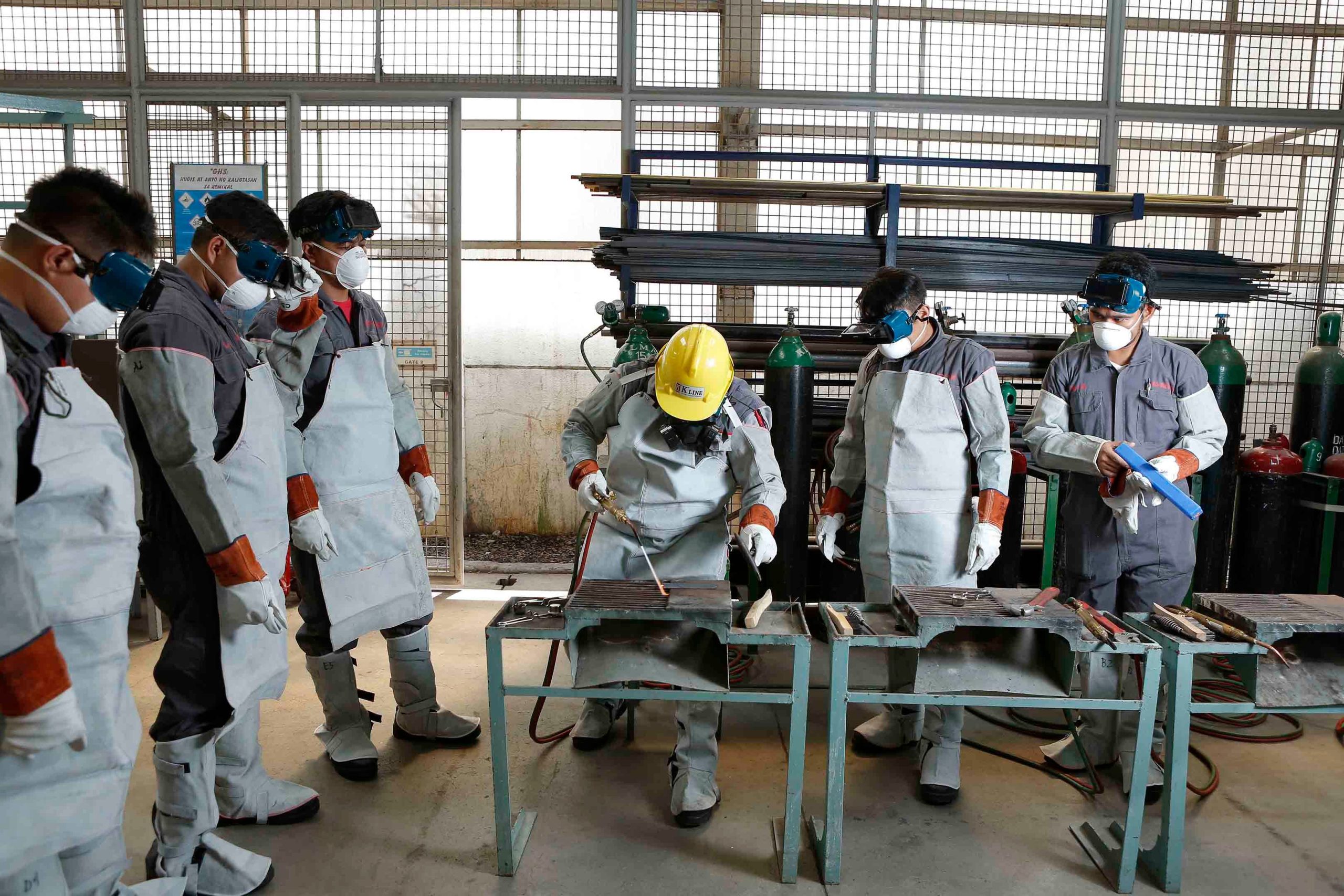
Structured mentorship, where a new hire shadows an expert through real tasks over months, transfers judgment in a way a written procedure cannot.
Find out what each worker actually doesn’t know before assigning training, instead of running everyone through the same full course regardless of experience.
Knowledge transfer takes repeated exposure across different conditions and seasons. A month of overlap barely covers one set of scenarios.
None of this requires treating retirement as a crisis to be managed once and forgotten. Organizations that do this well treat knowledge transfer as a continuous program tied to their training system, not a one-time project triggered by a two-weeks notice.
How Training & Certificate Management Can Help
A training program that gives every worker the same course regardless of what they already know cannot support the kind of targeted knowledge transfer described above. Quantum’s Training and Certificate Management module addresses this with adaptive course delivery: workers take a pre-quiz first, and the system routes them only to the material covering what they haven’t yet demonstrated competency in. For a new hire stepping into a role a retiring veteran built over decades, that means training time goes toward closing their specific, real gaps rather than sitting through content built for the average worker. For a veteran nearing retirement, it means their remaining training hours aren’t spent re-covering material they’ve known for twenty years.
The module’s Smart Login capability, which lets any worker check in to training by scanning a QR code and entering their employee ID with no app download or password, also matters here. Veteran workers who are reluctant to adopt one more piece of software and new hires who need a low-friction way to log every session both get the same simple path in, and every completion is attributed to the right person automatically. Organizations can learn more about how Quantum’s safety training tracking software supports competency-based training programs built around real skill gaps rather than a one-size-fits-all curriculum.