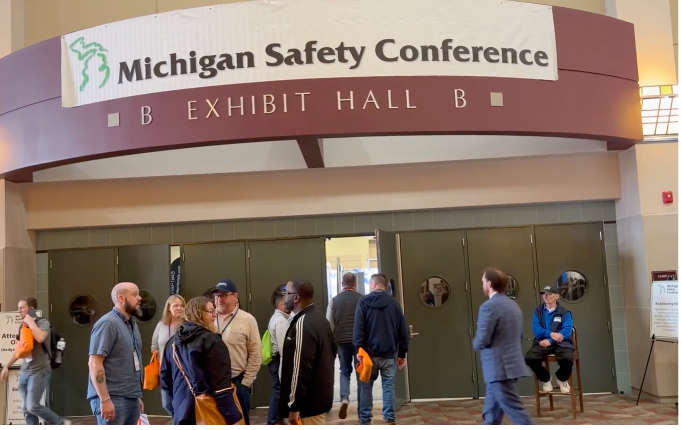
Total Worker Health® stood out as the central theme at the Michigan Safety Conference (April 13–15 in Lansing), signaling a shift toward more holistic approaches to workplace safety and well-being. Introduced by Cindy Ostrowski, current president of MSC, the concept carried through all sixteen conference tracks and more than 100 sessions, spanning topics from agricultural safety to transportation.
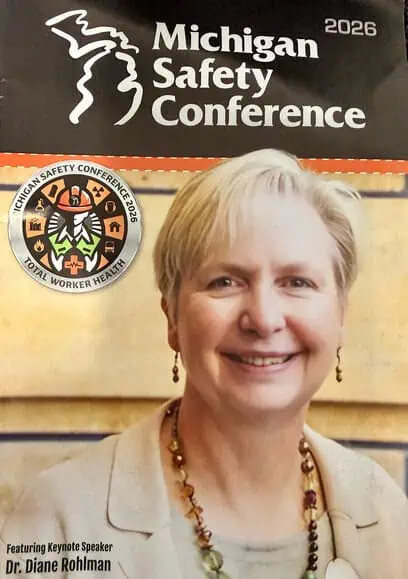 Dr. Diane Rohlman of the University of Iowa’s Healthier Workforce Center of the Midwest delivered the conference keynote, opening with a central message: safety programs that focus solely on compliance are no longer sufficient.
A true Total Worker Health® approach expands the lens—integrating safety, mental health, workplace conditions, and life outside the job. She noted that rising workers’ compensation costs, high turnover in critical shifts, and increasing chronic health challenges all point to a deeper truth: workplace safety starts with the full human experience, not just the worksite.
What does that look like in practice? Dr. Rohlman emphasized that it begins with addressing root causes—not just symptoms. From inadequate lighting on third shift to the strain of mandatory overtime, from the quality of supervisory support to broader psychosocial stressors, the conditions of work directly shape both health and performance.
Organizations that take a systems-level approach—integrating hazard control, mental health awareness, ergonomic design, and supportive leadership—see measurable returns. In fact, every dollar invested in safety can yield up to four in reduced injury-related costs. Even more importantly, these organizations create environments where people can truly thrive.
She encouraged starting with what already exists: identifying and addressing factors such as fatigue, inconsistent supervision, and unsafe conditions, while actively engaging employees in developing solutions. By combining data with employee dialog, organizations can design workplaces that support both productivity and well-being.
Dr. Rohlman concluded: When leaders model healthy behaviors and organizations design environments that support both safety and well-being, the payoff is clear: healthier people, safer workplaces, and more resilient businesses.
NIOSH and Total Worker Health
The Total Worker Health program is an initiative of NIOSH, the National Institute for Occupational Safety and Health. It is a United States federal research agency within the CDC (Centers for Disease Control and Prevention) responsible for conducting research and making recommendations to prevent work-related injuries, illnesses, and deaths.
NIOSH was created by the Occupational Safety and Health Act of 1970. The act mandates “to assure so far as possible every man and woman in the Nation safe and healthful working conditions.”
The Total Worker Health program seeks to amplify NIOSH’s mission to transfer knowledge into practice. The program informs work design to prioritize safety and improve physical and psychological outcomes so that work is safe and enhances workers’ health and well-being.
This perspective is especially critical for small and mid-sized employers, where most people work—and where risks are often highest. Research from the University of Iowa as far back as 2017 shows that while nearly all small businesses carry workers’ compensation insurance, far fewer invest in proactive health promotion like wellness programs, mental health support, or chronic disease management. Yet the organizations that do take a holistic, systems-level approach see meaningful results: fewer injuries, stronger engagement, and better performance over time. The key is not complexity or cost—it’s intentionality.
For more from the CDC on Total Worker Health click here.
Quantum on Location
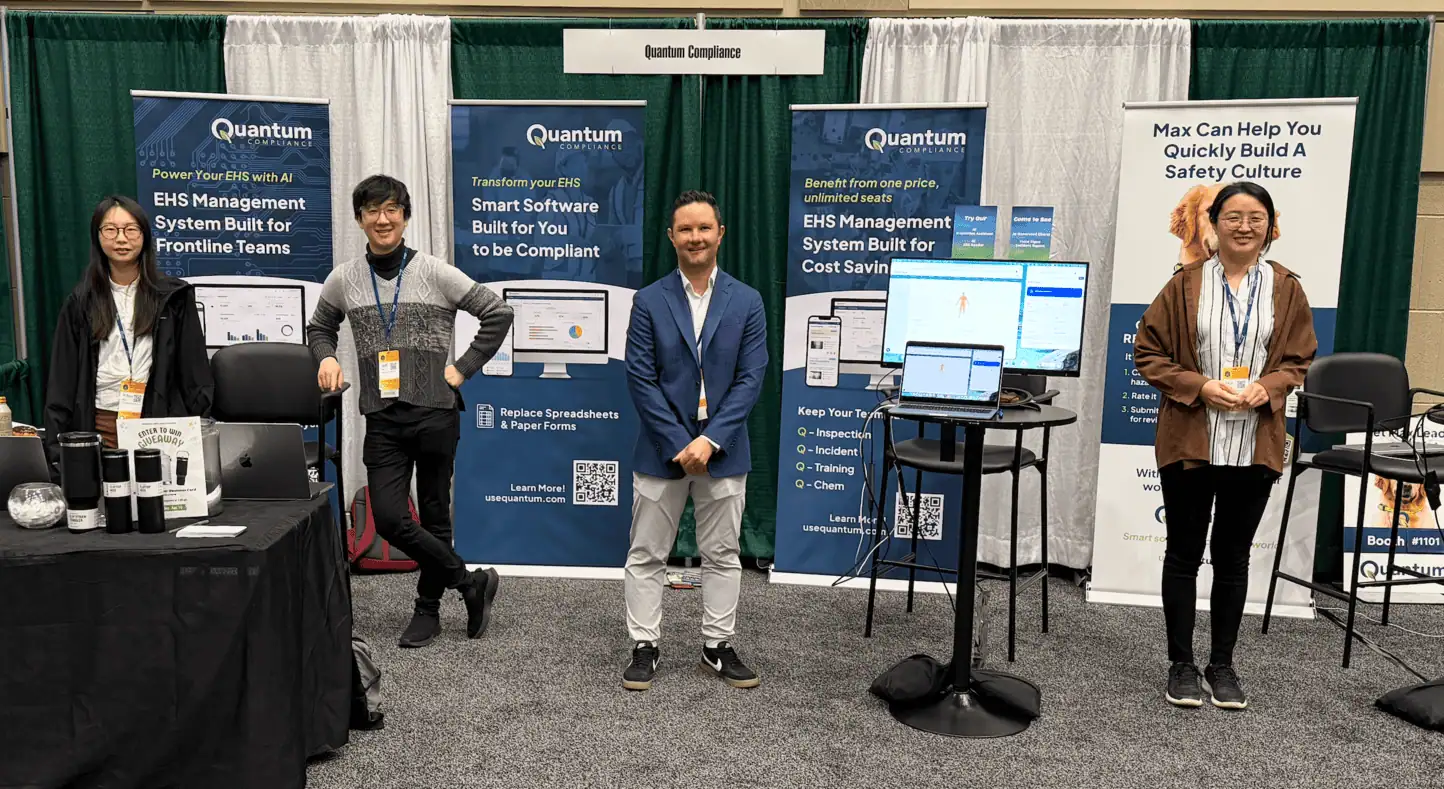
The Quantum team had an excellent outing at MSC. At our booth and through on-site conversation we met many EHS professionals who shared their workplace stories and expressed interest in learning how our software could support them. Key goals for them were to achieve compliance and avoid fines, to save time, and to gain greater insight into what is actually occurring on-site through summary dashboards—all of which we can accomplish in partnership with them. To learn more about our software click here.