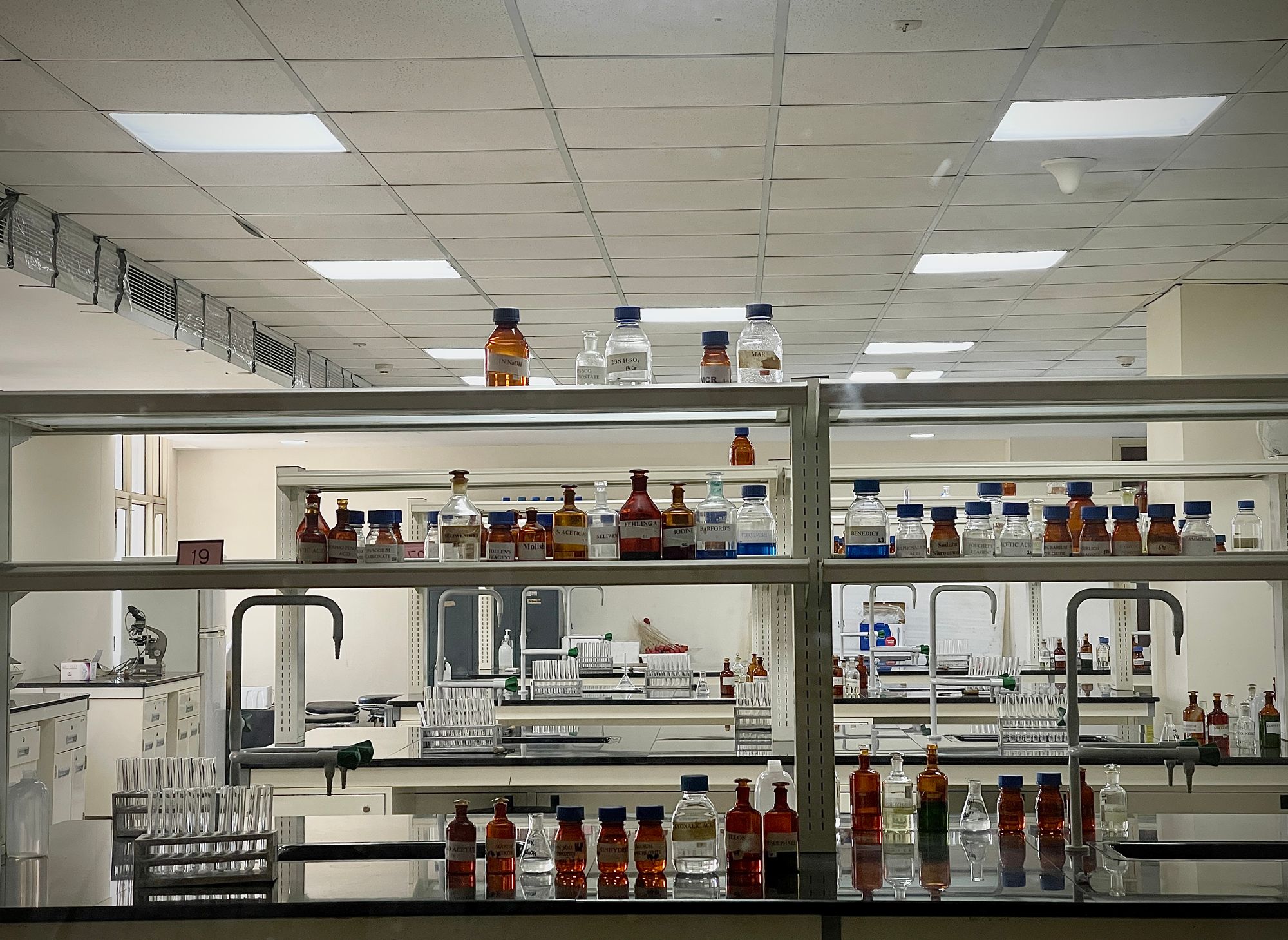
The quality control lab at the back of the plant keeps a binder on the shelf above the eyewash station, labeled Chemical Hygiene Plan. During a site visit, a corporate auditor pulls it down and reads the first page. The Chemical Hygiene Officer named there transferred to another facility two years ago. The reagent appendix lists two solvents the lab stopped buying, and it says nothing about the acid digestion method the team brought in last spring. Nobody on shift can say when the plan was last reviewed.
Chemical hygiene plans can age this way. A plan gets written once, during a lab startup or in response to an audit finding, and then the lab keeps changing while the document stays where it was put. Staff turn over and methods and suppliers change, yet nothing in the daily work forces the plan to catch up. The Laboratory Standard pairs the written plan with a required annual review for that reason.
Does the Laboratory Standard Apply to Your Lab?
Not every room with a fume hood falls under 29 CFR 1910.1450. The standard applies to employers engaged in the “laboratory use of hazardous chemicals,” and OSHA defines that term through four conditions. All four have to be met. If any one fails, the work is governed by the regular OSHA health standards in subpart Z, including Hazard Communication, even when it takes place inside a lab.
“Laboratory Use” Requires All Four Conditions
| Condition in 1910.1450(b) | What it means in practice |
|---|---|
| Manipulations are on a “laboratory scale” | Containers are designed to be easily and safely handled by one person. Workplaces whose function is producing commercial quantities are excluded. |
| Multiple chemical procedures or chemicals are used | One procedure using one chemical does not meet this condition. |
| Procedures are not part of a production process and do not simulate one | Pilot runs that mimic production fall outside the standard. |
| Protective laboratory practices and equipment are available and in common use | Hoods, ventilation, and lab practices are part of how the work is normally done. |
The production condition is where plant labs need the most care. A QC lab running titrations and instrument analysis on samples pulled from the line can meet all four. A pilot unit scaling a process toward production, or a room that blends product in commercial quantities, will not. The standard also carves out lab uses that provide no potential for employee exposure, with examples such as dip-and-read test strips and commercially prepared kits that contain every reagent the test needs.
Where the standard does apply, it takes the place of most other subpart Z health standards for that lab. Exposures still have to stay below the permissible exposure limits, prohibitions on eye and skin contact still hold, and a substance-specific standard can state its own lab requirements. If the action level (or, where there is none, the permissible exposure limit) for a regulated substance with monitoring and medical surveillance rules is routinely exceeded, the Laboratory Standard’s own exposure monitoring and medical examination provisions apply.
The Eight Elements a Chemical Hygiene Plan Must Contain
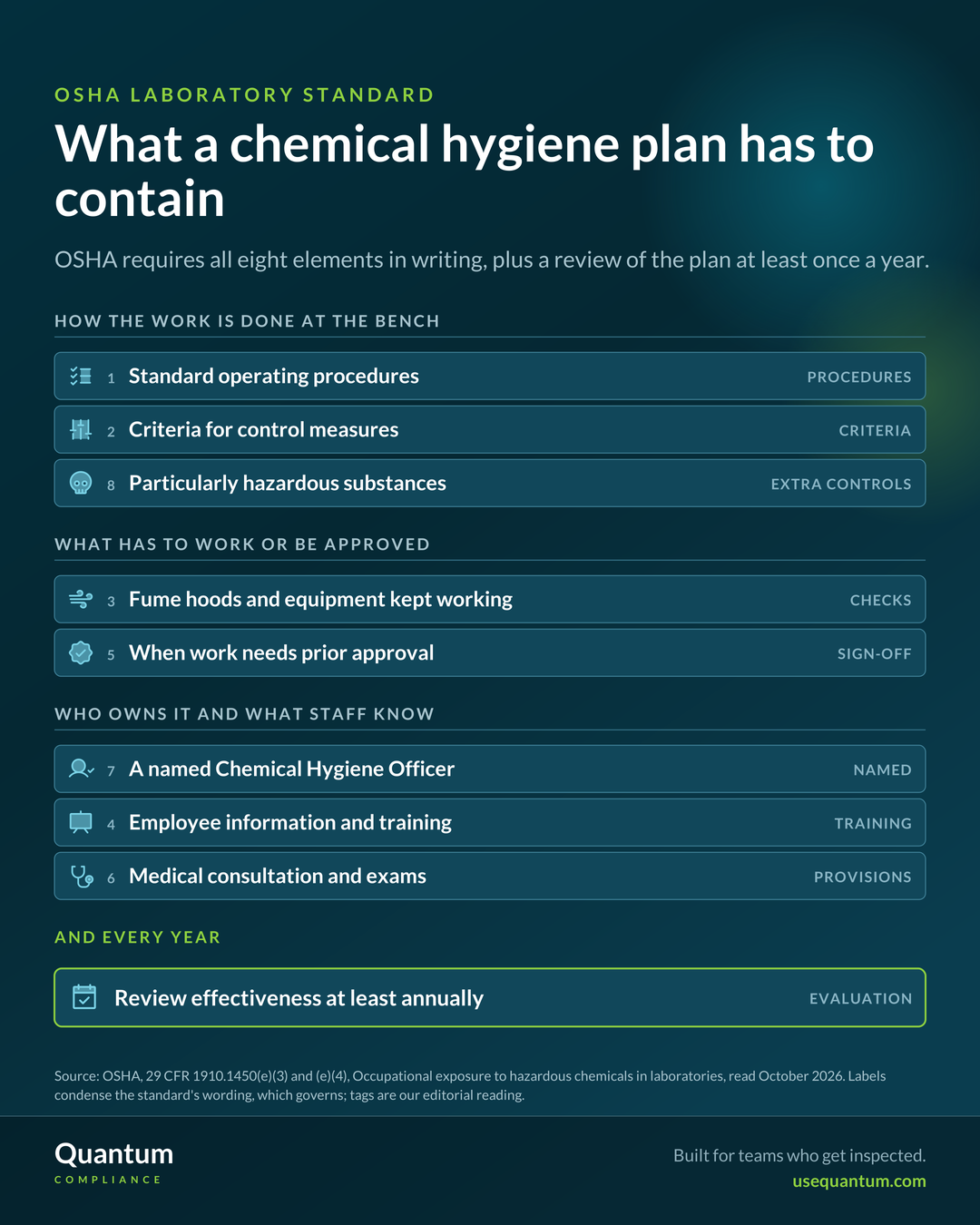
Paragraph (e) requires a written plan that is capable of protecting employees from the health hazards of the chemicals in that laboratory and of keeping exposures below the limits in paragraph (c). The plan has to be readily available to employees, to their representatives, and to OSHA on request. It also has to name the specific measures the employer will take to protect laboratory employees. Paragraph (e)(3) lists eight elements:
Required Elements of a Chemical Hygiene Plan, 1910.1450(e)(3)
Safety and health procedures to follow when lab work involves hazardous chemicals.
How you decide on engineering controls, PPE, and hygiene practices, with particular attention to extremely hazardous chemicals.
A requirement that hoods and other protective equipment function properly, and the specific measures that keep them that way.
Provisions that meet paragraph (f).
The circumstances under which an operation, procedure, or activity needs approval from the employer or the employer’s designee before it starts.
Provisions that meet paragraph (g).
Who implements the plan, including a designated Chemical Hygiene Officer and, if appropriate, a Chemical Hygiene Committee.
Added protection for select carcinogens, reproductive toxins, and highly acutely toxic substances, considering designated areas, containment, waste removal, and decontamination where appropriate.
Source: OSHA, 29 CFR 1910.1450(e)(3). Paragraph (e)(4) adds the annual review.
Then comes paragraph (e)(4), the one the binder in the opening failed: “The employer shall review and evaluate the effectiveness of the Chemical Hygiene Plan at least annually and update it as necessary.” The wording asks for an evaluation of effectiveness, which means checking whether the plan still matches the people, methods, and chemicals in the lab. Writing down what changed gives an auditor evidence that the review took place.
Where the plan meets the chemicals on the shelf
Several of the plan’s obligations depend on knowing exactly what is in the lab. Training under paragraph (f) has to cover the physical and health hazards of chemicals in the work area, and employees must be told where to find reference material on those hazards, including, but not limited to, the safety data sheets received from suppliers. Paragraph (h) requires that labels on incoming containers are not removed or defaced, and that SDSs received with incoming shipments are kept and readily accessible to laboratory employees. Chemicals developed in the lab are covered by separate provisions in paragraph (h)(2). A plan written against an inventory that no longer exists cannot meet any of these well.
What to Do Before Your Next Review
These steps target the habits that let a plan fall behind the lab.
- Confirm scope, room by room. Walk each lab against the four conditions and write down which areas fall under 1910.1450 and which fall under HazCom and the other subpart Z standards. Pilot and scale-up areas need the closest look.
- Add change triggers to the annual date. Make a new method, a new chemical, a new hood, or a departure of the Chemical Hygiene Officer a trigger for review, so the plan is reopened when the lab changes.
- Reconcile the plan against the real inventory. Compare what the plan describes with what is on the shelves today, flag particularly hazardous substances, and confirm each has a current SDS your staff can reach during their shift.
- Name the prior approval triggers. Write down which operations or chemicals need sign-off before work begins, and who signs.
- Verify hood performance with records. Keep the evidence that hoods and other protective equipment were checked and are working.
- Retrain where the plan changed. Paragraph (f) requires training at initial assignment and before new exposure situations. The employer sets refresher frequency, so set one and follow it.
Paragraph (j) separately requires an accurate record for each employee of any exposure measurements and of medical consultations and examinations. Those records belong in your exposure and medical files.
OSHA’s Laboratory Safety Chemical Hygiene Plan fact sheet summarizes the required elements, and Appendix A to the standard offers non-mandatory guidance on writing the plan itself.
How Q-Chem Can Help
Q-Chem supports step three. It keeps a chemical inventory mapped by facility location, with SDS data extracted into searchable fields, so you can pull up exactly what a given lab holds and search it by hazard, pictogram, or ingredient when you look for particularly hazardous substances. Every SDS sits in an electronic SDS binder that staff can reach by scanning a QR code, and an offline binder export gives you a backup if the network goes down. Where your plan ties prior approval to bringing a new chemical into the lab, Q-Chem’s chemical authorization workflow can hold that gate, which covers part of step four.
Writing the plan, deciding which rooms meet the definition of laboratory use, and testing fume hoods stay with your team. Q-Chem keeps the inventory behind the plan current, which is the gap the auditor in the opening found. Questions? Contact sales@usequantum.com.