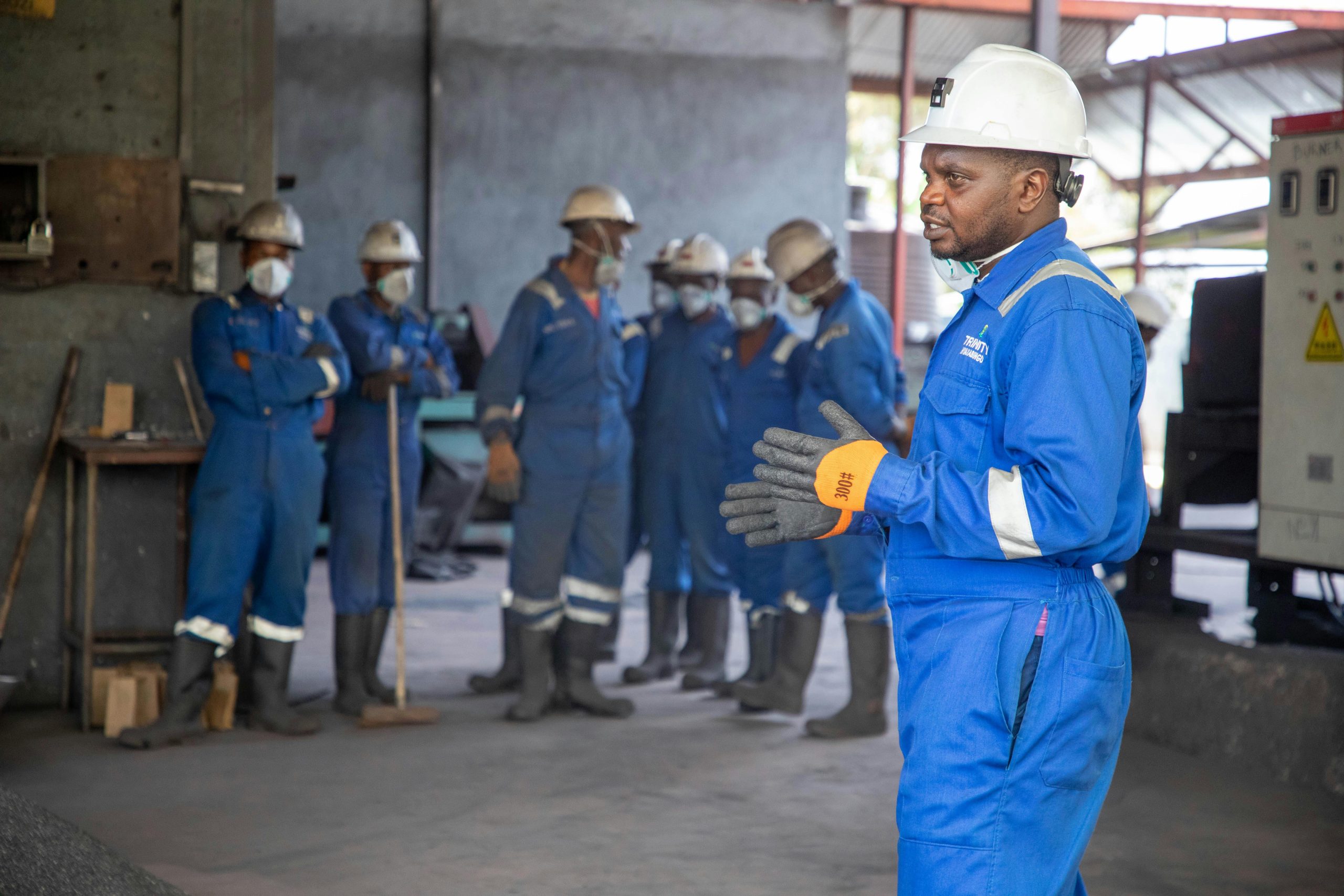
An operator walks past a pinch point without a guard. The equipment catches their hand. The investigation concludes: human error. A safety memo goes out reminding workers to “be more careful.” Nothing changes. The same incident happens three months later.
This scene repeats across every industry. And it misses the entire point of root cause analysis.
When we blame the worker, we stop investigating. We miss the system failures that put the worker in that position in the first place. The guard wasn’t installed. The warning sign wasn’t visible. The workflow required the worker to reach into the danger zone to complete their task. The training was generic, not task-specific. The supervisor hadn’t verified the fix.
Root cause analysis isn’t about finding who to blame. It’s about finding what to fix so the same incident cannot happen again, regardless of who is working that day.
What Is Root Cause Analysis?
Root cause analysis (RCA) is a systematic process for investigating why an incident occurred, not just what happened. The goal is to identify the underlying system failures, process gaps, or environmental factors that created the conditions for the incident to occur.
Most incidents are not one-cause events. They result from a chain of failures. An operator might bypass a lockout procedure (direct cause), but why? Was the procedure unclear? Was there time pressure from production demands? Were they never trained on why the lockout mattered? Did the supervisor rarely check compliance?
Each of those is a system failure. Each one, if fixed, could prevent the incident from recurring.
The Difference Between Blame and Systems Thinking
Traditional incident investigations use a “cause and effect” model: find the cause, assign blame, issue a correction. This approach assumes incidents are anomalies caused by bad actors. But research in safety science shows the opposite is true.
When a worker takes an at-risk action, the system usually put them there. They were under time pressure. The correct procedure was more difficult than the shortcut. They weren’t trained. The equipment was broken and the workaround became normal. The supervisor looked the other way. The task had inherent conflicts between safety and productivity, and productivity always won.
Systems-based RCA asks: why did a competent, motivated person feel compelled to take that action? What environmental, organizational, or procedural factors made the unsafe action the path of least resistance?
This shift from individual accountability to system accountability is why OSHA’s incident investigation guidance recommends looking beyond the immediate action to the underlying conditions.
The Five Whys: A Simple Framework
A practical approach to systems-based RCA is the “Five Whys” technique. For each answer you uncover, ask “why” again. Continue until you reach a system or process failure you can actually fix.
Example:
Incident: Worker was struck by a fork truck in the warehouse.
Why #1: Why was the worker in the path of the forklift? Because they were retrieving a pallet that had fallen against the loading dock door.
Why #2: Why had the pallet fallen? Because it was stacked too high and tipped during movement.
Why #3: Why was it stacked too high? Because there was no clear stacking height limit posted, and the loader was trying to fit more product into the available space.
Why #4: Why was there no posted limit? Because the risk assessment for the warehouse never identified stacking height as a hazard.
Why #5: Why wasn’t stacking height included in the risk assessment? Because the assessment was generic, inherited from the previous site manager, and never updated based on actual warehouse operations.
System failures identified: Risk assessment process incomplete; training on stacking standards missing; no visual management controls; no supervision of loading procedures.
None of those failures involve the worker’s competence or willingness. All of them are fixable.
Common Pitfalls in Root Cause Analysis
Stopping too early. “The worker wasn’t paying attention” feels like a root cause. It isn’t. It’s a description of the last event before the incident. Keep asking why attention lapsed. Was the task monotonous? Were they rushed? Were they trained to recognize the hazard?
Assuming people always follow procedures. If workers are regularly bypassing a procedure, the procedure is the problem, not the workers. A RCA should ask: why is the shortcut more appealing than the safe path?
Conflating severity with cause. A serious incident might have a simple root cause (and vice versa). Don’t assume a bad injury means a complex failure. Investigate the same way regardless of outcome.
Failing to verify the fix. Even if you identify the system failure, you must verify that the corrective action actually works. A control that looks good on paper might not work in the real environment where workers operate.
Putting Systems-Based RCA into Practice
Start with your next incident. Form an investigation team that includes someone who does the work (not just a supervisor). Walk the actual area where the incident occurred. Ask open-ended questions: “Walk me through what happened. What made you do that? When did that become normal? Has anyone tried to change it?”
Map out the systems involved: the procedure, the tools, the environment, the training, the supervision, the production schedule. Ask which of those systems failed, and which failure chains together with others created the conditions for the incident.
Then ask: if we fix this system failure, can this incident happen again? If the answer is “yes,” keep investigating. You haven’t found the root cause yet.
How Incident Management Software Can Help
Documenting investigations consistently makes patterns visible. When you track not just what happened, but why at each level of analysis, you can identify if certain machines, locations, or processes have recurring system failures. Some organizations find that three seemingly unrelated incidents all trace back to the same training gap or the same equipment issue.
Quantum Compliance’s Q-Incident module enables you to standardize the investigation process, ensure the Five Whys are applied consistently, and track corrective actions through closure. Teams can collaborate on investigations in real-time, and managers can see patterns across the organization that suggest where systemic improvements will have the biggest safety impact.
Learn how Q-Incident supports structured root cause analysis.
The Bottom Line
When an incident occurs, someone took an at-risk action. Your job isn’t to shame them or remove them from the role. Your job is to ask: what system put a competent person in that position? Fix the system, and you prevent the incident from happening to someone else. That’s root cause analysis. That’s systems thinking. And that’s what truly reduces incidents.