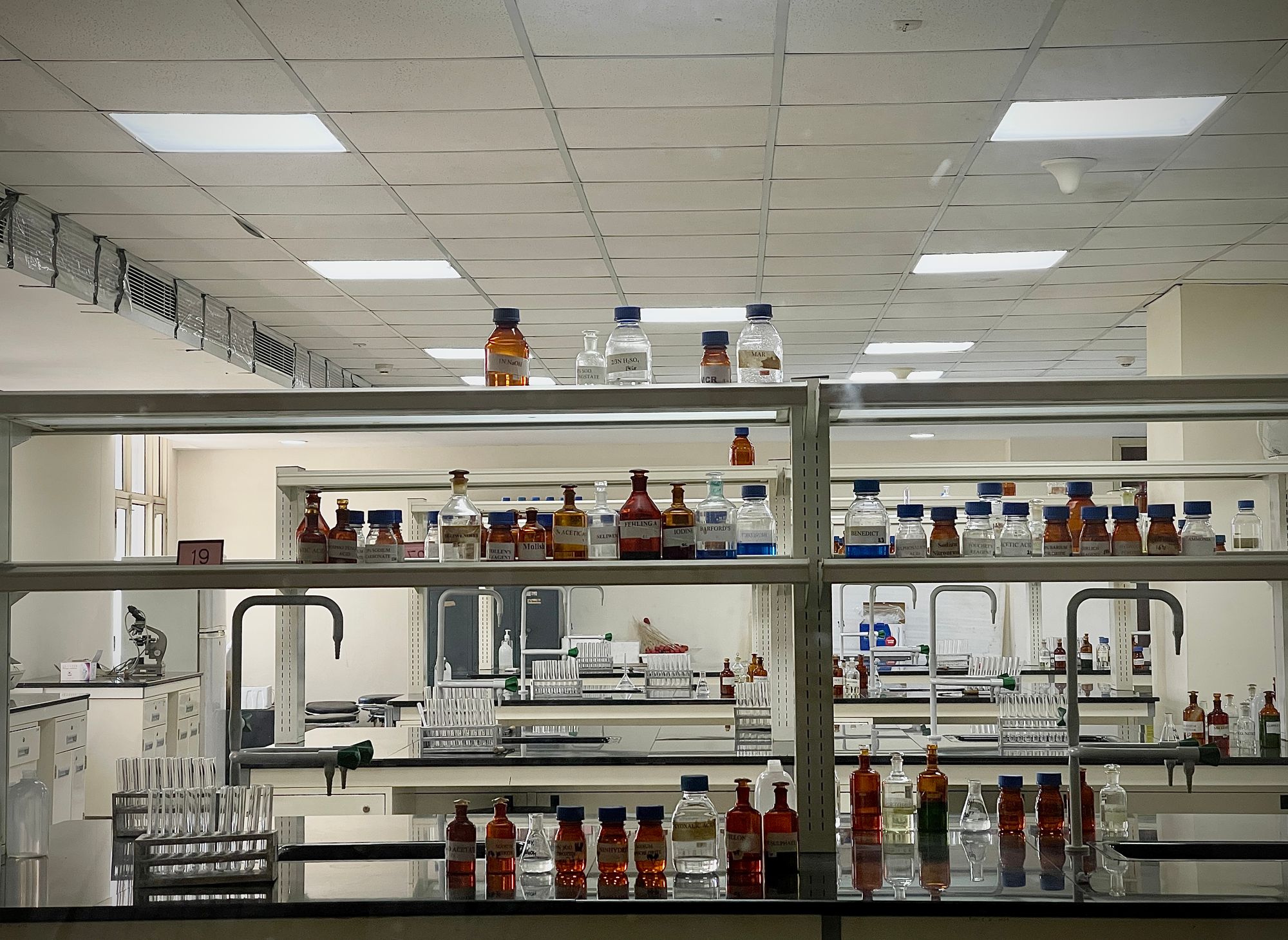

Walk into most industrial facilities and you will find chemicals: thousands of them, sometimes, spread across storage rooms, labs, maintenance bays, and production lines. What you won’t always find is a clear picture of which ones are regulated, which are restricted, and which are triggering reporting obligations you may not have realized you have.
Chemical regulatory screening is the process of comparing your active chemical inventory against government-maintained lists to identify compliance obligations, hazard thresholds, and restricted or reportable substances. It sounds straightforward. In practice, it is one of the more complex recurring tasks in EHS management, because no single list covers everything and the lists themselves change year over year.
This guide covers the major U.S. regulatory frameworks EHS managers need to understand, where the common gaps appear, and how to build a screening workflow that holds up over time.
Why Regulatory Screening Is Not a One-Time Task
Many EHS programs approach chemical regulatory screening as a setup activity: something you do during a program build, then revisit only when a new chemical arrives. That approach creates risk from two directions.
First, your inventory changes constantly. Chemicals are added and removed. Suppliers reformulate products without notification, sometimes changing hazard classifications or regulatory status in the process. A degreasing solvent that was unregulated three years ago may now appear on a restricted substance list. Without ongoing screening, those changes go undetected until an audit or incident surfaces them.
Second, the regulatory lists themselves change. The EPA updates TSCA rules. California adds substances to Prop 65. OSHA revises Permissible Exposure Limits. States enact their own chemical notification and disclosure requirements. A screening pass that was thorough in 2022 is not necessarily thorough today.
The result for facilities without a systematic process is a compliance posture that feels solid but carries significant undetected gaps.
The Major Regulatory Lists EHS Managers Need to Know
There is no master registry that consolidates every chemical obligation into one place. Instead, EHS managers need to maintain awareness of several overlapping frameworks, each with different scope, different thresholds, and different consequences for non-compliance.
TSCA (Toxic Substances Control Act)
The primary federal chemical regulatory framework in the U.S., administered by the EPA, TSCA governs the manufacture, import, processing, distribution, and disposal of chemical substances. Section 6 of TSCA authorizes the EPA to restrict or ban chemicals that present an unreasonable risk, and in recent years the agency has moved aggressively on several high-profile substances, including trichloroethylene (TCE), methylene chloride, and per- and polyfluoroalkyl substances (PFAS).
Facilities that manufacture, import, or process chemicals in commercial quantities have reporting and recordkeeping requirements under TSCA. For EHS managers at end-user facilities, the immediate concern is whether any chemicals in inventory are subject to use restrictions or phase-outs under Section 6 rules. The list of regulated substances has grown substantially since 2016 and continues to expand.
TSCA Section 6 Key Chemical Restrictions (EPA)
| Chemical | Restriction Status |
|---|---|
| Asbestos | Most uses prohibited (final rule 2024) |
| Trichloroethylene (TCE) | Most industrial uses prohibited (final rule 2024) |
| Methylene Chloride | Consumer use prohibited; industrial restrictions in effect |
| Perchloroethylene (PCE) | Phase-out in dry cleaning; industrial use restrictions underway |
| PFAS (ongoing) | Reporting rules and proposed restrictions under active rulemaking |
California Proposition 65
California’s Prop 65 list contains over 900 chemicals known to the State of California to cause cancer, birth defects, or other reproductive harm. The Safe Drinking Water and Toxic Enforcement Act requires that any business with 10 or more employees provide clear and reasonable warnings before knowingly exposing workers or consumers to a listed chemical above the “No Significant Risk Level” (NSRL) for carcinogens, or the Maximum Allowable Dose Level (MADL) for reproductive toxicants.
Because California represents the largest single consumer market in the U.S., Prop 65 functions as a de facto national standard for many industries. Manufacturers selling into California must assess whether their products expose users to listed substances above threshold levels. EHS managers at facilities with California operations, or whose supply chains include California customers, need to incorporate Prop 65 screening into their chemical inventory review.
California Prop 65 — No Significant Risk Levels (NSRLs) for Common Workplace Chemicals
| Chemical | NSRL (cancer) | Common Workplace Source |
|---|---|---|
| Benzene | 4.1 μg/day | Solvents, fuels, adhesives |
| Formaldehyde | 40 μg/day | Resins, adhesives, cleaning products |
| Hexavalent Chromium | 0.17 μg/day | Welding fume, electroplating |
| Cadmium | 4.1 μg/day | Batteries, pigments, plating |
| Ethylene Oxide | 0.35 μg/day | Sterilization, fumigation |
Source: OEHHA, Current Proposition 65 No Significant Risk Levels (NSRLs)
EPCRA and Tier II Reporting Lists
The Emergency Planning and Community Right-to-Know Act (EPCRA) establishes two relevant lists: Extremely Hazardous Substances (EHS) under Section 302, and the Toxic Release Inventory (TRI) chemicals under Section 313. Facilities that store EHS chemicals above their Threshold Planning Quantities must notify their State Emergency Response Commission and Local Emergency Planning Committee. Facilities that release or transfer TRI chemicals above threshold quantities must file annual Form R reports.
Tier II reporting under Section 312 requires annual hazardous chemical inventory reports for chemicals stored above certain quantities. The accuracy of those reports depends directly on the accuracy of your SDS library and inventory records. This connection between SDS data quality and regulatory reporting accuracy is one of the most underappreciated dependencies in EHS management. The EPA’s EPCRA program page provides current threshold quantities for both EHS and TRI lists.
REACH and International Lists
For manufacturers or distributors with European operations, the EU’s REACH regulation (Registration, Evaluation, Authorisation and Restriction of Chemicals) adds another screening layer. The Substances of Very High Concern (SVHC) candidate list under REACH triggers notification obligations when articles contain SVHC above 0.1% by weight. Many global EHS operations screen against REACH alongside U.S. lists as a single integrated process, rather than running separate regional programs.
Building a Practical Regulatory Screening Workflow
The practical challenge is not understanding the lists. It is maintaining a process that keeps your screening current without requiring a full manual review every time a regulation changes or a new chemical enters inventory.
Effective screening workflows share a few common elements. First, they are anchored to the SDS. Your Safety Data Sheet library is the primary source of chemical identity data: CAS numbers, component chemicals, concentration ranges, and hazard classifications. A screening process that relies on trade names alone will miss multi-component products and reformulations. CAS-based screening against regulatory lists is more reliable and more automatable.
Second, they are triggered by inventory changes, not just calendar reviews. When a new chemical is approved for use or a supplier reformulation notice arrives, that should prompt a screening pass. Waiting for the annual review to catch a new restriction is too slow.
Third, they account for the gap between nominal inventory and actual inventory. As our earlier post on the chemical inventory gap describes, many facilities carry chemicals in active use that are not reflected in their SDS library. Screening an incomplete inventory produces an incomplete picture.
Where SDS Data Quality Becomes a Screening Bottleneck
The accuracy of regulatory screening is directly constrained by the accuracy of your SDS data. Section 3 of a compliant SDS lists composition and ingredient information, including CAS numbers and concentration ranges for each component. That data is what gets compared against regulatory lists.
The problem is that SDS documents are not standardized in formatting, even though GHS mandates standardized content. Manufacturers place Section 3 data in different layouts, use different notation conventions for concentration ranges, and occasionally omit CAS numbers for proprietary components. Manual review of large SDS libraries to extract this data reliably is time-intensive and error-prone.
Some chemical management platforms now use OCR-based import tools that can detect component chemical data even when manufacturers place it in non-standard document locations. This kind of automated SDS parsing reduces the manual correction burden during bulk imports and improves the completeness of the data fed into regulatory screening workflows. NIOSH maintains a comprehensive chemical information resource that can supplement SDS data when component information is incomplete or when you need to cross-reference exposure limits and hazard classifications.
Common Screening Gaps to Watch For
Even programs that run regular screening tend to have predictable blind spots. Chemicals that have been in inventory for years receive less scrutiny than new additions, even though they are equally subject to new restrictions. Contractor-supplied chemicals are frequently absent from the central SDS library entirely. Chemicals used in small quantities, particularly in maintenance and janitorial operations, are often the last to be inventoried and screened.
The assumption that a chemical is unregulated because it has never appeared on a screening report is worth examining carefully. OSHA’s Hazard Communication Standard requires that chemical hazard information be available for all hazardous chemicals in the workplace, which establishes a baseline for inventory completeness that regulatory screening can then build on.
How Q-Chem Can Help
Quantum EHS Management System’s Q-Chem module is built around the principle that accurate SDS data is the foundation of every downstream chemical compliance obligation. The module includes a central SDS library with structured import tools, chemical inventory tracking tied to locations and containers, and built-in regulatory screening capabilities that compare inventory against key compliance lists, including Tier II-relevant thresholds.
For EHS managers overseeing large or frequently changing chemical inventories, having screening integrated into the same platform that manages your SDS library means your regulatory view reflects the same inventory your frontline teams are actually working with, rather than a separate spreadsheet that drifts out of sync over time.