It is a Friday afternoon walkthrough in the machine shop. The yellow flammable cabinet by the parts washer is full, so two 5-gallon cans of acetone are staged on a cart beside it, waiting for Monday. The supervisor is not hiding anything; he points them out himself. “Cabinet’s full. We’ll consolidate next week.” Almost every EHS manager has seen this exact scene, and most walk past it, because the one number everyone remembers about flammable storage is the cabinet limit, and the cabinet is technically fine.
That is the problem. OSHA’s flammable liquids standard, 29 CFR 1910.106, does not regulate cabinets. It regulates quantities, by hazard category, by container, and by fire area. The cabinet limit is the only one of those numbers most teams can recite, and it is arguably the hardest one to violate. The cans on the cart are where citations actually come from.
The Cabinet Limit Is a Category Limit, Not a Volume Limit
The rule most people know says a storage cabinet may hold no more than 60 gallons of flammable liquids. The actual text is more specific: no more than 60 gallons of Category 1, 2, or 3 flammable liquids, and no more than 120 gallons of Category 4. Categories are assigned by flashpoint and boiling point under the GHS classification carried on each product’s safety data sheet, which means the limit that applies to your cabinet depends on what is actually inside it, not on how much shelf space is left.
Two things follow from that. First, the 60 gallons is an aggregate across Categories 1 through 3; you cannot stack 60 gallons of acetone and 60 gallons of mineral spirits in the same cabinet and call each one separately compliant. OSHA confirmed this reading in a 2011 interpretation letter on intermingling liquids in a single cabinet. Second, a cabinet holding mostly Category 4 combustibles with a few gallons of Category 1 solvent is governed by the lower limit, because the lower-category liquids are present.
OSHA 1910.106 Storage Quantity Limits at a Glance
| Where the liquid sits | Maximum quantity |
|---|---|
| Inside one storage cabinet | 60 gal of Category 1, 2, or 3 combined; 120 gal of Category 4 |
| Outside a cabinet or inside storage room, per fire area: Category 1 in containers | 25 gal |
| Outside a cabinet or inside storage room, per fire area: Category 2, 3, or 4 in containers | 120 gal |
| Outside a cabinet or inside storage room, per fire area: Category 2, 3, or 4 in a single portable tank | 660 gal |
Source: OSHA, 29 CFR 1910.106(d)(3)(i) and 1910.106(e)(2)(ii)(b)
The Overflow Is the Violation
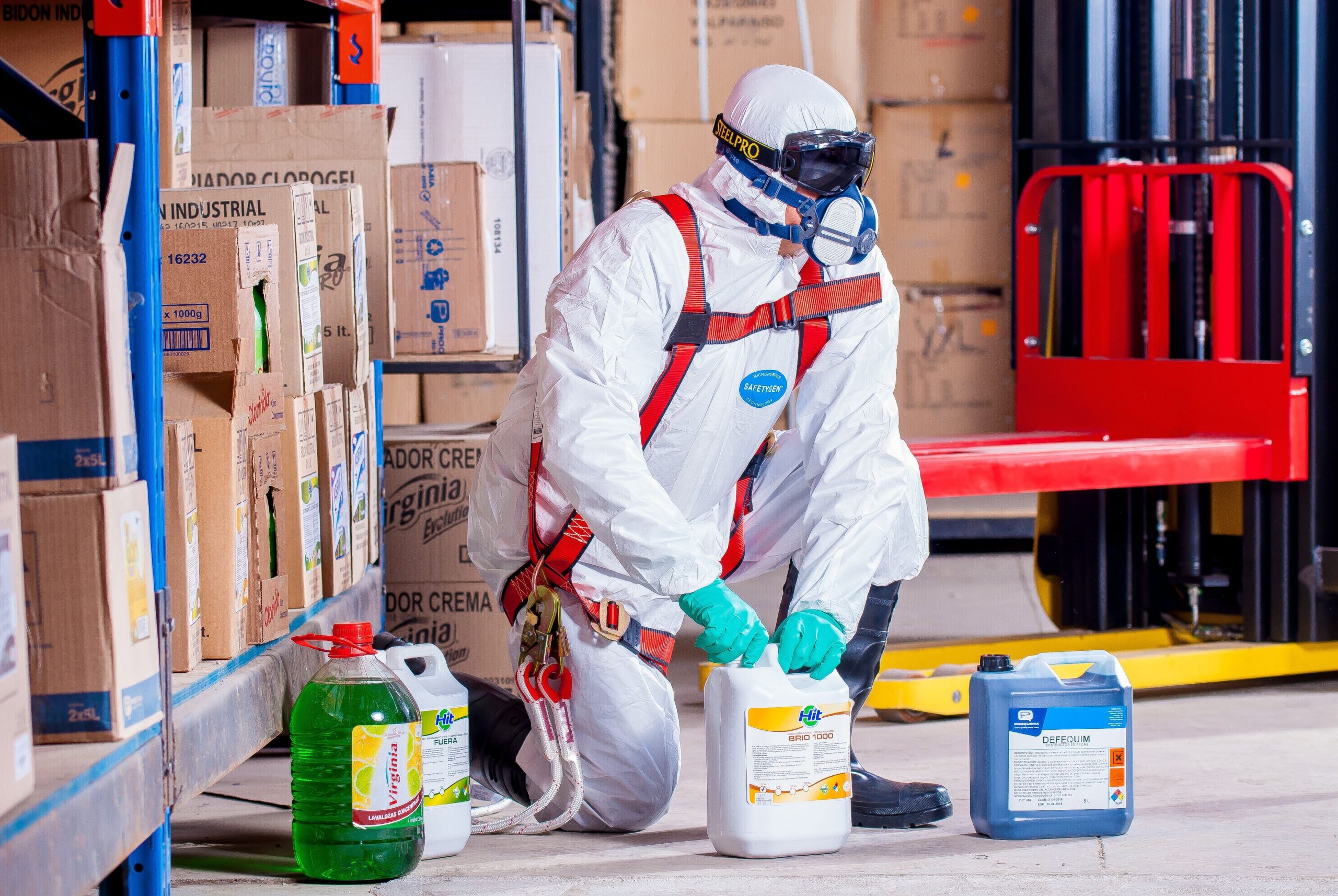
Go back to the cart in the machine shop. Acetone is a Category 1 flammable liquid. Under 1910.106(e), which governs industrial plants where flammable liquids are used incidentally, the quantity of Category 1 liquid that may sit outside an inside storage room or storage cabinet in any one fire area is 25 gallons in containers. Two 5-gallon cans on a cart eat 10 of those 25 gallons. Add the safety cans at three workstations and the half-empty pail under the bench, and a shop that looks tidy can be past its fire-area limit without anyone touching the cabinet. Flammable aerosols count too; the standard’s container storage rules treat them as Category 1 flammable liquids.
Container size is the third limit, and it is the one that surprises purchasing more than operations. Table H-12 in the standard caps how large a container each category of liquid may occupy. A Category 1 solvent may not sit in glass larger than one pint, or in an ordinary metal container larger than one gallon. The 5-gallon poly jug of a Category 1 solvent that arrived last week because it was cheaper per gallon is not a storage problem; it is a container violation the moment it enters the building.
Maximum Allowable Container Sizes (Table H-12)
| Container type | Category 1 | Category 2 | Category 3 and 4 |
|---|---|---|---|
| Glass or approved plastic | 1 pt | 1 qt | 1 gal |
| Metal (other than DOT drums) | 1 gal | 5 gal | 5 gal |
| Safety cans | 2 gal | 5 gal | 5 gal |
| Metal drums (DOT specification) | 60 gal | 60 gal | 60 gal |
Workers Stage Solvents Where the Work Is. The System Decides Where That Is.
It is tempting to read the cart full of acetone as a housekeeping failure and coach the supervisor. That framing misses what actually happened. If the only compliant cabinet is a five-minute walk from the parts washer, if the cabinet is full because purchasing buys quarterly in bulk, if there is no approved safety can sized for a shift’s worth of solvent, then staging containers at the point of use is the behavior the system produced. The worker optimized for the job in front of them, exactly as anyone would.
The durable fixes are system fixes. Put cabinets where the liquids are used, not where the wall space was free. Right-size purchase quantities so the cabinet never becomes the bottleneck. Issue approved safety cans, which Table H-12 rewards with a larger allowable size for Category 1 liquids precisely because they are safer. And verify the cabinets themselves: metal cabinets need double walls with a 1.5-inch air space, a raised 2-inch door sill, a three-point latch, and the conspicuous “Flammable – Keep Fire Away” label the standard requires.
You Cannot Manage Limits You Cannot See
Every flammable storage limit in this article depends on two pieces of data: how much of each liquid sits in each location, and what category each liquid is. Both usually live in different places, the quantities in a purchasing spreadsheet and the classifications buried in section 9 of a thousand safety data sheets. Fire-area math is only possible when those two datasets meet, which is why a location-based chemical inventory is the practical foundation of 1910.106 compliance. Classification accuracy matters just as much; some platforms now apply OCR during bulk SDS imports that detects chemical data even when a manufacturer places it in a non-standard spot in the document, so the flashpoint and category information driving these thresholds does not silently degrade as the library grows.
How Q-Chem Can Help
Q-Chem, the chemical management module of the Quantum EHS Management System, maintains your chemical inventory by storage location with quantities tied to each product’s current safety data sheet. That gives you the two numbers 1910.106 actually regulates, how much and what category, in one view per area, so a full cabinet and a loaded cart stop being invisible to each other.
Because the inventory is built on the SDS library itself, classification data stays current as suppliers revise their sheets, and OCR-assisted import keeps that data accurate even when manufacturers format documents inconsistently. The walkthrough still matters. Q-Chem just means you walk in already knowing which fire areas are close to a limit.