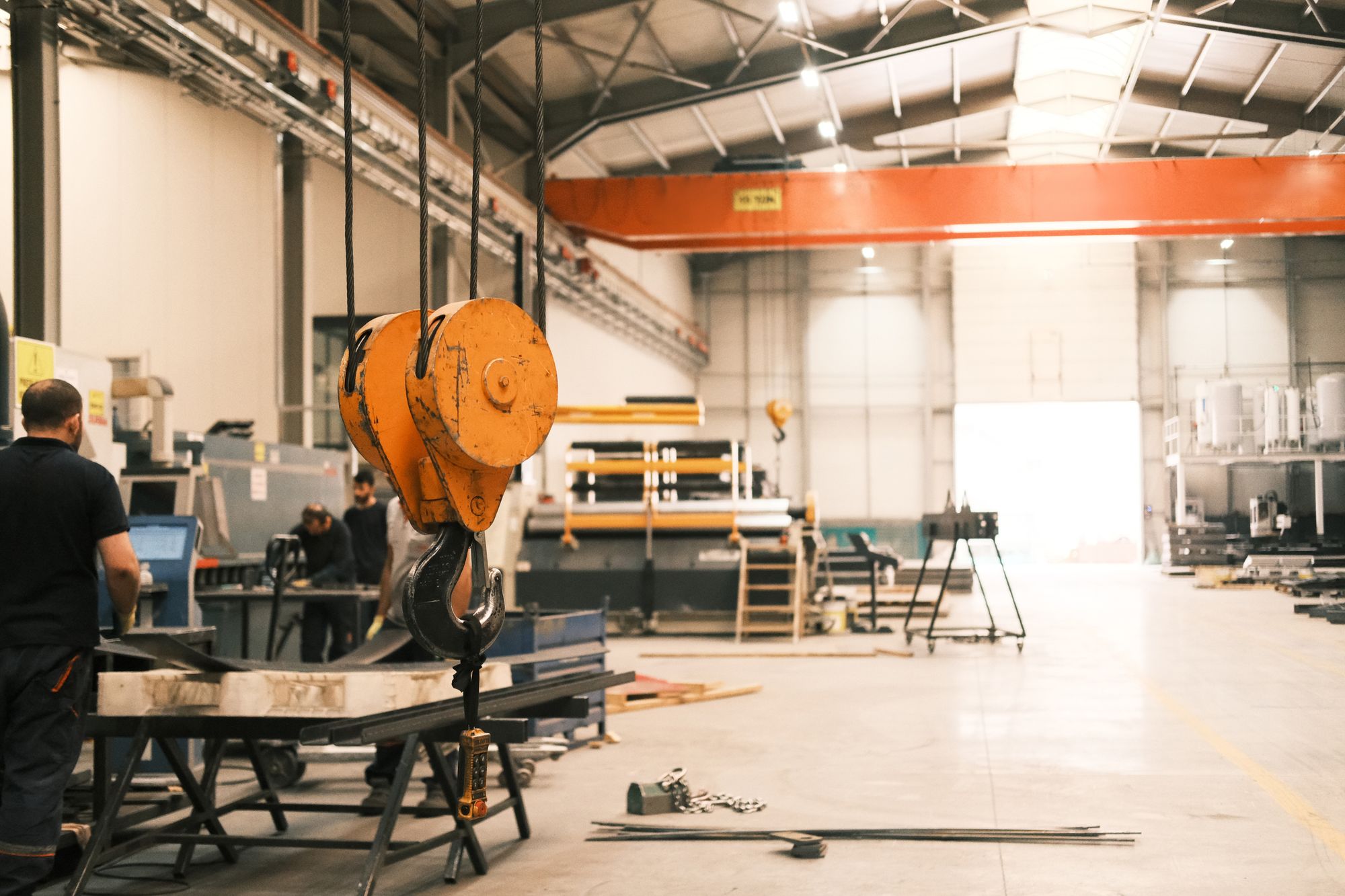
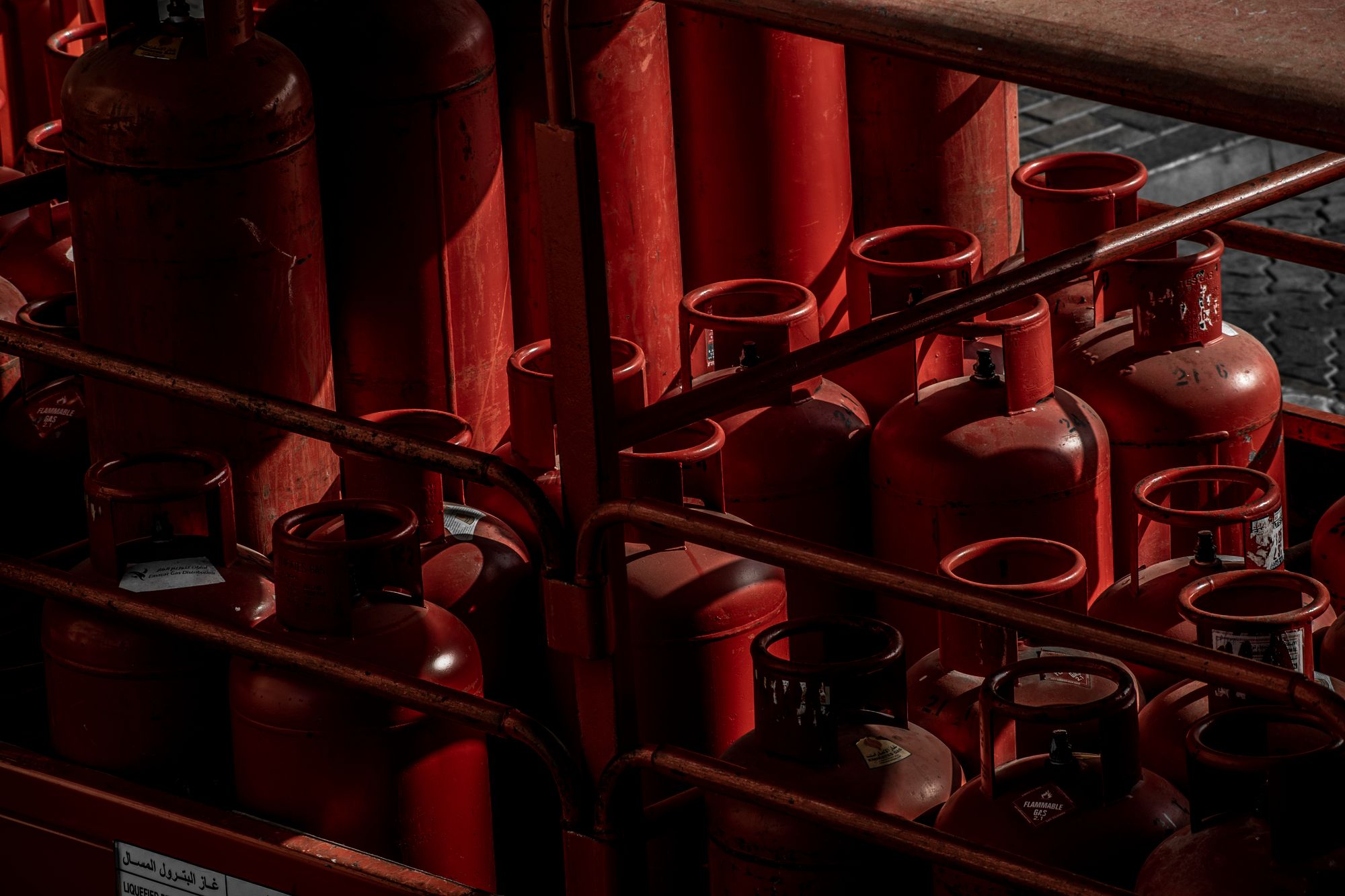
The maintenance shop has a cylinder corner, and this morning’s walkthrough finds it like this. Two oxygen cylinders, three acetylene and a spare propane tank for the forklift are all chained to the same wall bracket, because that is where the bracket is. Someone has parked an empty argon cylinder beside them with the cap off. Nothing has gone wrong yet. The arrangement grew one convenient decision at a time, and nobody ever drew the room on paper.
Whoever stacked those cylinders worked with the room they were given. Moving the oxygen away from the fuel gas is a layout decision for the people who run the shop, and OSHA spells out the distances in some detail.
Which OSHA Standards Cover Compressed Gas Cylinder Storage
For general industry the starting point is 29 CFR 1910.101, and it is short. Paragraph (a) requires employers to determine that the cylinders under their control are in a safe condition, to the extent visual inspection can show it, with inspections following DOT hazardous materials rules or, where those do not apply, CGA Pamphlets C-6 and C-8. The next paragraph carries most of the weight: the in-plant handling, storage and use of compressed gases must follow Compressed Gas Association Pamphlet P-1-1965, which OSHA incorporates by reference. A final paragraph covers pressure relief devices. The federal rule for general gas storage therefore points to a pamphlet edition from 1965, whatever the current CGA edition says.
The specific distances and quantities in this post come from 29 CFR 1910.253, the oxygen-fuel gas welding and cutting standard. Its paragraph (b) sets storage rules for the cylinders used in that work. For cylinders feeding a lab instrument or a beverage line, 1910.101(b) and CGA P-1 are the clearer reference. Applying the 1910.253 practices to every cylinder on site is still a reasonable choice, because they are specific and easy to audit.
What 1910.253 Requires for Cylinder Storage
Inside buildings, cylinders must be stored in a well-protected, well-ventilated, dry location at least 20 feet from highly combustible materials such as oil or excelsior, and kept away from radiators and other sources of heat. Storage spaces must be located where cylinders will not be knocked over or damaged by passing or falling objects, or tampered with by unauthorized persons. Cylinders cannot be kept in unventilated enclosures such as lockers and cupboards. The standard also says cylinders should be stored in definitely assigned places away from elevators, stairs and gangways; that sentence uses “should” rather than “shall.”
Empty cylinders need their valves closed, and on cylinders designed to accept a valve protection cap, the cap stays in place and hand-tight except when the cylinder is in use or connected for use. Acetylene cylinders are stored valve end up. Each cylinder must also be legibly marked with the chemical or trade name of the gas, by stenciling, stamping or labeling that is not readily removable, on the shoulder whenever practical.
Cylinder Storage Rules in the Two Gas Welding Standards
| Requirement | General industry, 1910.253 | Construction, 1926.350 |
|---|---|---|
| Oxygen stored apart from fuel gas | 20 ft, or a noncombustible barrier at least 5 ft high rated at least 1/2 hour [(b)(4)(iii)] | Same wording [(a)(10)] |
| Distance from highly combustible materials, indoors | At least 20 ft [(b)(2)(ii)] | At least 20 ft [(a)(11)] |
| Securing against tipping | No upright-securing rule; storage spaces located where cylinders will not be knocked over [(b)(2)(ii)]; acetylene stored valve end up [(b)(3)(ii)] | Secured upright at all times, except, if necessary, briefly while hoisted or carried [(a)(9)] |
| Valve protection caps | In place and hand-tight, except in use or connected for use [(b)(2)(iv)] | In place and secured [(a)(1)] |
Source: OSHA, 29 CFR 1910.253 and OSHA, 29 CFR 1926.350
Oxygen and Fuel Gas Need Distance or a Barrier
Paragraph (b)(4)(iii) is the one the opening scenario breaks. Oxygen cylinders in storage must be separated from fuel-gas cylinders or combustible materials, especially oil or grease, by at least 20 feet, or by a noncombustible barrier at least 5 feet high with a fire-resistance rating of at least one-half hour. The construction standard, 1926.350(a)(10), uses the same wording. The rule applies to cylinders in storage, so a welding cart with a connected oxygen and acetylene pair in use falls outside it.
The hazard behind the separation rule appears at the top of the same standard, where paragraph (a)(1) warns that mixtures of fuel gases and air or oxygen may be explosive and shall be guarded against.
The Indoor Fuel-Gas Storage Limit
Inside a building, fuel-gas cylinders in storage are limited by paragraph (b)(3) to a total gas capacity of 2,000 cubic feet, or 300 pounds of liquefied petroleum gas. Cylinders in actual use or attached ready for use do not count toward the limit. Above that amount, the cylinders go in a separate room or compartment built to the requirements of paragraphs (f)(6)(i)(H) and (I), or outside, or in a special building. Those rooms and buildings need good ventilation and no open flame for heating or lighting.
2,000 cu ft
Total fuel-gas cylinder capacity allowed in storage inside a building, or 300 lb of LP-gas. Cylinders in use or attached ready for use are not counted.
Source: OSHA, 29 CFR 1910.253(b)(3)
A walkthrough cannot confirm this limit on its own. Checking it takes an inventory of every fuel-gas cylinder inside and its size, with the spares separated from the ones attached ready for use, kept current as deliveries change.
Construction Sites Add a Securing Rule
On construction work, 1926.350(a)(9) is blunter than anything in 1910.253. Compressed gas cylinders must be secured in an upright position at all times, except, if necessary, for short periods while they are actually being hoisted or carried. The general industry text asks instead for storage places where cylinders will not be knocked over. A rack with a chain or strap at each assigned spot covers storage under either standard, and on a construction site the cylinder still needs securing wherever it is set down.
How to Set Up Compliant Cylinder Storage
Start with the room and the hardware. Training and inspection come after the layout exists, and they hold up better when the layout already makes the right arrangement the easy one.
Steps to Set Up Compressed Gas Cylinder Storage
Assign a location to each gas type. Measure 20 feet between oxygen and fuel-gas storage, or specify a 5-foot noncombustible barrier rated for a half hour where the room is too small.
Install racks or brackets with chains or straps, clear of heat sources, stairs, elevators, gangways and forklift routes, with a marked spot for empties.
Convert the 2,000 cubic foot limit into a number of cylinders for the sizes you actually buy, post it at the storage area, and send overflow to outside storage, a special building, or a separate room built to 1910.253(f)(6)(i)(H) and (I).
Record which gas is stored where, keep its SDS reachable from the floor, and update both whenever deliveries change.
Check caps, closed valves on empties, separation, legible markings and nothing stored in lockers. Train the crew on the layout once it exists.
The first three steps get decided once by someone who knows the building. After that, the inventory and the inspection are what keep the layout from drifting back to a single shared bracket as cylinders come and go.
How Q-Chem Can Help
Q-Chem handles step four. Each gas sits in the chemical inventory against the facility location where it is stored, with its SDS attached, and anyone on the floor can open that SDS by scanning a QR code. The separation distance and the cylinder arithmetic behind the 2,000 cubic foot ceiling remain decisions for someone who knows the building, since Q-Chem records where each gas is kept and leaves the measuring to you. See how Q-Chem manages chemical inventory and SDS access.
For step five, Q-Inspection, a separate module, lets a cylinder storage checklist be scheduled for each area and completed on a phone with photos, and a failed item becomes an assigned corrective action tracked to closure. With Smart Login, the person doing the walk scans a QR code and enters an employee ID, with no app download or password. Questions about setting this up? Contact sales@usequantum.com.