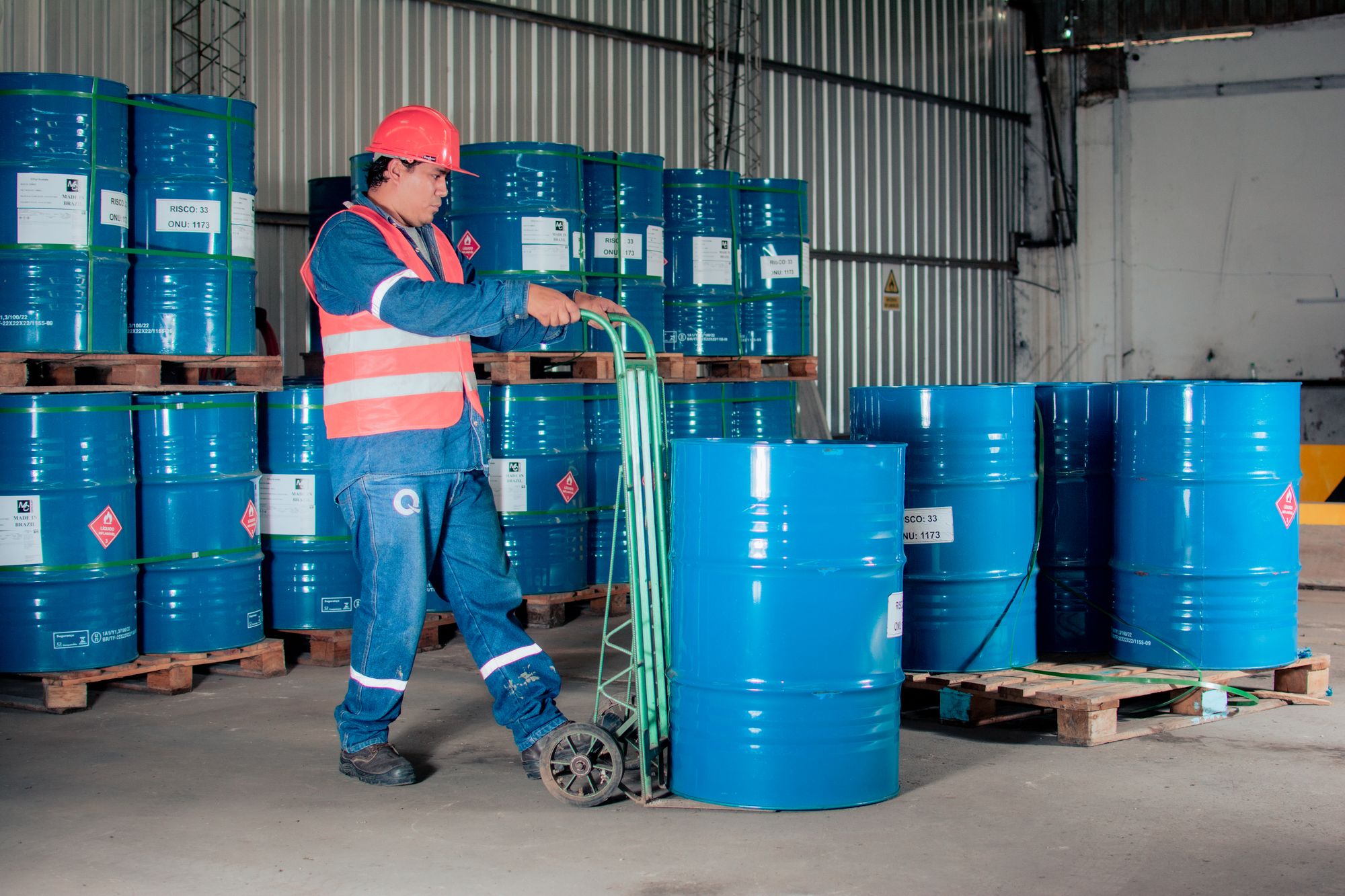

The second shift at a metal fabrication plant is four people short for a production run that ends in six weeks. Purchasing calls a staffing agency. Four workers arrive Monday at six in the morning, sign in at the front desk, collect a badge and a pair of safety glasses, and are walked out to press brakes they have never operated. Someone asks whether they have been trained. The agency says yes. What the agency means is that it played a general machine safety video on Friday afternoon.
Nobody in that building did anything obviously wrong, and the arrangement is entirely ordinary. OSHA’s own training bulletin walks through a close version of it, because it produces a specific failure: two companies each believe the other handled the part that matters.

Both companies are the employer
OSHA’s position on temporary worker safety is not ambiguous. The staffing agency and the staffing agency’s client, which OSHA calls the host employer, are joint employers of the worker, and both are responsible for providing and maintaining a safe work environment. The agency signs the paycheck and you control the floor, and neither fact relieves the other party of anything.
There is no universal split you can copy from another site, because OSHA says the extent of each employer’s responsibility depends on the specific facts of the case. The organizing principle it offers instead is that each employer should consider the hazards it is in a position to prevent and correct, and the OSHA standards it is in a position to comply with.
OSHA lists four reasons it pays attention to these arrangements. Some employers may use temporary workers as a way to avoid meeting their compliance obligations. Temporary workers get placed in a variety of jobs, including the most hazardous ones. They are more vulnerable to hazards and to retaliation than workers in traditional employment. And they are often not given adequate safety and health training, or an explanation of their duties, by either employer.
RECORDABLE CASE RATES, 2024
Total recordable cases per 100 full-time workers, private industry. A recordable case goes on the log of whichever employer supervised the worker day to day.
Source: U.S. Bureau of Labor Statistics, Table 1, Incidence rates of nonfatal occupational injuries and illnesses by industry and case types, 2024. Retrieved September 2026.
Taken at face value, those numbers would make supplied labor one of the safer ways to work in the United States, which sits oddly next to OSHA’s description of where temporary workers get placed. Part of the explanation is structural. The recordkeeping rule routes a recordable case to the log of whichever employer supervises the worker day to day, and that is usually the host. An injury that happens on your floor, to a person the agency pays, generally lands in your industry’s numbers rather than in the staffing industry’s. The survey does not break out how much of the gap that accounts for, so read an industry rate as a measure of where cases get filed as much as a measure of how dangerous the work is.
Where the training line usually falls
OSHA’s Temporary Worker Initiative bulletin on safety and health training is the clearest statement of how the two companies are expected to divide the work. In most cases the staffing agency handles generic safety and health training and the host employer handles site-specific training, because the host generally controls the details, means, methods and processes of the work and knows the machinery. The bulletin frames that as what happens in most cases, and it asks the two employers to establish which party owns each piece and put the detail in the contract.
HOW THE DUTIES USUALLY DIVIDE
| What has to happen | Who is usually in a position to do it |
|---|---|
| Generic safety and health training, including how to recognize and report a hazard | Staffing agency |
| Site-specific training on the equipment, tasks and hazards of the actual job | Host employer delivers it; the staffing agency still has to satisfy itself that it happened and was adequate |
| Finding out what the assignment really involves before workers are dispatched | Staffing agency, with information from the host |
| Physical conditions, guarding, PPE and hazard communication at the worksite | Host employer, which controls them |
| Recording a recordable injury on the OSHA 300 Log | Whichever employer supervises day to day |
The split depends on the facts of each case. Sources: OSHA, Protecting Temporary Workers and TWI Bulletin No. 4. Retrieved September 2026.
Training has to be finished before the worker starts on the project. It has to be delivered in a language and vocabulary the worker understands. And no employer escapes its own duty by requiring another party to perform it, which means a staffing agency that stations a team leader on your floor has not thereby taken over your site-specific training obligation. An agency with reason to believe your site-specific training is inadequate is expected to tell you and work with you to fix it, provide the training itself, or remove its workers from your site.
Who writes the injury down
The recordkeeping question has a clean answer that is easy to get wrong in practice. Under 29 CFR 1904.31, you record injuries and illnesses for employees who are not on your payroll if you supervise them on a day-to-day basis. Paragraph (b)(2) applies that directly to workers obtained from a temporary help service, employee leasing service or personnel supply service. OSHA defines day-to-day supervision as supervising the details, means, methods and processes by which the work is accomplished, on top of specifying the output or result. Walking four people to a press brake and checking on them through the shift meets that description.
Paragraph (b)(4) handles the other side. A case you supervised is not also recorded by the agency. The rule tells the two employers to coordinate so that each injury appears exactly once, on one log or the other. OSHA’s training bulletin reads the reporting rule at 29 CFR 1904.35(b) as landing on both employers as well: each has to inform workers how to report an injury and establish a reasonable procedure for reporting promptly and accurately, one that would not deter a reasonable employee from reporting at all. A supplied worker with no company login and no work email tends to fall out of that system. Some platforms now let a worker reach a report form by scanning a posted code and entering an employee ID, without an app to install or a password to issue, which removes one common reason a temporary worker never files anything. Where that report ends up in your incident records is a separate decision you should make before the first shift rather than after the first injury.
What to do before the next dispatch
Five things to settle before workers arrive
Name the standards that apply to the job the worker will actually do, and state which company delivers which part of the training. OSHA recommends setting the respective responsibilities out in the contract. It does not transfer the underlying duty, but it ends the argument about who was supposed to do what.
Describe the equipment, the working heights, the chemicals and the energy sources. An agency asked for general laborers has no reason to send anyone with fall protection training.
Same content and same standard you would give a new hire on your own payroll, in a language and vocabulary the worker understands, completed before work begins.
The bulletin asks each side to inform the other when training is done. Keep the record on your side too, because an inspector asking about a worker on your floor will not accept a pointer to someone else’s filing cabinet.
Decide which company records a case before anyone is hurt, give the worker a way to report that does not require a company account, and confirm the agency has its own channel for anything reported to it.
Steps one and two are the design-level fixes, and they are also the easiest two to skip, because both of them happen weeks before anyone sets foot on the floor and neither produces a document anybody asks for afterward.
How Q-Training Can Help
Steps three, four and part of five are record problems, and that is where Quantum’s Training and Certificate Management module does real work. Required training is set once by job title, role or group, so a supplied worker slotted into a press operator role picks up that role’s course list automatically. Each person has a training record showing what was completed and when, and every worker gets a personal QR code that a supervisor, client or auditor can scan to see the current record with no login and no account. For someone who started this morning and belongs to another company, that check takes a few seconds at the gate.
The module does not write your staffing contract, it does not determine who supervises day to day, and judging whether the agency’s generic training was any good remains a human call. Steps one and two are conversations between two companies, and no software settles them. What the platform picks up is the point where someone has to prove the training happened, which is also where these arrangements tend to come apart. If supplied labor is a standing part of your operation, the same problem arrives in contractor management with a longer list of documents attached.