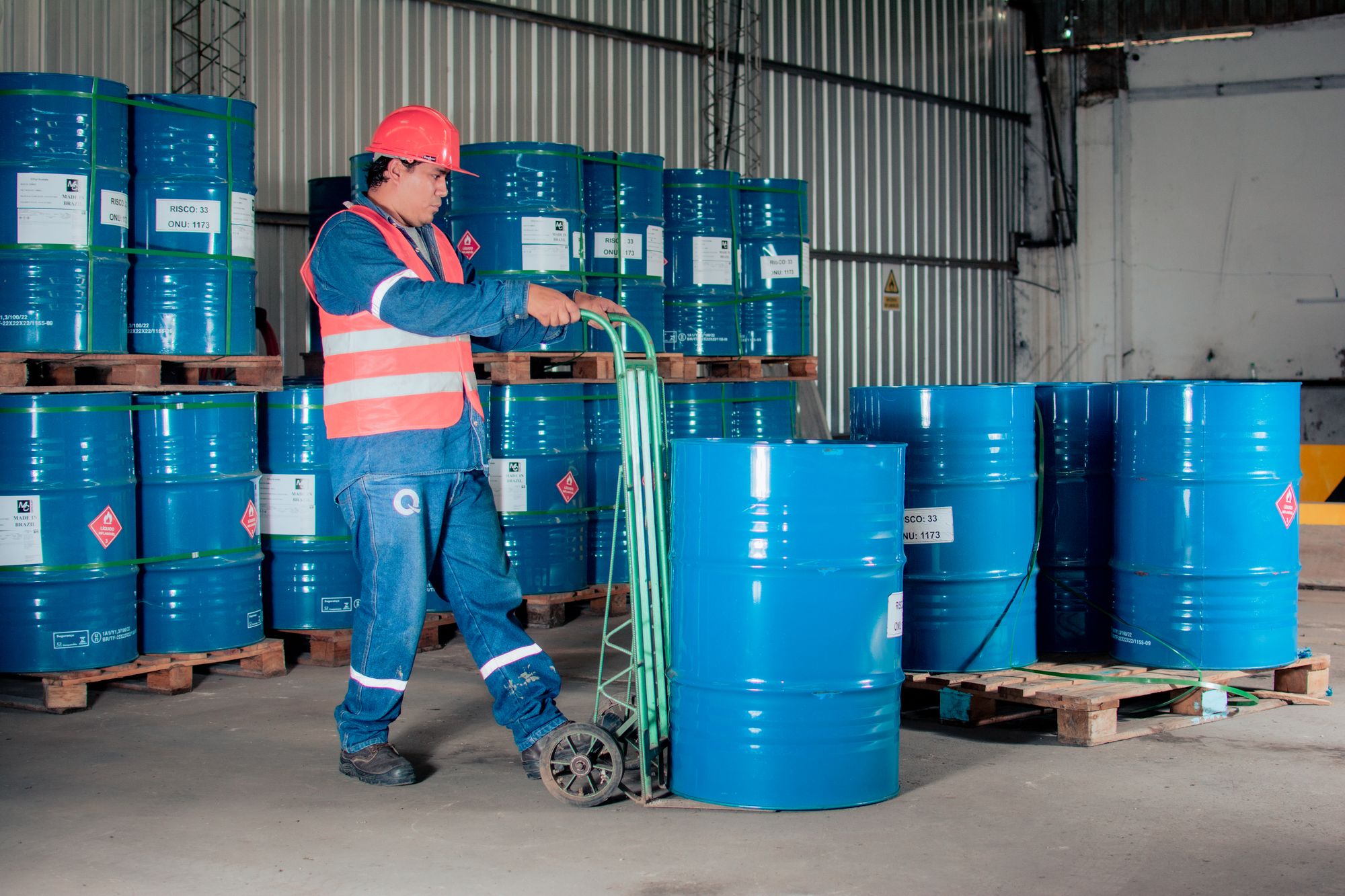
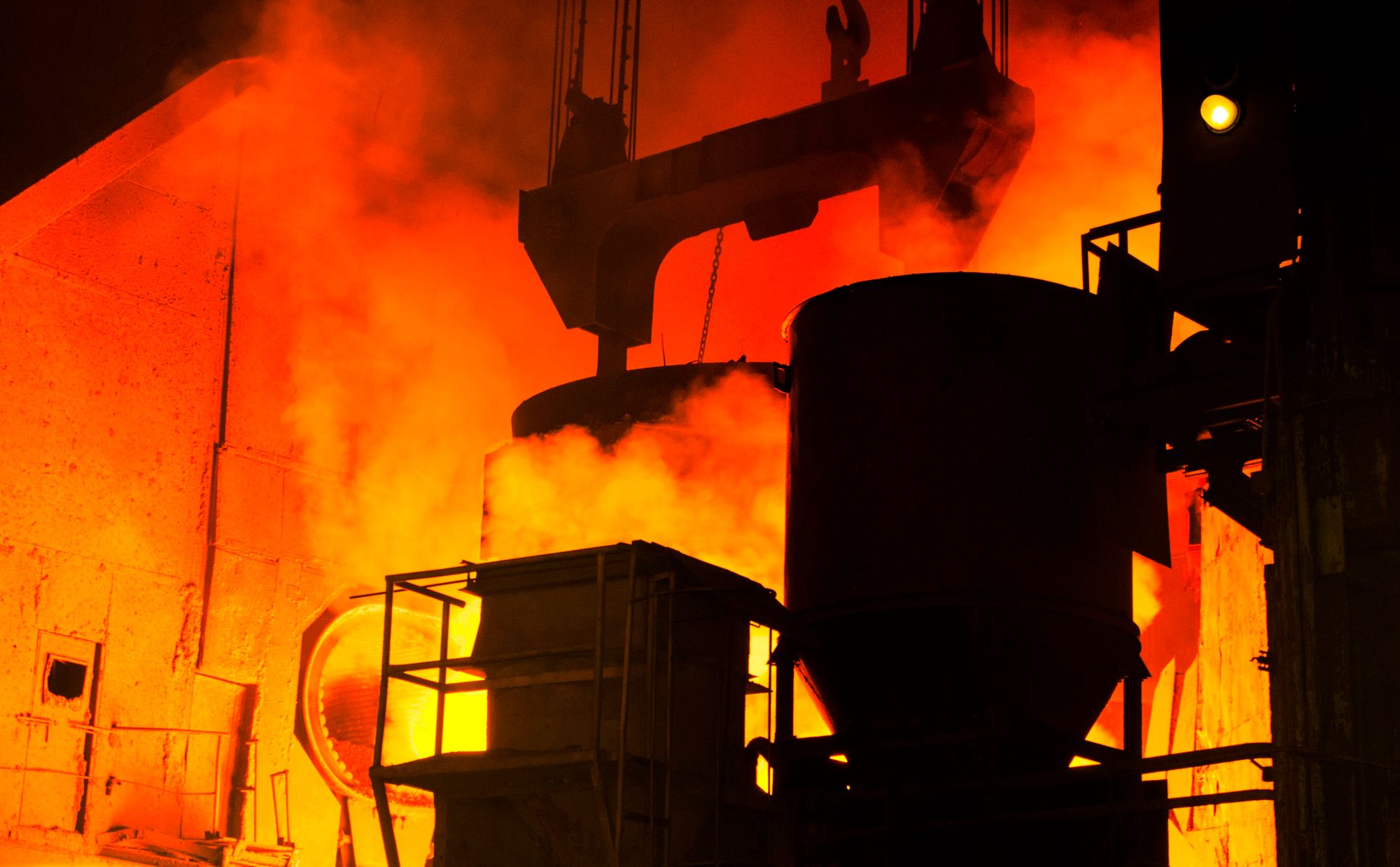
The compliance officer came for a machine guarding complaint. Third week of July, heat index in the mid-eighties since mid-morning, and the annealing line at the back of the plant runs warmer than that. On her way out she asked the shift supervisor how the plant tracks the heat back there, and whether the three who started Monday got extra time before the line. He answered honestly. Neither answer existed on paper.
Both come off a checklist OSHA published in April, and the officer had to document the answers.
On April 10, 2026, OSHA issued a revised National Emphasis Program for outdoor and indoor heat-related hazards, replacing the 2022 version and running for five years. There is still no federal heat standard, and OSHA’s own rulemaking status page records nothing after the post-hearing comment period closed on October 30, 2025. So the operative document for heat enforcement is an inspection directive, and it publishes what inspectors look at.
What the April revision changed
CPL 03-00-024 rebuilt the target list and reorganized what officers carry into the field. An industry made it on any one of four criteria: BLS heat illness counts or rates, BLS days away, restricted or transferred cases, and OSHA severe injury reports of heat death or hospitalization, all for 2021 to 2024, or a 2022 to 2025 heat inspection ending in a General Duty Clause violation or hazard alert letter. Forty-six industries came off, twenty-two went on, thirty-three stayed, leaving fifty-five targets at the four-digit NAICS level, down from seventy-nine.
THE HEAT NEP TARGET LIST GOT SHORTER AND MOSTLY TURNED OVER
Four-digit NAICS industries in Appendix A. The dark block is the 33 industries on both lists, so the bars are aligned on what stayed. Both scaled against the larger 2022 total.
79 industries33 kept46 dropped
55 industries33 kept22 new
Source: OSHA, CPL 03-00-024, National Emphasis Program, Appendix A. The 2022 total of 79 is the directive’s own 46 removed plus 33 retained.
If your industry is one of the twenty-two additions, your Area or Regional Office must run a ninety-day outreach program before it opens any programmed inspection there, a precondition it may already have met. The revision also reorganized this guidance into two appendices officers must document: Appendix I, a heat program evaluation checklist, and Appendix J, citation guidance.
What actually triggers a heat inspection
Two triggers operate here. Programmed inspections run off establishment lists generated from the Appendix A Table 1 industries, on days when the National Weather Service has announced a heat warning or advisory locally. The directive sets no temperature for that trigger, only the existence of an NWS alert.
Separately, a heat priority day is a day when the heat index is expected to be 80°F or more. On those days, during inspections opened for any other reason, officers “should inquire regarding the existence of any heat-related hazard prevention programs.”
80°F
Expected heat index that makes a day a “heat priority day,” when officers already on site for another reason are directed to ask about your heat program
The directive adds that heat-related fatalities have occurred with a heat index below 80°F when aggravating factors are present. The figure directs inspections; harm starts lower.
The expansion rule uses “shall.” Officers investigating for other purposes shall expand their inspection where there is evidence of violative conditions, and the directive gives examples: a case on both the OSHA 300 and 301, employee statements, or plain view observations. Complaints, referrals and fatality reports get handled whether or not the employer is in a targeted industry.
The eleven questions
Appendix I is titled Evaluation of a Heat Program. One instruction, then eleven numbered items: determine whether the employer has a heat illness and injury program addressing the following. Officers document it on all inspections.
APPENDIX I: WHAT THE OFFICER IS ASKED TO DETERMINE
| Question, as written in the directive | What answers it on site |
|---|---|
| 1. Is there a heat program (written or verbal) that is effectively communicated to employees? | A dated written program, plus evidence of how it reached the crew |
| 2. How did the employer monitor ambient temperature(s) and levels of work exertion at the worksite? | Logged readings alongside a note of the task and exertion level at the time |
| 3. Were there sufficient amounts of cool water easily accessible to the employees? | Location, quantity and temperature of water at each work area |
| 4. Did the employer allow additional breaks for hydration? | What crews describe when asked directly |
| 5. Were there scheduled rest breaks? | The break schedule in force on the day in question |
| 6. Was there access to a shaded area? | Where it is, how far the walk, and whether it was usable |
| 7. Did the employer provide time for acclimatization of new and returning workers? | Start dates, return-from-absence dates, and the ramp actually applied |
| 8. Were administrative controls used (earlier start times, workload adjustments, and employee/job rotation) to limit heat exposures? | Shift and rotation records showing the adjustment was made |
| 9. Did the employer provide training on heat illness signs, how to report signs and symptoms, first aid, how to contact emergency personnel, prevention, and the importance of hydration? | Per-employee records covering all six named topics |
| 10. Do employees and supervisors understand the heat program? | Employee interviews, which the directive requires officers to conduct |
| 11. Is the heat program properly implemented and managed by a designated heat safety representative? | A named person with the role assigned in writing |
Source: OSHA, CPL 03-00-024, Appendix I. Evaluation of a Heat Program. Right-hand column is our reading of what satisfies each item, not OSHA text.
Question one accepts a verbal program, so having no document is not automatically a finding. It does require the program be effectively communicated, so one living in a single manager’s head already fails question one on that clause, before ten and eleven ask whether employees and supervisors can explain it and whether anyone owns it by name.
What OSHA cites when there is no standard
Appendix J directs that a citation for a heat-related health hazard, indoor or outdoor, shall be issued under the General Duty Clause when all elements of a violation have been established, and a hazard alert letter may go out where they are not. Appendix C requires the description to name heat sources, conditions and exertions with particularity, and says it should not consist of the employer’s failure to implement abatement measures. Appendix J phrases it as avoiding a description resting solely on that failure.
Other standards are named as potentially applicable, introduced with “including, but not limited to,” so treat that list as open. Seven state plans run heat standards of their own: California, Colorado, Maryland, Minnesota, Nevada, Oregon and Washington. Adopting the federal NEP is encouraged but not required of them, so a multi-state operator faces an uneven floor.
What to do before the next heat advisory
Design-level fixes come first because they work whether or not anyone remembers the training.
- Find your four-digit NAICS in Appendix A, across all three tables, and check for the dagger marking a newly added code. The Area Office may still drop a site with no heat exposure, and some cooperative-program participants are exempt.
- Cut the heat load at the source. Shield radiant sources, insulate hot surfaces, add ventilation or spot cooling, enclose or automate the hottest tasks. This is the only category that reduces the exposure itself.
- The schedule is the cheapest control you have. Earlier start times, workload adjustments and employee or job rotation are the three administrative controls question eight names.
- Provision water, rest and shade as infrastructure. The abatement language asks for water that is cool, in a familiar location, readily accessible to the work, easy to access, and in sufficient quantity for the duration of the work.
- Give new and returning workers time to acclimatize, and do not invent a ramp. The directive sets no numeric schedule, deferring to ACGIH’s action limit and threshold limit value. Pick a defensible source and cover people back from extended absence.
- Write the program down and name the heat safety representative. Train on the six topics in question nine, then check that supervisors can explain it unaided, since question ten checks them specifically. Our safety training software handles the evidencing half.
- Pair every temperature reading with the task and exertion level it applied to.
- Read your own logs first. The officer reviews the OSHA 300 and 300A for three calendar years plus the current year to date, unless your establishment is exempt from recordkeeping by size or industry classification.
How Q-Inspection Can Help
Appendix I is a form: eleven questions, asked on a schedule, by an accountable person, ending in a record. Q-Inspection is built for that shape of work, with custom forms by site, role or task type, scheduled or ad-hoc, photo capture in the field, and an e-signature question type so whoever ran the check signs it. Findings collect into a list prompting a corrective action, submission is blocked until each has one, and those actions are tracked through verification to closure. That turns items five and six, and the recurring half of item three, into something you can hand an inspector.
Nothing here shields a furnace, reads a thermometer, or rewrites next week’s roster, so items two and eight stay with engineering and operations. Training records live in the training module and stay there; the inspection record captures what the inspector answered on the day. What our safety audit software does is make the check happen on schedule, capture the answer the same way every time, and stop a finding from quietly expiring.