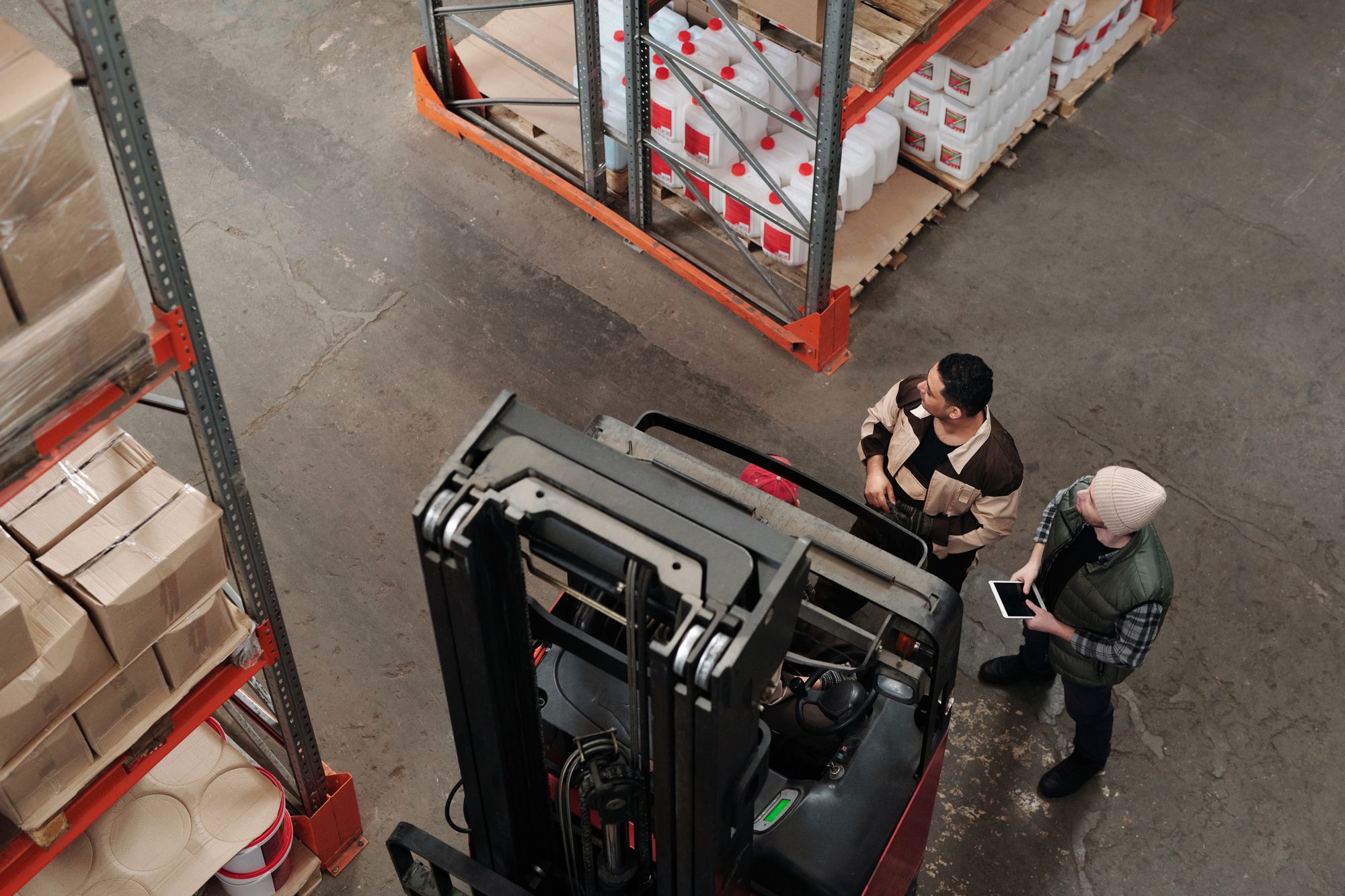
A forklift operator on the afternoon shift notices a rack upright bent out of true near the loading dock. He pulls out his phone, scans the QR code bolted to the post, snaps a photo, and picks a severity level from a dropdown. The whole thing takes maybe ninety seconds. He goes back to work assuming someone will look at it.
Three weeks later, the rack is still bent. Nobody has told him whether it was inspected, flagged for repair, or even opened. He doesn’t file another report for the rest of the quarter. Neither does anyone who heard him mention it in the break room.
This is the failure mode that kills most hazard reporting programs, and it rarely happens at the point of submission. Employees generally report the first time. What determines whether they report a second time is what they can see happened after the first one.
The Feedback Loop Is Part of the Reporting Program
OSHA’s Recommended Practices for Safety and Health Programs folds reporting and feedback into a single action item. Employers are told to establish a process for workers to report hazards and close calls, include an option for anonymous reporting to reduce fear of reprisal, and then “report back to workers routinely and frequently about action taken in response to their concerns and suggestions.” The guidance is direct about the alternative: workers who conclude nothing comes of a report tend to stop volunteering the information, and a safety program loses a data source it cannot generate any other way, direct observation from the people actually exposed to the hazard.
What OSHA Requires vs. What OSHA Recommends
| Practice | Legal status |
|---|---|
| Reasonable procedure to report work-related injuries and illnesses, with no retaliation for reporting | Mandatory, 29 CFR 1904.35 |
| Extending that same reasonable-procedure, no-retaliation standard to hazard and near-miss reports | Recommended practice, not a standard |
| Anonymous reporting option to reduce fear of reprisal | Recommended practice, not a standard |
Source: 29 CFR 1904.35, Employee Involvement and OSHA Recommended Practices, Worker Participation
The legal floor here is narrower than EHS teams sometimes assume when they talk about OSHA recommendations as if they carried the same weight as a standard. 29 CFR 1904.35 requires a reasonable procedure for reporting work-related injuries and illnesses, one that would not deter or discourage a reasonable employee from reporting, and it prohibits discharging or discriminating against an employee for making that report. That obligation covers events that have already happened. Extending the same reasonable-procedure, no-retaliation standard to hazards and near misses, the reports meant to catch a problem before anyone gets hurt, is a recommended practice rather than a binding requirement, and the accountability for making that practice work falls on how the employer designs the program, separate from citation risk.
Why the Categories of Hazards Being Reported Matter
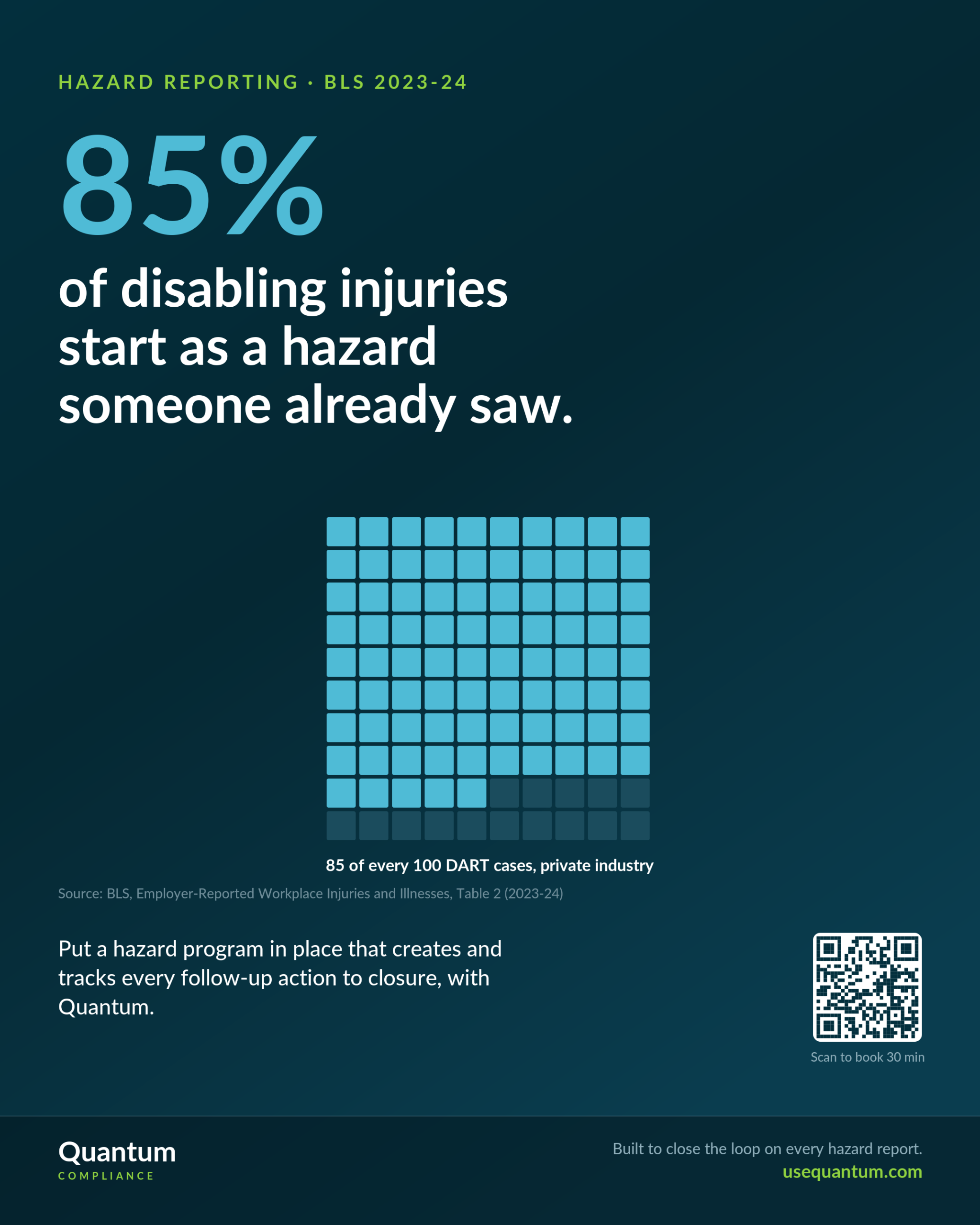
The hazards that get caught by a reporting program, before they become injuries, tend to fall into a small number of categories. Federal injury and illness data shows the same categories driving the bulk of days-away and restricted-work cases year after year.
Leading DART Event Categories, Private Industry
Cases involving days away, restricted work, or job transfer, by event or exposure type, 2023-24
Source: Bureau of Labor Statistics, Employer-Reported Workplace Injuries and Illnesses, Table 2
None of those categories require exotic equipment or an unusual worksite to produce. A frayed strap, a wet floor, a rack leaning slightly out of plumb, an ergonomically awkward lift repeated all shift, all of it fits the profile of what a hazard report is supposed to catch before it becomes one of those numbers. Which is exactly why the reporting habit is worth protecting.
Where the Loop Actually Breaks
In practice, the breakdown happens at a handful of predictable points. Nobody confirms receipt, so the employee has no evidence the report reached an actual person. Reports sit in a single queue with no severity triage, so a bent rack upright and a burned-out hallway light wait in the same line. A corrective action gets assigned to somebody but carries no due date, so it ages quietly for months. The person who reported the hazard has no way to check status on their own, which means their only option is to ask a supervisor directly, and most people won’t do that twice. And, most often, nobody tells the reporter what happened at all, even when the honest answer is “we looked at it and decided it doesn’t need a fix right now.”
Five Steps to Close the Loop on Every Hazard Report
Treating what happens after the submit button as part of the same workflow, roughly in this order, addresses most of it:
Steps to Close the Loop
An automatic acknowledgment at the moment of submission is the only proof the reporter has that anyone saw it.
Route by severity and hazard type first, so a structural issue doesn’t wait behind a burned-out light.
A corrective action with nobody’s name on it and no deadline ages indefinitely.
Checking on a report shouldn’t depend on catching a supervisor in the hallway.
Silence reads as dismissal whether or not that was the intent behind it.
How Q-Hazard Can Help
Q-Hazard covers most of the mechanics in that list, though not the judgment calls behind them. Reporting through a QR code or the mobile app, paired with Smart Login’s single employee-ID sign-in, attaches every report to a specific person automatically. That is what makes steps one and four possible in the first place: there is no ambiguity about who reported what, and no separate lookup needed to notify them later. Severity, hazard type, and contributing factors are captured at the point of intake, corrective actions carry due dates and require verification before they close, and hazard resolution status stays visible on an ongoing basis instead of disappearing once a task is assigned, covering steps two through four. Built-in email notification templates handle the routine report-back in step five. See how the Hazard Reporting app handles intake and routing in practice.
Deciding which reports are actually urgent, and whether a given fix is adequate, stays a judgment call for the EHS manager and location leads reviewing the queue. Whether reporting volume is trending down because the hazard picture genuinely improved, or because people quietly stopped trusting the process, is a read that comes from watching your own trend dashboard and exported hazard data over time, as part of a broader EHS platform, rather than a conclusion the software draws for you.