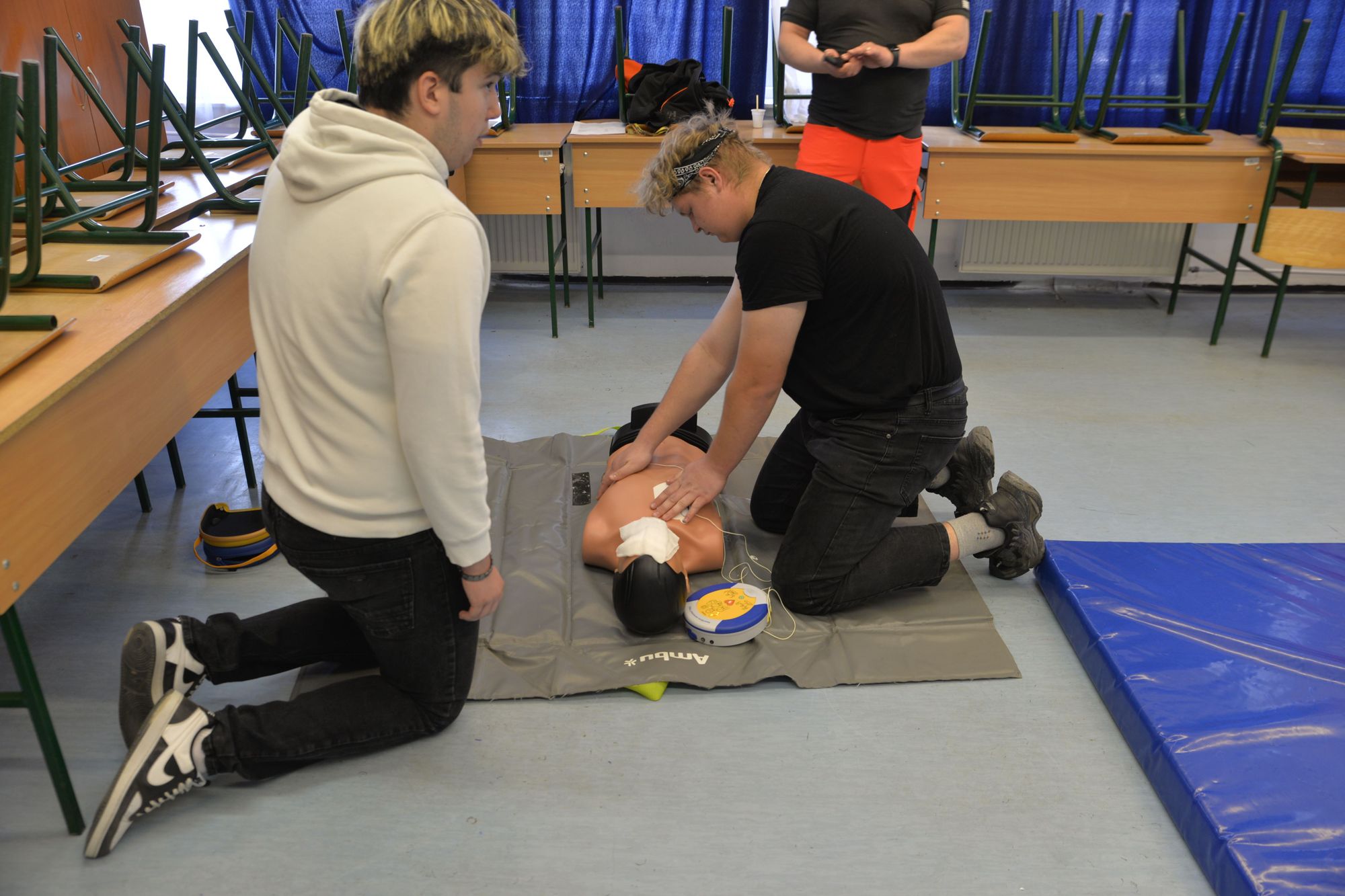
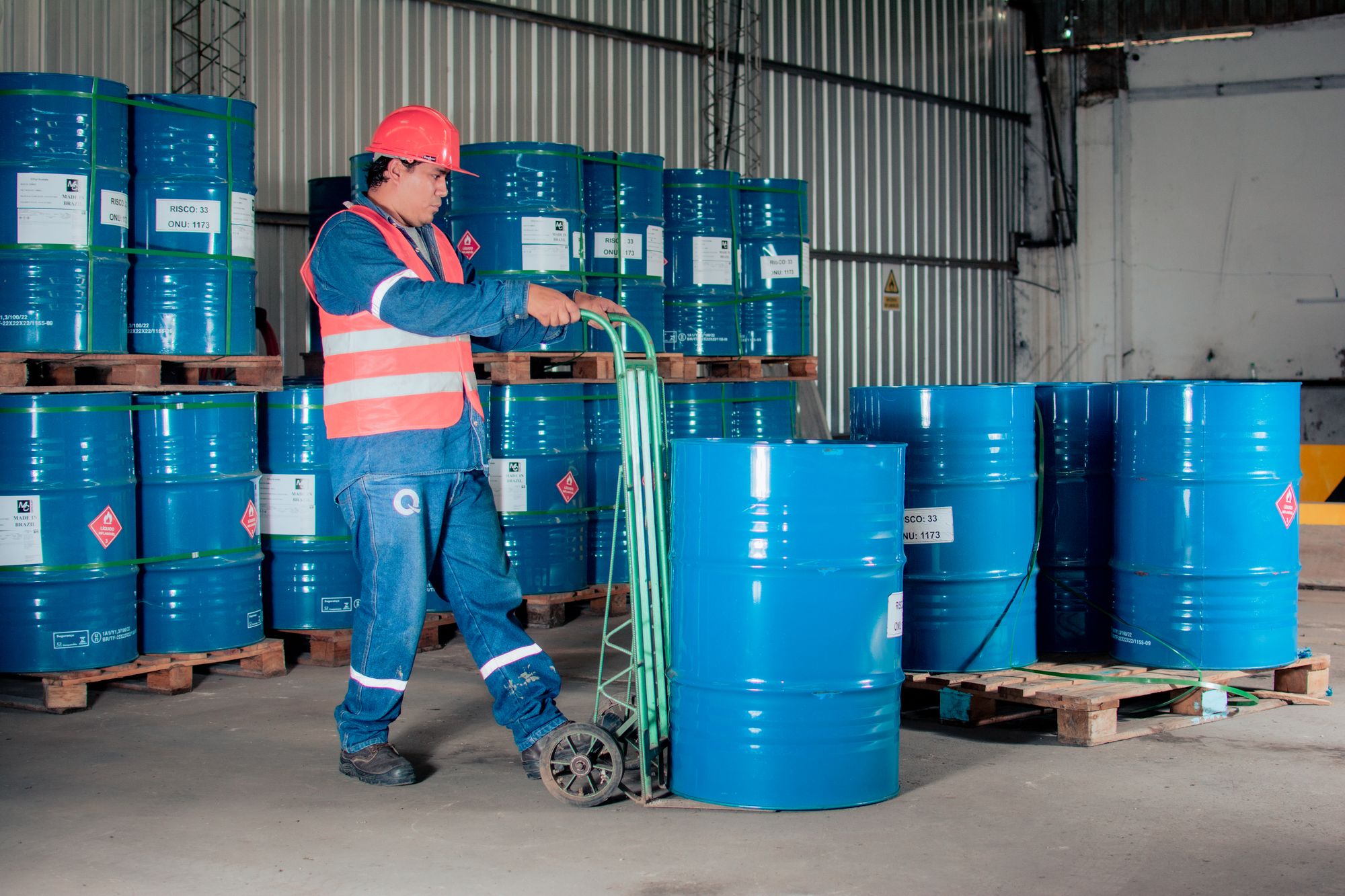
The maintenance crew finished the new clean-in-place skid on Line 4 on a Thursday, and by Friday morning a drum of caustic cleaner concentrate was sitting next to it on a spill pallet. Section 2 of its safety data sheet classifies it as Skin Corrosion Category 1B. The operator who charges the skid opens that drum twice a shift. The only plumbed eyewash in the building is still bolted to the wall of the old chemical room, three corridors and two doors away, because that is where the drum used to live.
The crew followed the project plan, which covered piping, controls and guarding and had no step asking where the corrosives would end up. That gap is exactly where OSHA’s eyewash rule gets missed, because the requirement follows the chemical and the task, while emergency equipment is often planned around rooms.
What OSHA’s Eyewash Station Requirements Actually Say
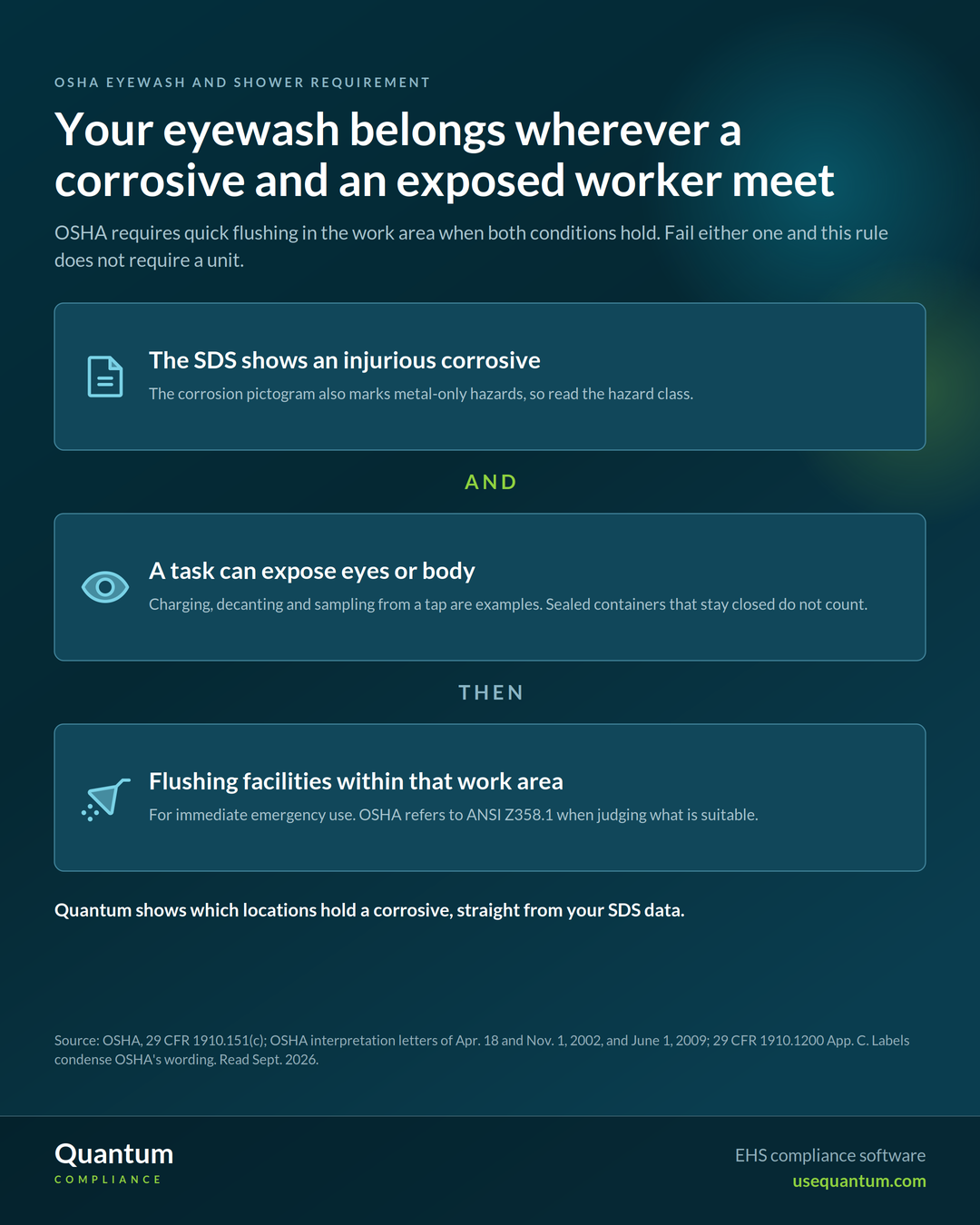
The federal rule is a single sentence. 29 CFR 1910.151(c) reads: “Where the eyes or body of any person may be exposed to injurious corrosive materials, suitable facilities for quick drenching or flushing of the eyes and body shall be provided within the work area for immediate emergency use.”
There are no flow rates, distances or water temperatures in the regulation. OSHA has said so directly. In a 2002 interpretation letter, the agency explained that ANSI Z358.1 was never adopted as an OSHA standard, and that because 1910.151(c) gives no specific installation or operating instructions, it is the employer’s responsibility to assess conditions such as water temperature so the unit actually protects against the materials in use. The same letter, answering a question about the 1990 edition, describes the ANSI flow provision for emergency showers: heads delivering at least 20 gallons per minute, with enough supply to run for a minimum of fifteen minutes.
OSHA can still measure a unit against it. A second letter later in 2002 confirmed that when inspectors find facilities unsuitable, the citation is written under 1910.151(c), and that in judging suitability OSHA may refer to the most recent consensus standard along with other recognized medical, technical and industrial hygiene sources. So the consensus standard is one of the references an inspector can hold your unit up against.
The Trigger Is Printed on Your Safety Data Sheets
OSHA ties the requirement to your chemical data. In a 2009 letter, the agency wrote that if none of the materials used in a work area is an injurious corrosive, as indicated by the safety data sheet for each product, an eyewash or shower would not be required under 1910.151(c). The same letter answered no when asked whether a severe eye irritant that is not corrosive triggers the rule, while noting that ANSI’s definition of hazardous material is broader and includes caustics as well as additional substances.
Under the GHS classification OSHA adopted in Appendix C to 1910.1200, the corrosion pictogram shows up on three different hazard classes, and they do not carry the same meaning for this rule.
Three Hazard Classes Share the Corrosion Pictogram
| Hazard class and category | Signal word and hazard statement | What it means for 1910.151(c) |
|---|---|---|
| Skin corrosion, Category 1A to 1C | Danger. “Causes severe skin burns and eye damage” | A corrosive on the SDS. Flushing is required wherever a task can expose eyes or body. |
| Serious eye damage, Category 1 | Danger. “Causes serious eye damage” | Review it. Confirm on the SDS whether the product is corrosive. ANSI’s broader definition of hazardous material may still apply. |
| Corrosive to metals, Category 1 | Warning. “May be corrosive to metals” | A hazard to containers and equipment. Check the SDS for a separate skin or eye classification. |
Source: OSHA, 29 CFR 1910.1200 Appendix C, Allocation of Label Elements; OSHA interpretation letter, June 1, 2009
A search for everything carrying the corrosion pictogram will pull in products that only attack metal, while a search limited to skin corrosion can skip eye damage products that deserve a look. Start with the hazard class in Section 2 of the SDS.
Exposure Decides Where the Unit Goes
The 2009 letter also quotes OSHA’s 2008 position on how exposure changes the answer. If hazardous materials are present in a way that exposure could not occur, such as sealed containers that will not be opened or caustics in building piping, an eyewash or shower would not be necessary. If that piping has a spigot or tap where employees are expected to sample or withdraw the contents, one is needed where that task happens.
That makes the task inventory as important as the chemical inventory. Drum charging, decanting into secondary containers, battery maintenance, line breaking and sampling are common exposure moments, and they do not always happen in the room where the eyewash was installed.
Where These Citations Show Up
Federal OSHA Citations in Manufacturing, NAICS 32 and 33
Citations issued October 2024 through September 2025, all establishment sizes, both subsectors combined
Source: OSHA, Frequently Cited OSHA Standards, Federal OSHA, NAICS 32 (incl. chemical, plastics, paper and petroleum manufacturing) and NAICS 33 (incl. metal, machinery and electronics manufacturing)
Across those two manufacturing subsectors, Federal OSHA cited 1910.151 103 times in 103 inspections during the period, slightly more often than the eye and face protection standard. Two limits apply to that number. The count covers every paragraph of 1910.151, including the first aid provisions in (a) and (b), so eyewash citations are a subset of it, and Federal OSHA data excludes states that run their own plans. Even so, a one-sentence rule with no numeric specification is being cited at about the same rate as the eye protection standard beside it.
What to Do About It
Steps to Match Flushing Facilities to Your Corrosives
List every product the SDS classifies as skin corrosion Category 1, plus serious eye damage Category 1 for review, by the location where it is stored and used.
Ask whether a less corrosive product or a ready-to-use dilution will do the job, then look at closed transfer and sealed dispensing so fewer tasks open the container at all.
For every task that still opens, pours, samples or breaks into a corrosive line, place a suitable unit within that work area and use the current ANSI Z358.1 for location, installation and maintenance details.
Add a flushing check to new chemical approvals, equipment projects and relocations, so a moved drum triggers the question before the drum moves.
Schedule activation and condition checks for each unit, and show every worker who handles the product where the nearest one is and how to use it.
Substitution and closed transfer come first because they shrink the number of places that need a unit, which usually costs less than plumbing a new station for every task. Step four is the one that would have caught the Line 4 skid, and it only works if the approval process for a new chemical or a moved one actually asks the question. Some platforms now route new chemicals through an authorization step before they reach the floor, which gives that check a natural home.
How Q-Chem Can Help
Q-Chem, Quantum’s Chemical Management module, supports step one and the new-chemical part of step four. Its SDS import extracts hazard classes, pictograms and components into structured data, so you can search your inventory by hazard and see which locations hold a corrosive without opening each PDF. A searchable SDS library also makes it quick to confirm whether a flagged product is corrosive or only corrosive to metals. The chemical authorization workflow gives new products an approval step where the flushing question can be asked before anything reaches the floor.
Deciding whether a particular task creates an exposure, and tracking the eyewash units themselves, stay with your team. To see how it fits with the rest of your program, explore the Quantum EHS platform or contact sales@usequantum.com.