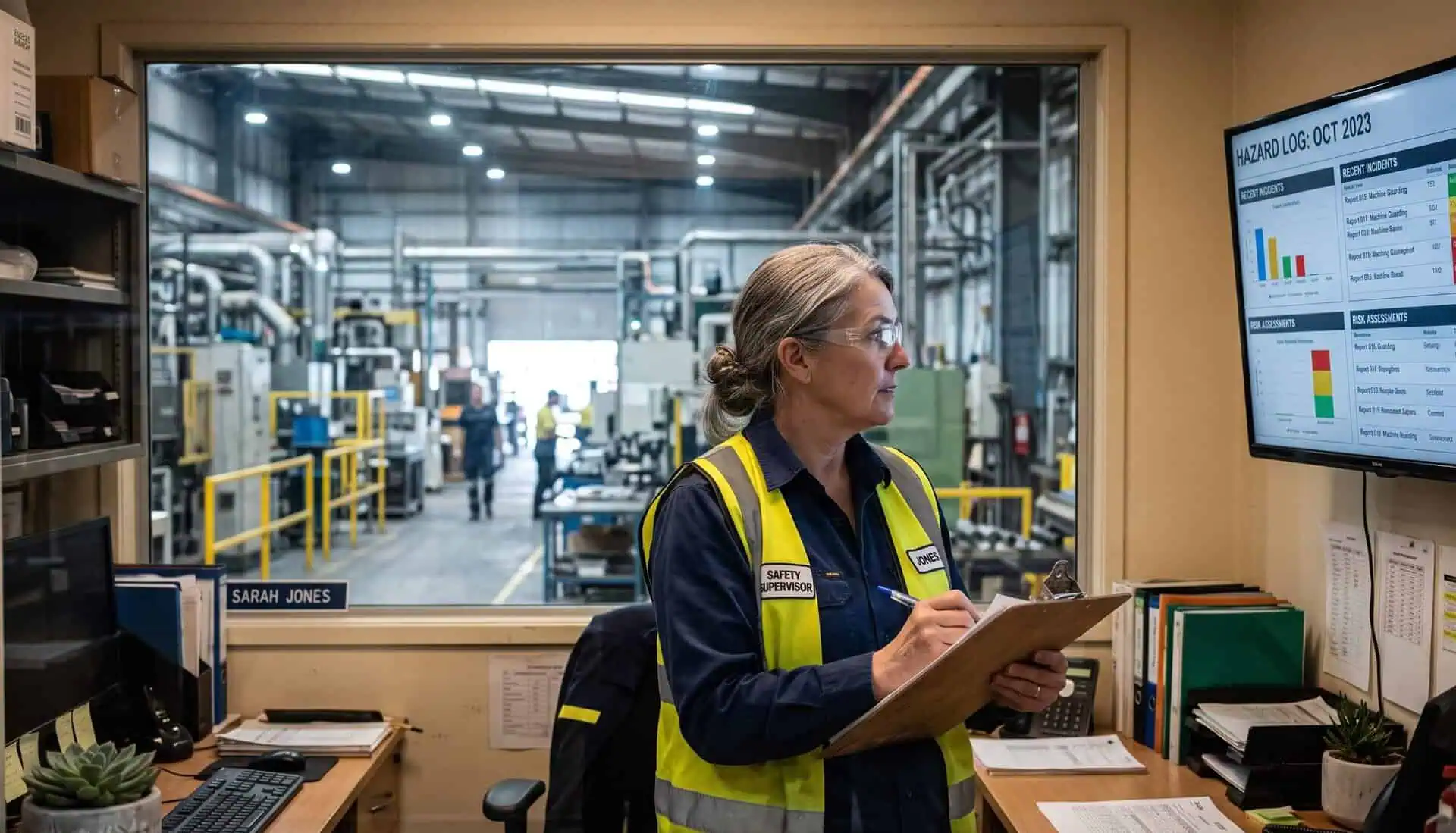
Walk onto almost any production floor and you’ll find the same split among the workforce. About a third of employees are already reporting hazards without being asked, spotting the frayed cord, the blocked exit, the forklift operator cutting a corner too tight. Another third could get there with the right nudge and the right access. And the last third, if we’re honest, may never fully buy in. The question isn’t how to convert everyone overnight. It’s how to build a program that makes it easy for the willing middle to step up, and rewarding enough that the habit sticks.
That’s the idea behind a “Great Catch” or “Good Catch” program: an incentivized, low-friction way for employees to report hazards before they become incidents, and a deliberate effort to strip away the stigma that keeps people quiet in the first place.
Meet People Where They Actually Are
In most manufacturing and production environments, hazard reporting isn’t competing with apathy; it’s competing with the realities of the floor. Cranes, forklifts, moving lines, and the very real fact that phones aren’t allowed anywhere near production. That last point matters more than it seems. If the plan for hazard reporting assumes someone can just pull out their phone and snap a photo, the plan is already broken for most of the shift.
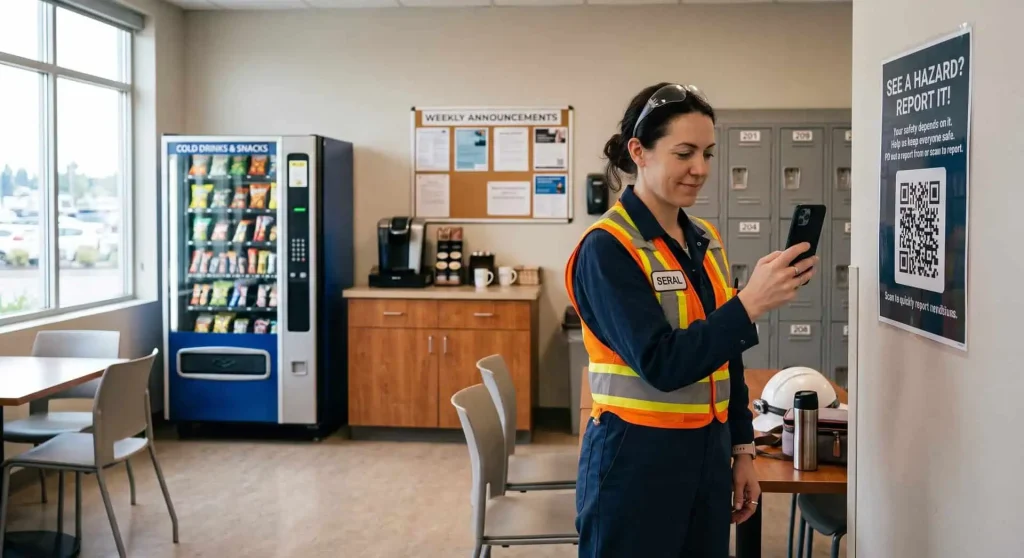
The fix isn’t complicated, but it does require intention. Employees need a clear, sanctioned path: tell a supervisor, or step into the break area where reporting is actually possible. If that pathway doesn’t exist yet, the starting point is simple: put a reporting access point exactly where people already are. A posted QR code in the breakroom. A shared Google Form that routes to every department. Something anyone can reach in the sixty seconds they have between shifts, without needing special access or a second thought.
Get ahead of it. Give everyone a QR code they can use to report and don’t wait for the near-miss to prove the gap exists.
The Math Behind Engagement
Here’s a pattern worth paying attention to: in a workforce of 100, it’s typically 10 to 15 people who consistently bring forward corrective and preventive observations, a spill risk, a lighting issue, a contractor working outside the lines, whatever it is. When you go back and look at who actually gets hurt on a site, it’s rarely those 10 to 15. The employees engaged enough to report are, almost by definition, rising above the injury statistic.
That’s not a coincidence, and it’s not just correlation for its own sake. Reporting is a proxy for situational awareness. The employee who notices a hazard worth flagging is the same employee who notices the hazard in time to step around it. An identification and recognition program built around “Good Catches” isn’t just collecting data; it’s cultivating the exact behavior that keeps people safe.
Naming the Cringe Factor
None of this works if we pretend the cultural barrier isn’t real. There is a deeply ingrained stigma around safety reporting on the floor, the sense that speaking up makes you the tattletale. It’s a gritty, uncomfortable dynamic, and no amount of poster campaigns erases it on its own.
The most effective programs attack that stigma directly, on two fronts. First, protect anonymity as a default, not an afterthought; names get omitted if they surface, full stop. Second, treat the anonymous phase as a bridge, not a destination. Employees are still learning to outgrow old habits around reporting; the goal is to get them comfortable enough with the process that they eventually report under their own name, because they’ve seen firsthand that nothing bad happens when they do, and something good usually does.
What a Good Catch Program Actually Needs
- An access point where employees already are, the breakroom, not a hypothetical app on a phone that isn’t allowed on the floor.
- A dead-simple submission method: a QR code and a shared form beats a multi-step portal every time.
- A built-in recognition or incentive structure that treats a report as a win, not an admission.
- An anonymous-by-default policy, with a clear path toward employees reporting openly over time.
- Leadership that visibly reviews and acts on what comes in, so the 10 to 15 see the loop close.
The Takeaway
Hazard recognition training gets people to see the risk. A Good Catch program gets them to say something about it and keeps saying something long after the initial training session ends. The organizations that get this right aren’t the ones with the fewest hazards. They’re the ones where reporting a hazard feels like exactly what a good employee does, not something to be embarrassed about. Build the access point, protect the anonymity, celebrate the catch, and the culture will follow.