It is 2:40 in the morning on third shift when a line lead finds a packer slumped in a restroom stall, breathing slowly with blue lips, and not responding to his name. Someone calls 911. Someone else runs for the first aid cabinet and finds gauze, burn gel, and an eyewash bottle. The site does own a naloxone nasal spray. It sits in the HR manager’s desk drawer, in an office that locked at 5 p.m., and nobody on the floor knows it exists.
The people in that hallway did what the system let them do. Where the medication was kept, who knew about it, and whether anyone on nights had been shown how to use it were all decided months earlier, by whoever set up the program, or by the absence of anyone doing it.
What OSHA’s new fact sheet asks employers to consider
In September 2026, OSHA published Opioid Overdose Rescue with Reversal Medications, announced in a September 24 news release. The fact sheet is guidance and states that it “does not impose any new compliance requirements.” It lays out what a working program looks like.
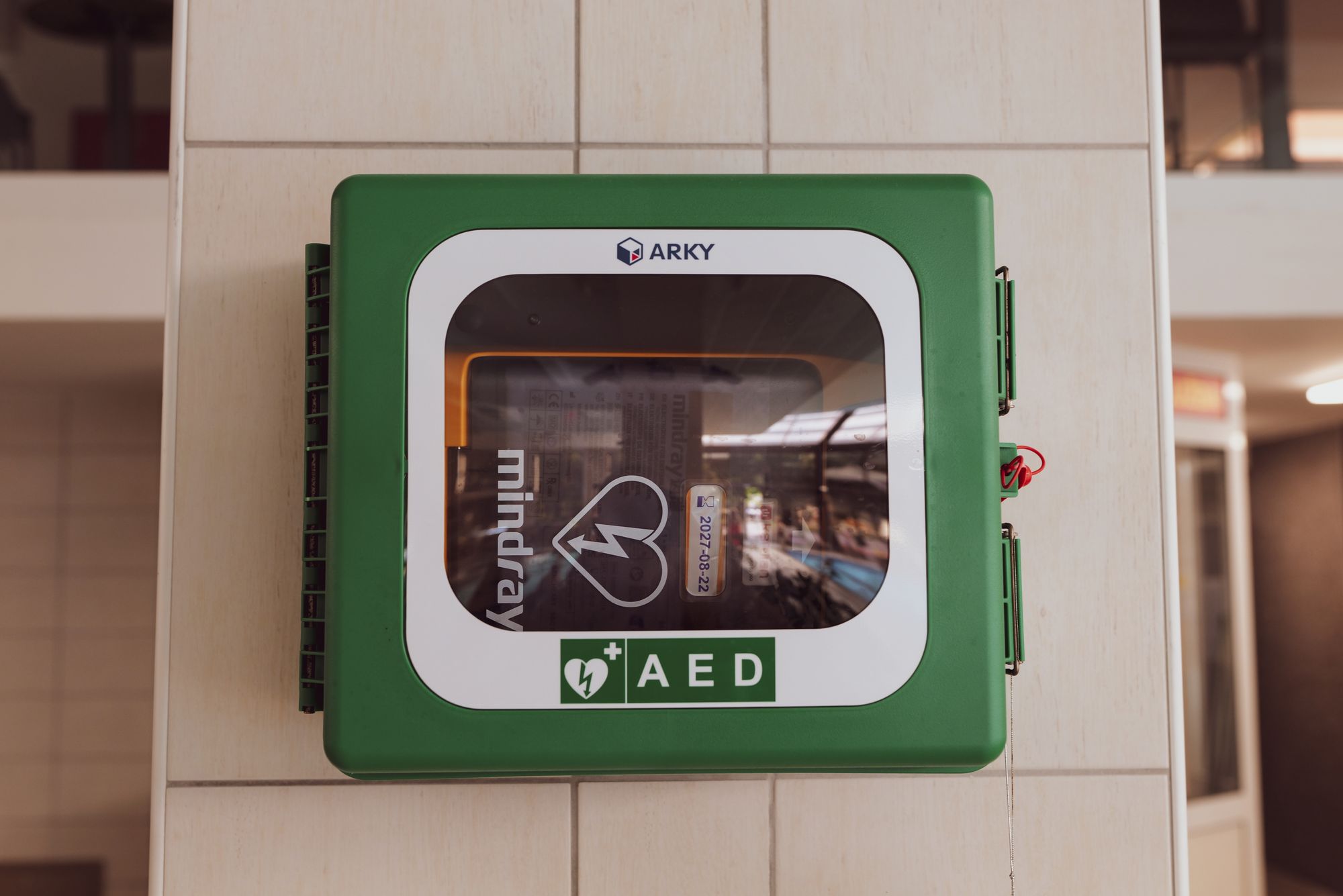
It names the two FDA-approved overdose reversal medications, naloxone and nalmefene, and notes that nasal sprays are the most common form and need no needles. Employers are told to keep naloxone “in visible, easy to reach locations, such as with automated external defibrillators (AEDs) and first aid kits,” and larger sites may keep multiple kits and clear signage. It says to track expiration dates and to “assign someone, such as a safety officer, to manage the supply.” Responders are reminded that the medication is temporary, that 911 must be called whenever it is given, and that a second dose may be needed if the effect wears off before paramedics arrive. Training is framed as a voluntary program, and the topics it suggests include recognizing the signs, giving the dose, the recovery position, what withdrawal looks like, Good Samaritan protections in your state, and treating the person with respect.
Overdose deaths at work fell in 2024, from a high base
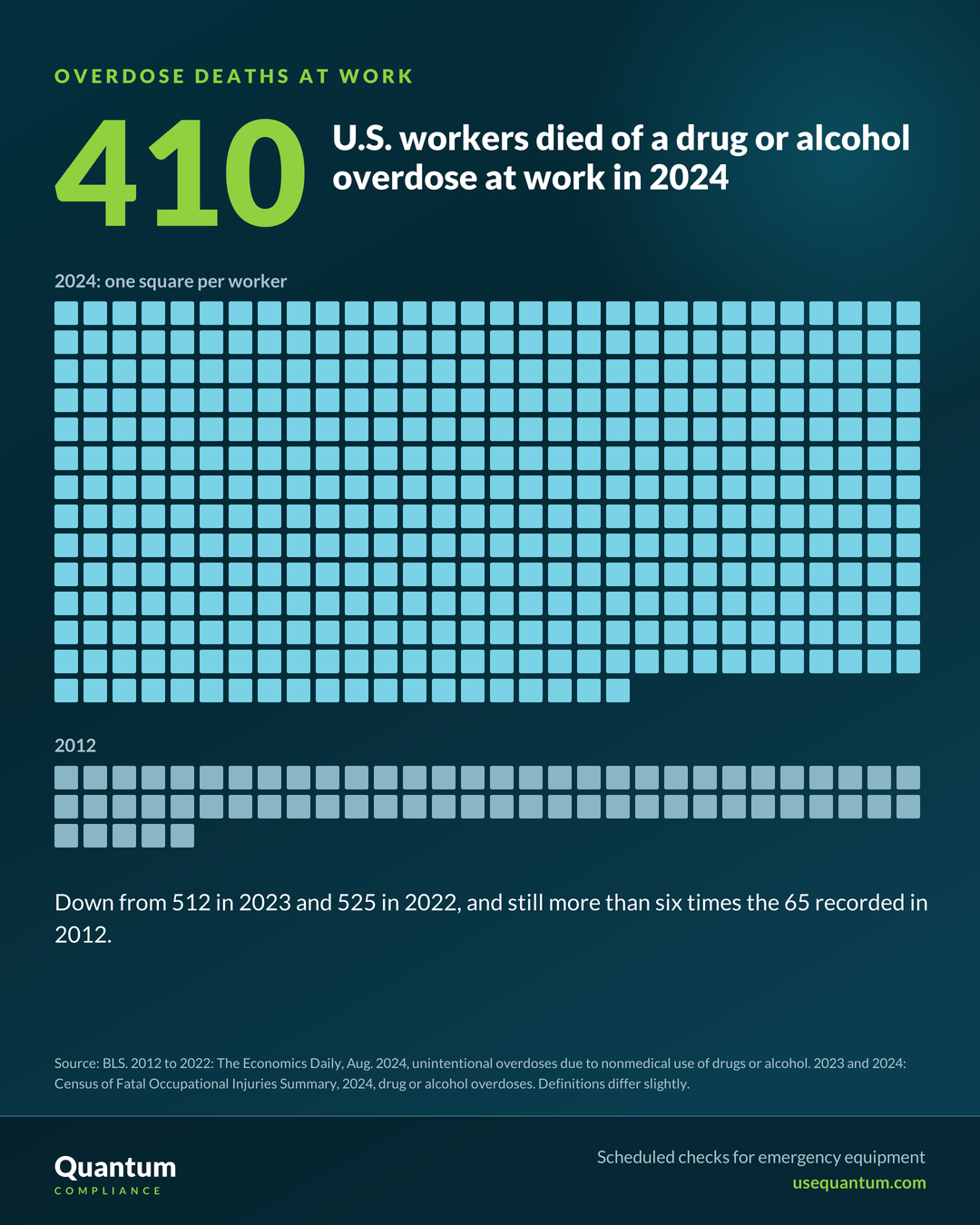
The Bureau of Labor Statistics tracks overdose deaths that happen on the job as part of its Census of Fatal Occupational Injuries. Its 2024 analysis found that workplace deaths from unintentional overdoses due to nonmedical use of drugs or alcohol rose every year from 2013 through 2022, reaching 525. The latest CFOI release shows drug or alcohol overdoses dropping to 410 in 2024 from 512 in 2023.
Workplace overdose deaths, selected years
2012 to 2022: BLS series on unintentional overdoses due to nonmedical use of drugs or alcohol. 2023 and 2024: CFOI 2024 release, drug or alcohol overdoses. Definitions differ slightly.
Source: BLS, The Economics Daily, August 2024; BLS, Census of Fatal Occupational Injuries Summary, 2024
The count fell from 512 in 2023 to 410 in 2024, after rising every year from 2013 through 2022, and 2024 is still more than six times the 2012 figure. These deaths happen at work, where a coworker or supervisor may be the first person in a position to help.
410
U.S. workers died of a drug or alcohol overdose at work in 2024
Where naloxone in the workplace usually stalls
Buying the spray is the easy part. OSHA’s fact sheet notes that state and local health departments may supply it at low or no cost, and lists other routes, including pharmacies, wholesale distributors, state standing orders, group purchasing organizations and manufacturer programs. The harder questions come after the box arrives. Is the kit somewhere a night-shift operator can reach in under a minute? Has anyone checked the date on it since it was unpacked? When the one trained person is on vacation, who knows what to do?
Each of those is decided ahead of time. If a worker freezes beside an unresponsive coworker, ask whether anyone ever showed them the kit, let them practice, or told them that calling 911 comes first. Treat the program the way you would treat an AED program or an eyewash station: equipment with a location, an owner, an inspection interval and a trained population.
What to put in place
Work through these in order. The early steps are about the equipment and who owns it, because training does little if the kit is locked away or expired.
Steps to set up a workplace overdose response program
Keep them unlocked, marked with signs, and reachable on every shift. Add kits on large sites so no work area is a long walk away.
A specific person, with a backup, responsible for stock, expiration and restocking after every use.
Present, sealed, in date, and stored as the label directs: away from direct light and excessive heat, never frozen.
Signs of overdose, calling 911 even if the person wakes up, giving the dose, a possible second dose, and the recovery position.
Decide who calls 911, who brings the kit and who meets the ambulance. After any use, restock and ask what slowed the response.
Two points need local answers before you roll this out. Good Samaritan protections and naloxone access rules differ by state, so check yours and say in training what they cover. And decide in advance how the organization will treat the person who overdosed. The fact sheet asks responders to treat people with respect and to connect them with treatment and support, and NIOSH’s workplace supported recovery guidance is a useful starting point for that policy conversation.
How Q-Inspection Can Help
Quantum’s Inspection & Audit module handles step three directly and gives step two something concrete to own. You can build a short naloxone kit checklist alongside your AED and first aid checks, schedule it at the interval you choose, and assign it to the supply owner. Inspectors complete it on a phone at the cabinet. Some platforms now let frontline workers open a form by scanning a QR code and entering only an employee ID, with no app download or password, and Quantum supports that for inspections. When a kit is missing, opened or past its date, a corrective action is assigned automatically and stays open until someone restocks it.
Training responders in step four is a separate job, and Quantum’s Training and Certificate Management module handles it on its own: assign the course by job title or role, run instructor-led sessions with attendance recorded, and keep each person’s training history. Neither module decides where your kits belong or what your recovery policy says, and neither responds to an overdose. Those stay with your team. To see how scheduled equipment checks work in practice, contact sales@usequantum.com.